

Women Are Not Just Telling Stories. NALIP’s Diverse Women in Media Forum Showed They’re Building the Industry
From The House of the Spirits to the creator economy, NALIP’s forum made clear that the future of media depends on who gets to build it.
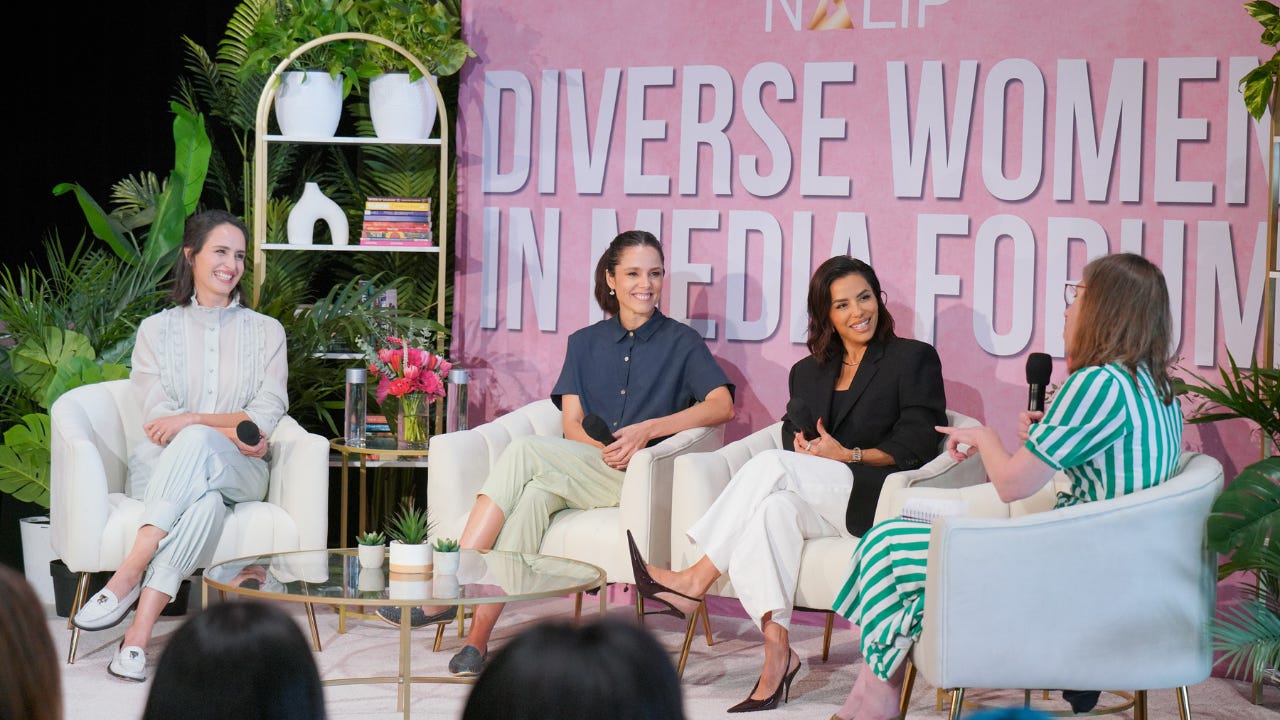
The year 2026 is a pivotal moment for the media industry as a whole. All eyes are on us to figure out, adapt, and be part of the disruption affecting each facet of our industry. Now, when our community needs representation more than ever, NALIP’s Diverse Women in Media Forum delivered and showed up for Latinos.
Held on Friday at the W Hollywood, the National Association of Latino Independent Producers featured an urgent theme: Women as Architects: The Future of Media. The event spotlighted Eva Longoria, the team behind The House of the Spirits, Peacock’s M.I.A., and wider discussions on how women are shaping storytelling, access, and power across the industry. Including two of our very own mitú jefas.
NALIP’s Diverse Women in Media Forum brought fundamental conversations about authorship, leadership, ownership, and the more urgent question of who gets to build culture in the first place.
What stood out most was the event’s refusal to separate creative work from structural power.
Again and again, the panels returned to the same underlying truth: representation is no longer only about being seen. It is about who gets to create, to greenlight, to craft the narrative before it ever reaches an audience, and who gets to stay in the room long enough to make those decisions matter.
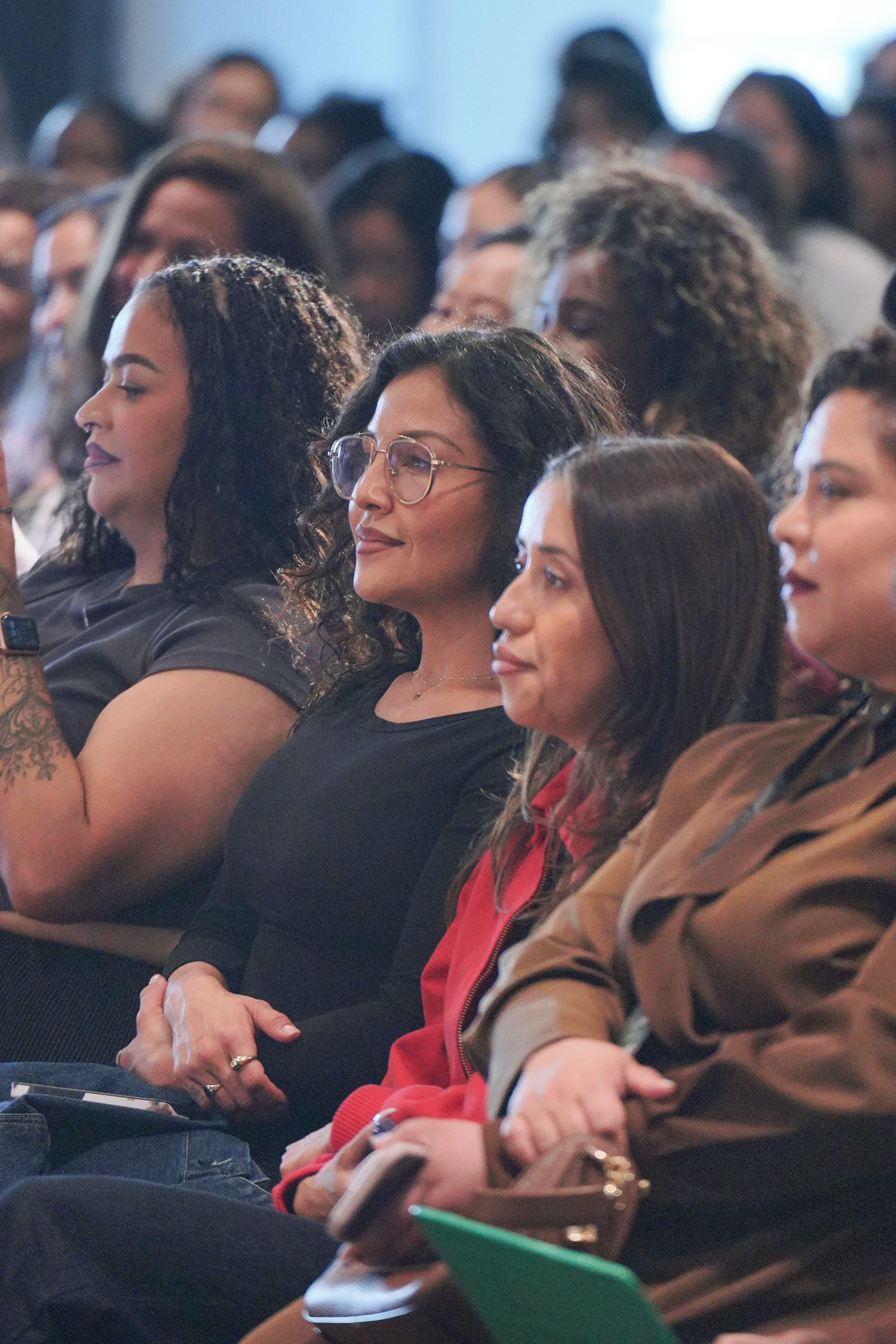
The forum brought together women working across film, television, digital media, talent ecosystems, and executive leadership, but the feeling in the room was not careerism for its own sake. It revolved around infrastructure and, more importantly, sustainability. Around what it actually takes to build a media sphere in which diversity is central to how stories are developed, produced, financed, and scaled.
In that sense, the title Women as Architects did real work.
One of the clearest examples came during the conversation around The House of the Spirits, where Eva Longoria joined showrunners Francisca Alegría and Fernanda Urrejola to discuss adaptation, memory, gender violence, and the female lens.
When mitú asked how they were thinking about reinterpreting Isabel Allende’s novel for viewers today, the answers were immediate and strikingly grounded. Alegría pointed to the book’s painful relevance, noting that the violence and patterns Allende wrote about in the 1980s are still happening today. At the same time, she pointed out the importance of remembrance and the need to understand what came before if we want any hope of not repeating it.
Longoria, for her part, was blunt about the industry’s state. When we asked what feels different about this moment in Hollywood for diverse women leaders compared to when she started, her answer was devastating in its clarity: “Oh my God. Nothing, unfortunately.” She pointed to the drop in the percentage of female film directors and made clear that Latinas continue to face even steeper barriers. Then she pivoted to what made The House of the Spirits meaningful in this landscape: that it exists at all, that it was made in Spanish by multinational Latino creatives on a major platform, and that audiences now have the power to prove this kind of work deserves to keep getting made.
After all, one of the most consistent currents running through the day was the understanding that access is never enough on its own.
A project can be historic, overdue, or exquisitely made. But if audiences do not show up, the industry still tends to treat it as exotic rather than as a way forward.
Alegría and Urrejola also spoke movingly about how their Chilean background molded their approach to the story. For both of them, The House of the Spirits was never simply a canonical text meant to be adapted with respectful distance. It was part of the emotional and political context they came from. Urrejola spoke about hearing those histories growing up, about the dictatorship, about families hiding people whose names they did not even know, about the subtle world of spirits and memory that, in the good tradition of magical realism, goes beyond the metaphor and becomes lived inheritance.
The key conversation around the mechanics of the creator economy and how we build culture.
The panel Reimagining Representation: Creators, Culture & the Future of Media was another moment for the books.
The conversation made clear that the old boundaries between talent, media companies, and brands no longer hold the same weight as they once did. What is emerging instead is a much more fluid ecosystem in which creators are not only performers or promoters of culture, but builders of IP, audiences, businesses, and distribution models. That shift carries enormous ramifications for Latinos and, in particular, women of color, because it changes the terms of authorship itself.
Vanessa Vigil, president of mitú, brought exactly the kind of clarity the moment demands. As one of the few Latina presidents in digital media and the leader of one of the country’s most influential Latino media companies, she spoke from inside the business reality of what it means to shape culture for a new generation of U.S. Latinos and how it’s not something exclusively for our community but for all diverse communities.
“We’re very much leaning into culture as the unifying thing that drives mitú,” Vigil said. “But I think what we have found is that there’s so much about our culture and our experience as Latinos specifically [that’s universal to] the black community [and] the Asian community can really relate. And so that is something that we love to see.”
“And it extends beyond,” she explained. “It goes beyond just Latinos doing things a certain way. It’s not specific just to us, but calling something out like the nostalgia of the era that we grew up in, I think it’s a moment of levity, and like the time that we live in, that I think a lot of people really appreciate. And that is, again, you’re tapping into culture, but it’s not exclusionary.”
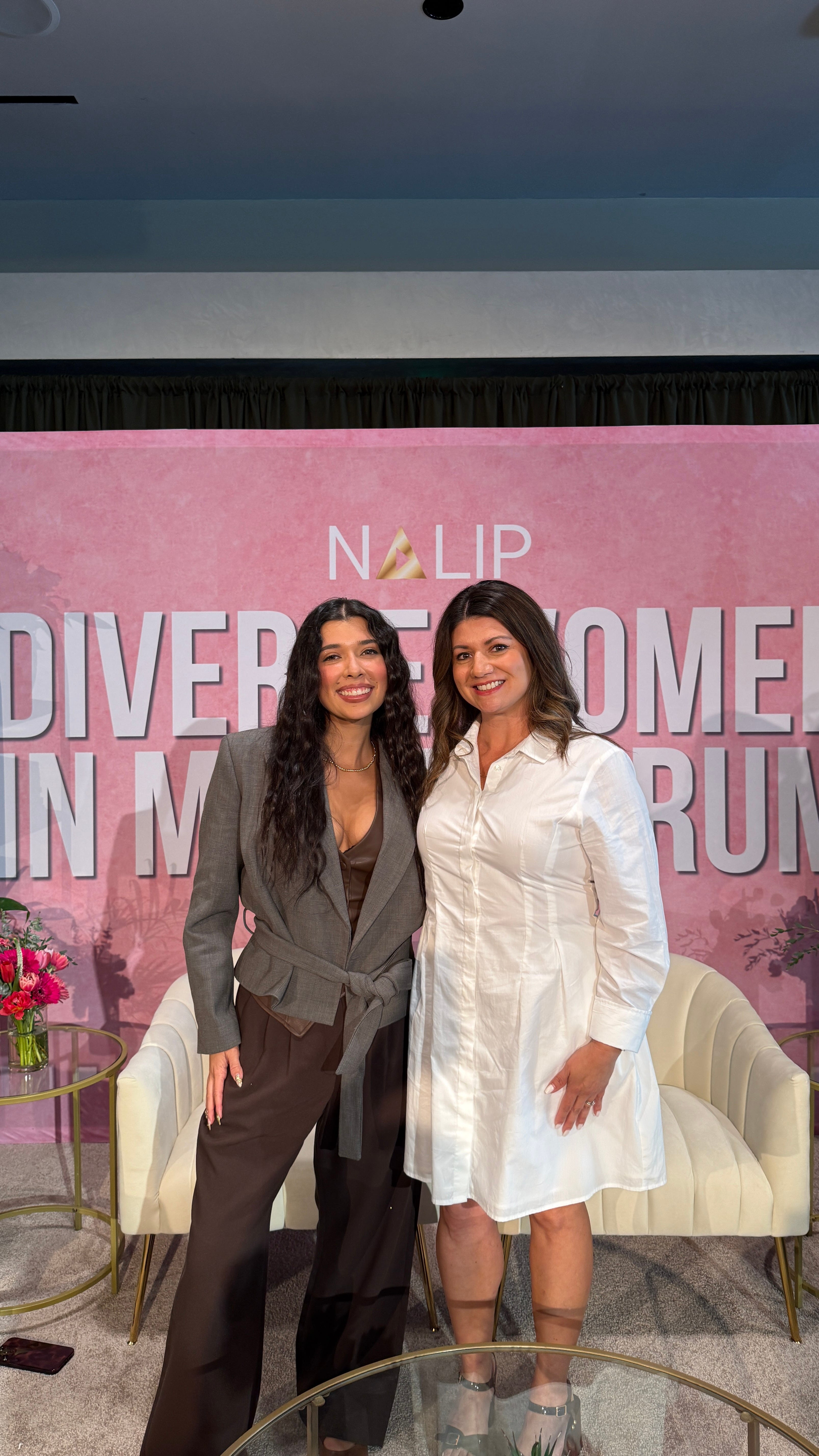
Similarly, the panel around Peacock’s M.I.A., The Character Architects, offered another version of that same idea from the creative side.
Moderated by mitú’s Daniela Salazar, the conversation explored how a character like Etta Tiger Jonze gets built across casting, writing, performance, and showrunning.
This was a pioneering conversation about collaboration as authorship, which is key right now because so much of the industry still isolates women’s contributions. However, Friday’s panels continued to resist that reduction. They made clear how often women, especially women of color, wear many hats while building projects from the inside out, while also carrying the strain of financial inequality and lack of representation along the way.
What NALIP’s forum captured so well is that women of color in media are no longer waiting for the industry to catch up to their ambitions.
NALIP has spent 27 years building a space for Latino excellence across creative media. Friday’s forum made explicitly clear what the new battleground looks like. And amongst the front lines are powerful and diverse women with a serious claim to the industry’s future.
And in this political and cultural moment, that is no small thing.
Because there is something especially clarifying about seeing a room full of women discuss media with this level of rigor at a time when so much of the wider culture still clings to rusted paradigms.