

Why So Many Latinas in Their 30s Are Fiercely Independent
And why that's our greatest privilege.
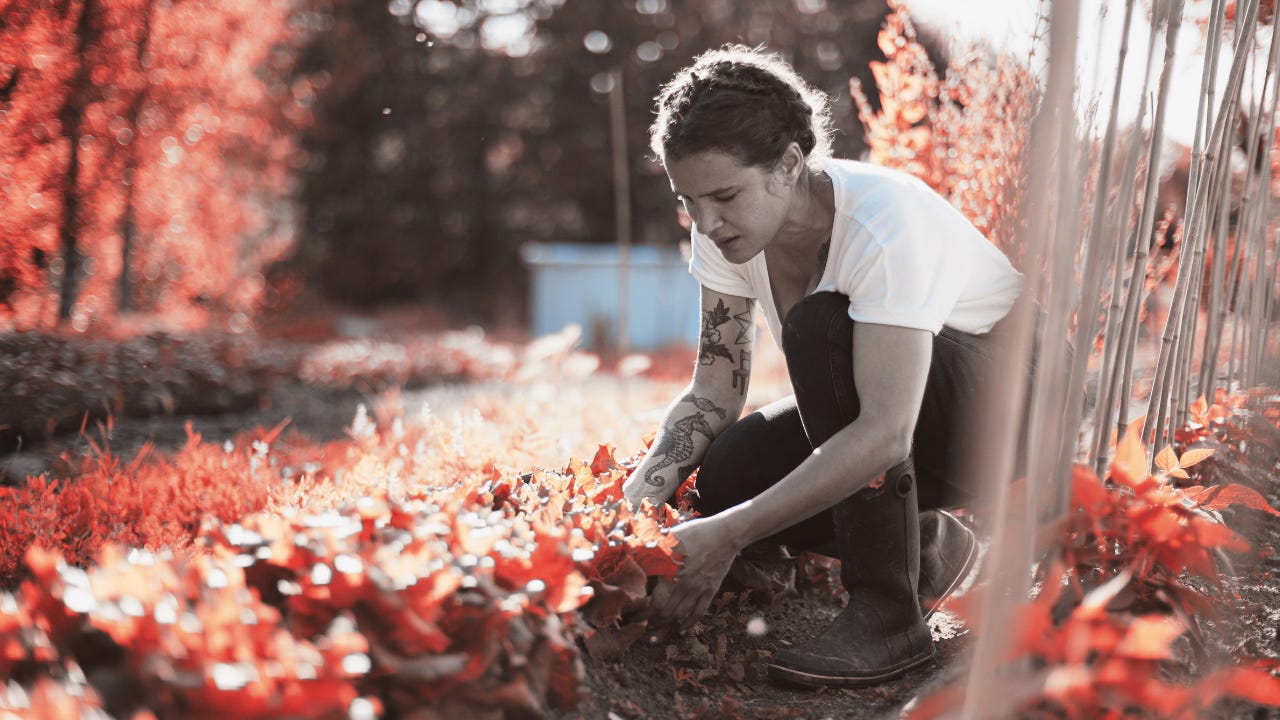
By Yamily Habib.
When I decided at 38 to move to the countryside, my mother immediately offered to help. Despite her autoimmune disease, she didn’t want me moving alone again. She understood better than anyone what it means to do everything alone, even when married.
Once I settled in and saw the neglected land ahead, my mother had a panic attack. “It’s too much work for you alone,” she said. But after watching her figure out her life, despite a husband who added to her burdens, I replied, “Watch me.”
Leaving home young taught me to be self-sufficient, but my new challenge was different. Still, I never thought it was impossible. I learned the tools and tricks for land management, survived accidents and mistakes, and remain stubbornly independent—not because help isn’t needed, but because my internal code resists it.
We’re All Breaking the Same Cycle
Seeing Erika Cruz’s reel on social media, I realized my experience isn’t unique. This conditioning is deeply rooted in many Latinas in their 30s.
“Most of us grew up watching the generation before us stay in situations that didn’t serve them because they heavily relied on a man financially and to make decisions,” Cruz wrote in the caption of her video. “That has shifted. Women are more likely to pursue higher education, and we are starting businesses at a faster rate. This doesn’t mean that we don’t want romantic love, but it does mean that we care about having independence and the opportunity to pursue our calling.”
To say she hit the nail on the head is an understatement.
My mother married at 20 while pregnant and had her three children before 30. She wasn’t financially dependent on my father, but social conditioning and pride weighed heavily on her. She raised us, finished medical school, earned many degrees, and after separating, became independent. That’s when I saw her truly shine.
These early lessons stuck with me. Growing up watching her bound by a self-imposed yoke fueled a building frustration inside me. By age seven, I swore I would never let anything tie me down that way. My choices—good or bad—would be my own, and I would refuse to depend on anyone, no matter the hardship.
And yes, this came at the cost of an irremediable reluctance to commit and an unbearable discomfort with intimacy. But this is most likely just my own issue. For I look around and see so many women of my generation achieving both, and I am grateful for our titanic capacity to break generational curses—though I am also grateful for therapy.
The Emotional Work Nobody Asked For
I am not the eldest daughter, and I greatly admire all those who are, like my mother, and the decision-making burden of parentification they were subjected to from a very young age. My experience was different, though not very far removed. As the middle daughter between two boys, my responsibility was (and still is, though I’m working on it) to tune in to the family’s emotions, to translate the emotional atmosphere, and to explain what’s really going on before the escalating drama devoured us all. These experiences also explain why Latinas of my generation are so obsessed with setting boundaries, returning emotional baggage to its rightful owner, and trying to sublimate our own.
These patterns carry into our professional lives as well. While we’ve diligently built our careers, honoring our mothers’ tenacity but learning not to repeat their mistakes, I see that there’s still work to be done—at least for me.
I recognize how hard it is to delegate, work as a team, or say “no” instead of taking on responsibilities that aren’t mine—filling weekends and losing sleep.
The Privilege of Choice
But as I write these lines, I realize that the bulk of the work is already done. At my age, my mother was tired enough for three lifetimes, and the possibility of doing things on her own terms didn’t seem possible. For my part, I live the life I always wanted, despite the difficulties and obstacles that come with the contract of life. I am completely independent, and it is by my own choice.
The privilege is undeniable.