

Why More Latino Parents Are Choosing Spanish-First Homes in a Country That Still Assumes English Comes First
As more Latino families center Spanish in daily life and education, they are running into a system that still treats their language like an afterthought.
When people talk about bilingual Latino households in the United States, the conversation usually starts from the same assumption: English is the center of gravity, and Spanish, if it survives, should feel grateful for the leftovers.
That assumption has shaped parenting advice, school policy, children’s products, and the broader culture for years. It also helps explain why so many Latino parents say they want their children to speak Spanish, yet still find themselves navigating an ecosystem built around the expectation that English will take over eventually.
That is the real shift underneath the growing Spanish-first conversation. Some Latino families are no longer treating Spanish as enrichment, nostalgia, or a soft cultural add-on. They are treating it as the foundation of their children’s identity, and a way to preserve the roots. However, they do so in a country that has not yet built enough infrastructure to support them.
Spanish-first families are pushing past the old bilingual script
Lucía, the founder of Pato Pato, describes her work as helping families raise “Spanish-first, bicultural kids.” In her words, the goal is to help parents “prioritize Spanish in their homes so it doesn’t get replaced by English, which happens by default if we aren’t heavily intentional.”
For years, many Latino parents got fed the same fear-based message that if they centered Spanish too much, their children would fall behind in English, struggle in school, or miss out socially. Lucía says that fear still drives the conversation. Parents worry “that if they prioritized Spanish (short or long term) their children would be ‘behind’…that they wouldn’t speak English, wouldn’t succeed academically, and a lot of fear-based messaging that still exists in this space to this day.”
But what she is seeing now is a move from vague desire to deliberate action. “Before, a lot of parents would say, ‘I want my child to speak Spanish,’ but there wasn’t always a clear plan behind it,” she said. “Now, families are becoming much more intentional.”
That means the questions have changed. Families are no longer stopping at whether Spanish matters. Instead, they are asking, “How do I teach my child to read in Spanish? Can their education be in Spanish? How do I build a life where Spanish is actually the main language?”
The Spanish-first movement starts at home, then runs into a system gap
In practice, Lucía says, Spanish-first begins with “one clear decision: Spanish is the primary language in our family.” From there, the model expands. Parents commit to speaking Spanish consistently. They protect the Spanish-only stage instead of panicking about English. They teach reading in Spanish first. Some homeschool in Spanish. Others build Spanish literacy around English-dominant schools. They look for peer groups, co-ops, and community spaces where their children can hear the language used socially, not just inside the house.
That progression, however, reveals the actual problem. Once families decide to center Spanish, they quickly discover how few resources exist for children who are already being raised in Spanish and need to deepen it.
Lucía explains it from her own experience: “There are plenty of tools for learning Spanish as a second language. There are ‘bilingual’ toys and games, but they lack depth for families like ours.” What is missing, she says, are tools “designed for children who are being raised in Spanish and need to develop it further…reading, math, social-emotional learning, and critical thinking.”
Research on Spanish-first education keeps pointing in the same direction
The politics around language may swing back and forth, but the research stays far steadier than the public discourse.
According to the Ohio State University Crane Center for Early Childhood Research and Policy, emergent bilingual students who spoke Spanish at home and received instruction in both Spanish and English in dual language immersion programs showed stronger outcomes in English vocabulary and reading. The Crane Center highlighted these findings, adding bilingual education “enhanced EB students’ English reading skills” rather than hindering them.
That cuts against one of the most persistent myths driving parental anxiety: English is not the fragile language in this equation. Spanish is.
Lucía says families are starting to recognize exactly that. “English is not at risk. Their children will learn it. It’s everywhere. Spanish is the language that requires intention and protection.”
The Century Foundation’s latest abbreviated report reaches a similar conclusion from a policy angle. It argues that current pushes toward English-only schooling under the Trump administration run directly against decades of evidence showing bilingual settings serve English learners better. The report notes that in 2023, nearly 22 percent of U.S. children spoke a non-English language at home, over 15 percent spoke Spanish, and 5.2 million students were formally classified as English learners.
The broader perspective makes clear that this is not a niche question affecting a tiny corner of the country. It is a structural issue touching millions of children.
Spanish-first parents are also reclaiming culture, not just language
That is why Lucía keeps pushing the conversation beyond vocabulary lists and pronunciation drills. In her framing, the stakes are not limited to fluency. Parents want their children to access “their own stories, history, humor, and traditions in the language they belong in.”
She sees many families approaching this work through grief as much as aspiration. Some parents, she says, feel they “lost something along the way, or that it was never fully passed down to them,” and now want something different for their children.
The Century Foundation’s research helps explain why that desire keeps surfacing so strongly. In its 2024 poll, nearly 70 percent of Latino respondents said they would choose bilingual education if it were available, compared to 15 percent who preferred English-only education. In a newer California-based study, respondents’ interest in bilingual education averaged 7.9 out of 10, while interest in dual-language immersion averaged 7.8. Fully 94 percent of respondents with multilingual children said it was “extremely” or “very” important that their children maintain their primary language as they reach English proficiency.
Put differently, families are not resisting bilingualism. They are asking for a fuller version than the current system typically offers.
And they are not asking for it only in gestures. They want schools, literacy tools, teachers, peer networks, and learning environments that treat Spanish as capable of carrying big ideas. Lucía makes that point directly when she says, “Teaching our children academic Spanish ensures they can think, question, and dream in our language.”
The Spanish-first gap is now forcing families to build what institutions did not
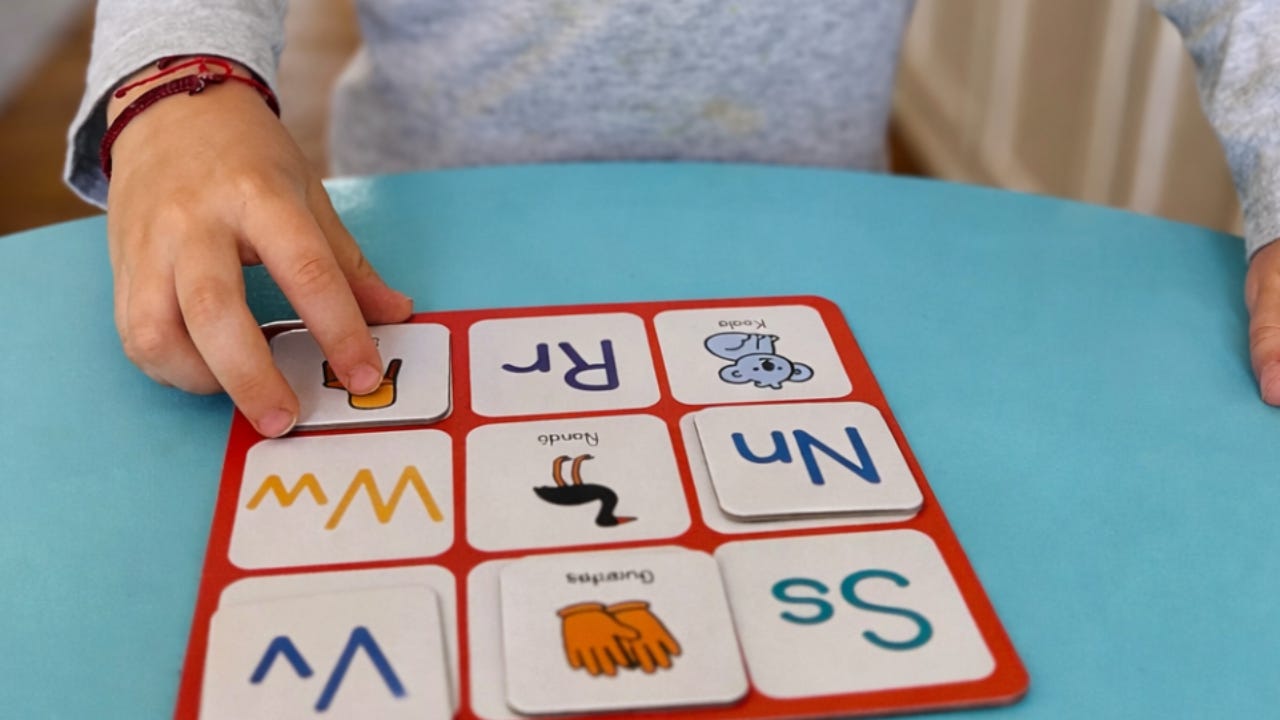
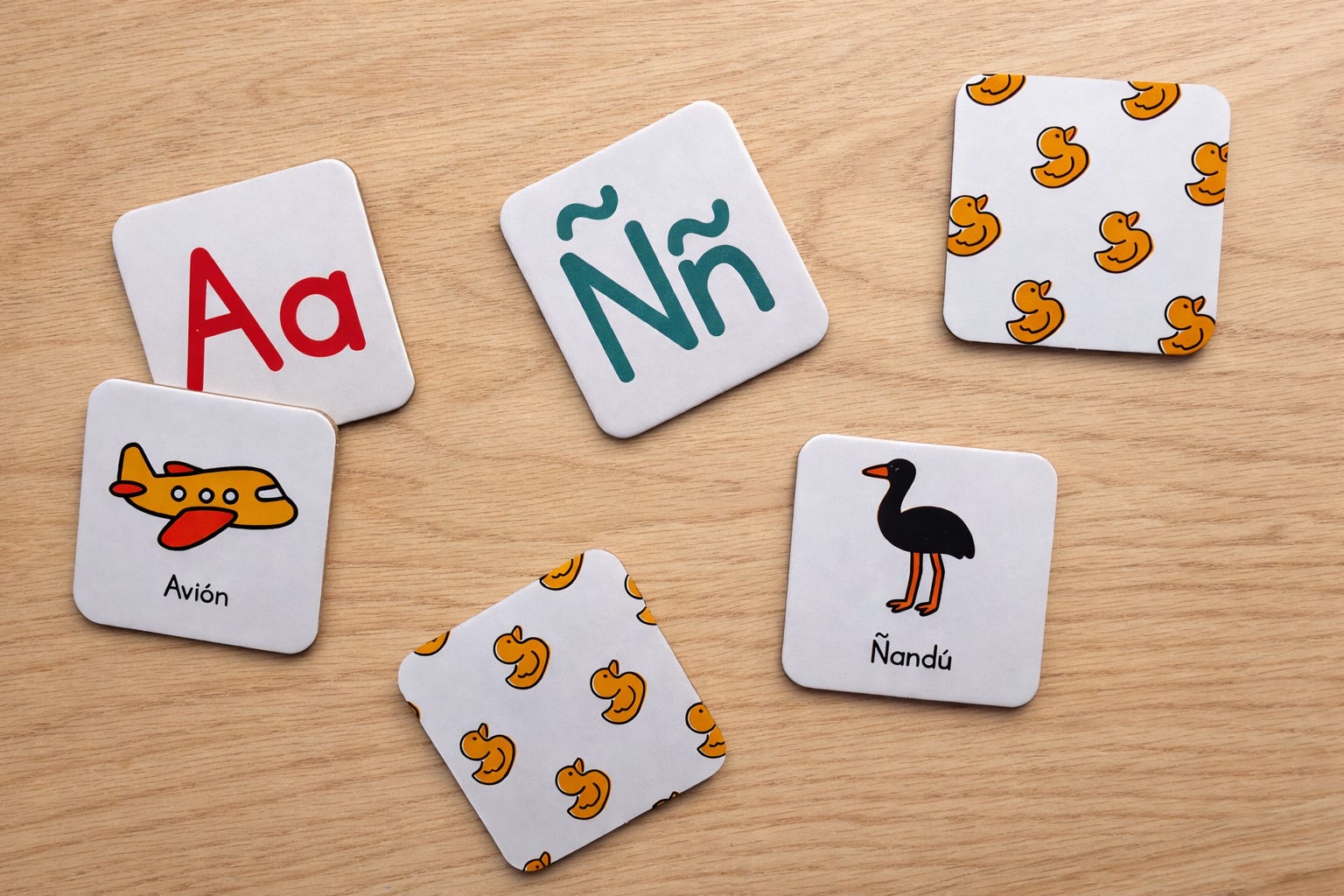
That is where Lucía’s phonics game, Lettería, comes in. She created it, she said, because families trying to teach reading in Spanish often end up “piecing things together, translating resources, or trying to adapt English-based systems that don’t fully align with how Spanish works.” The result, she says, is that many parents give up.
Lettería is her attempt to close that gap. She describes it as “a 2-in-1 phonics-based game to teach children the basics of reading in Spanish,” built to be simple, hands-on, and usable across different ages.
These kinds of products are key for families trying to build a Spanish-first ecosystem in a country that still assumes English-only outcomes are the natural endpoint. Parents are becoming the planners, teachers, translators, community organizers, and curriculum designers because the broader system has not caught up.
The good news is that there will always be an ingenious Latina who will find a solution.