

Where Are the Latinas at the Oscars?
The receipts are there: sparse nominations, rare wins, and a system that rewards our presence more than our work.
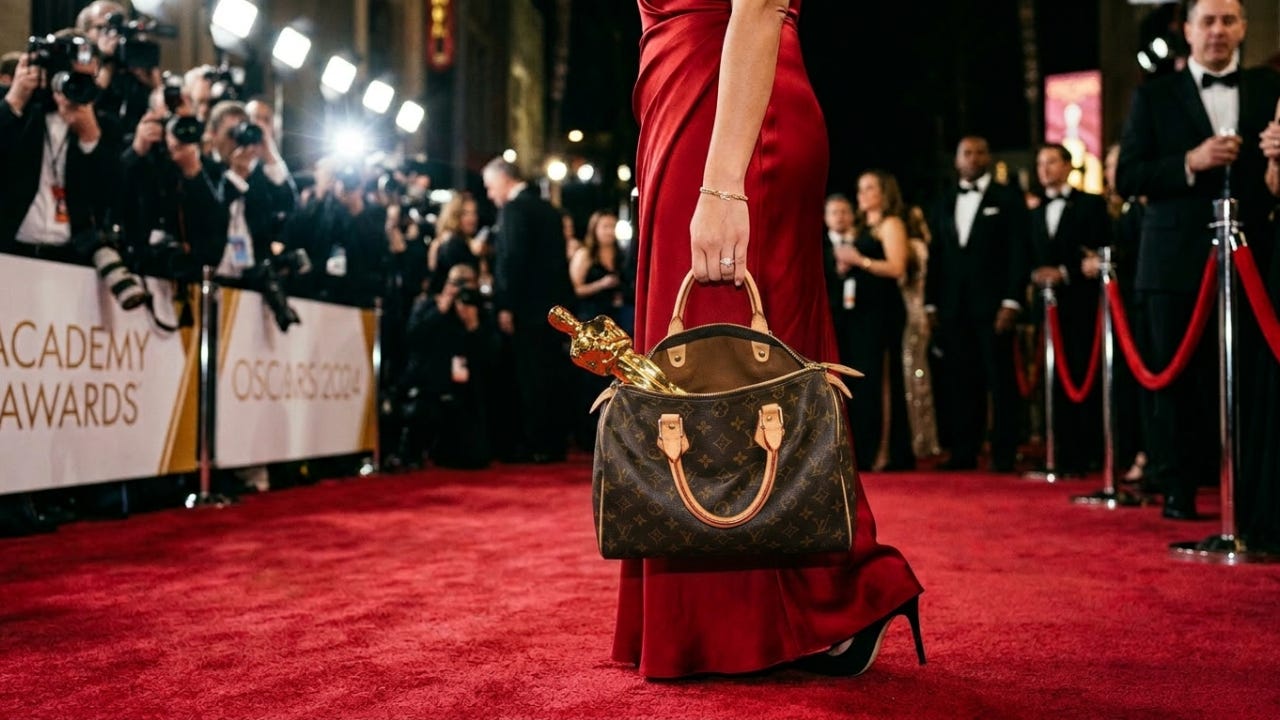
Everyone loves a Latina on the red carpet. The gowns, the glam. The headlines that call us “spicy,” “fiery,” “exotic,” whatever the adjective-of-the-week is. But when it comes time to hand out the trophies, the room falls silent.
Because the numbers tell a story Hollywood rarely wants to tell out loud: Since 1929, the Academy Awards have had 13,445 nominees. Only 6% were people of color, 17% were women, and less than 2% were women of color, according to USC Annenberg Inclusion Initiative data.
So yes, the question stands, especially as the Oscars roll around again: where are the Latinas at the Oscars?
Representation still feels like a guest list
Let’s start with the uncomfortable truth: the Academy has gotten better at celebrating “diversity” as a headline, while still keeping power and recognition concentrated in the same places.
In 2016, none of the nominees in the four acting categories were from an ethnic minority, a major flashpoint that helped fuel the #OscarsSoWhite backlash and boycotts. Since then, we’ve been tracking the pattern. We get moments, yes. We eventually get exceptions. We get a “historic year.” Then we get another year where the gap looks painfully familiar.
What we’re seeing in 2026, and what we are not
The 98th Academy Awards take place on March 15, 2026, and yes, Latino talent shows up across major categories this year. That range stretches from Wagner Moura’s Best Actor nomination for The Secret Agent to Benicio del Toro’s Best Supporting Actor nod for One Battle After Another, and from Guillermo del Toro’s double recognition for Frankenstein in Best Picture and Best Adapted Screenplay to craft-category standouts like José Antonio García’s Best Sound nomination for One Battle After Another and Adolpho Veloso’s Best Cinematography nomination for Train Dreams. Animation also carries real weight this year: Yvett Merino returns in Best Animated Feature as producer of Zootopia 2, Adrian Molina lands in the same category for Elio, and Mexican coproducer Nidia Santiago appears for Little Amélie or the Character of Rain. Colombian American photographer Juan Arredondo is also competing for Best Documentary Short for Armed Only with a Camera.
But when you narrow the lens to Latinas, the story still feels thin, and the contrast becomes the point. The Latina nominees and contenders that stand out in this ecosystem are largely concentrated outside the most visible performance categories: Florencia Martín is nominated for Best Production Design for One Battle After Another (with set decoration by Anthony Carlino), and Yvett Merino and Nidia Santiago show up through animation producing, a lane where Latina work has carved out hard-won space.
Meanwhile, Emilie Lesclaux appears in Best Picture as a producer of The Secret Agent, another reminder that women can be part of the year’s most significant films and still not see the spotlight translate into acting-category recognition for Latinas.
Did you see the shift? Latinas appear in the architecture of the work, the craft, the production, the building of the thing, proving we are not going anywhere. At the same time, the categories that drive the loudest cultural conversation still struggle to make room.
Latinas at the Oscars and the “historic” narrative we keep getting fed
You can feel the temptation to call 2026 a turning point because the broader Latino footprint is real. Hispanic Executive framed it as a “historic Latino harvest,” citing major nominations across the acting, animation, and craft categories.
But the angle here is different: Latino gains are not automatically Latina gains. A surge that still leaves Latinas out of the acting conversation isn’t a victory lap. It’s a reminder that Hollywood knows how to diversify without evenly redistributing the spotlight.
The receipts: what the Oscars data says about women of color
USC’s tracking gives us the clearest, most blunt context. Again: since 1929, 13,445 nominees. 6% people of color. 17% women. Less than 2% women of color.
That’s precisely how rare it is for the Academy to recognize women who live at the intersection of race and gender. Latinas sit inside that sliver. Sometimes we get named. Often, we get skipped. Even more often, we get treated like a visual accessory to the night.
A quick timeline of Latina breakthroughs that should not feel this rare
If you want to understand how slow this has moved, look at the milestones people still cite as “firsts.” Latina Oscar history traces back to 1954, when Katy Jurado became the first Latin American woman nominated for Best Supporting Actress for her performance in Broken Lance.
Then, in 1961, Rita Moreno won for West Side Story, a breakthrough that still sits in the cultural memory as a glass-ceiling moment.
Decades later, the modern era finally widened the frame. However, it still did not widen it enough: Salma Hayek earned a Best Actress nomination for Frida in 2002, followed by Catalina Sandino Moreno’s Best Actress nomination for Maria Full of Grace in 2004 and Adriana Barraza’s supporting nomination for Babel in 2006. In 2018, Roma brought two crucial breakthroughs in the same year, with Yalitza Aparicio nominated for Best Actress and Marina de Tavira for Best Supporting Actress, and more recently, the Academy recognized Ana de Armas with a Best Actress nomination for Blonde in 2022 and America Ferrera with a Best Supporting Actress nomination for Barbie in 2023.
And even that list, stacked like this, makes the point: we celebrate a handful of names across nearly a century of awards. That is not what representation looks like when the industry is actually healthy.
Latinas at the Oscars deserve more than “red carpet love”
Hollywood loves Latinas when we boost the vibe. When we make the photos look better and fill the room with charisma. Even better, when we play the part of the beautiful supporting character in somebody else’s story.
But the Oscars are supposed to be about craft, performance, and artistic risk. They’re supposed to reward the people who build culture, not just decorate it.
And if the system keeps producing years where Latinas barely appear in the most visible categories, that’s undoubtedly a pipeline problem. A gatekeeping problem. A power problem.
So where are the Latinas at the Oscars?
They’re here. Working, writing, directing, producing, designing, editing, scoring, and carrying entire films on their backs.
The real question is whether the Academy can stop treating Latina recognition like a special occasion. Because we are sure as hell tired of being props for the carpet.