

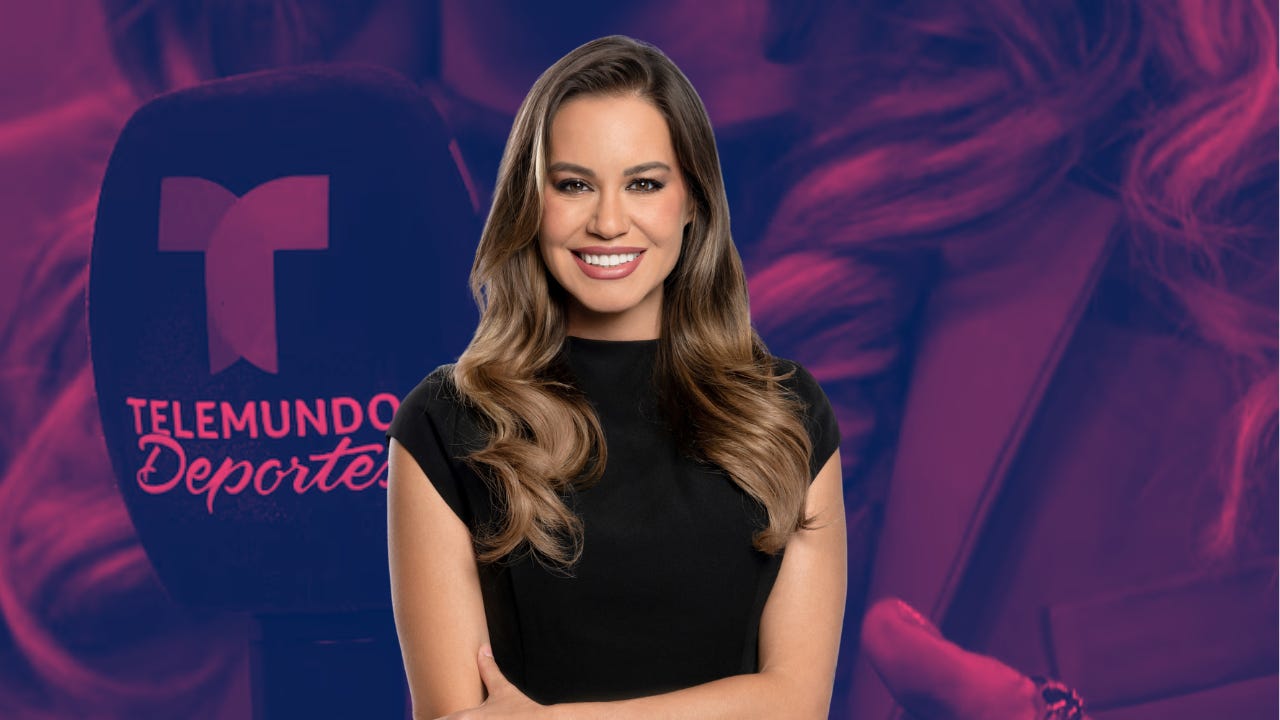
Verónica Rodríguez did not enter sports journalism through a polished “dream job” door. She entered through the most Latino doorway imaginable: family, fútbol, and a stadium ritual that felt like a second home.
“I was studying journalism because I loved soccer,” she told FIERCE. In her house, the sport was not a hobby. It was “part of our identity, of our family, the noise in the house, the reason for the family gathering, why you go to grandma’s house.” Her bond with her father ran through those Sundays. “My strongest relationship with my dad was through sports,” she said. “Sitting at the table with him, going to the stadium every two weeks.” She would go with her dad, her grandfather, and her sister to watch Pumas, then return home for the family meal and the post-game analysis. “We’d analyze the match, whether they deserved the win,” she remembered. Today, she gets to live that feeling “every day” through her work. “It feels like a blessing.”
She built a career on a paradox: shy, but fearless on camera
Rodríguez describes herself as shy, even as her career has been built in front of millions. “I didn’t plan to be on camera because I’m a bit shy,” she said. “I can pretend perfectly that I’m not shy, but I’m very shy.”
Her first on-camera interviews were then different from what people used to see in sports coverage. They were a human exchange. And she got a season’s worth of tickets for the team she loved. “They offered me on-camera interviews in exchange for tickets for the entire season for the team of my dreams, which were Pumas,” she said. “So I said yes.”
She did them, nerves and all. “With all the embarrassment, I did them, and it went well,” she told us. Then the doors started opening. And once she realized she could do it, she leaned in. “They can take the embarrassment away from me because I’m starting to really like it,” she said. “It excites me to be the link, to tell the stories.”
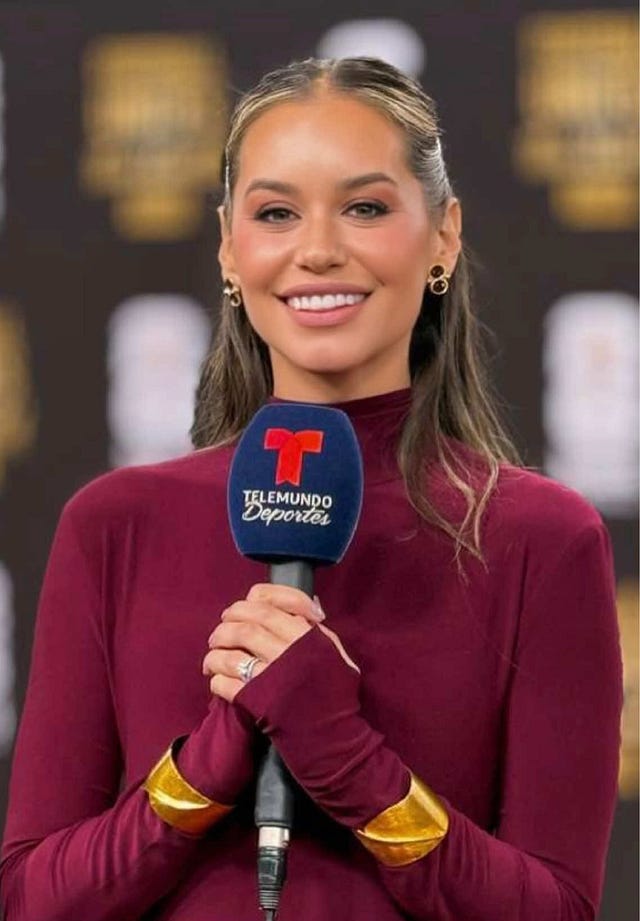
 Tiktok failed to load.
Enable 3rd party cookies or use another browser
The question every woman in sports media gets, and the work it takes to answer it
For years, women in sports media have had to clear a credibility checkpoint that men never face. Rodríguez knows it first-hand.
“The typical question for a woman in sports journalism is: ‘But do you actually like soccer, or are you there because you want to be on TV?’” she said. She heard versions of that for a decade, sometimes longer. The “prove it” test followed. “If you wear a Metallica shirt, people say, ‘Name three songs.’ It’s the same with sports journalism: ‘What is offside?’ ‘What does VAR mean?’”
However, Rodríguez did not bite. She decided to let her work speak for itself. Sports journalism, she argues, demands a kind of immersion that you cannot fake for long. “You need to be completely passionate about sports because it’s a career where you won’t have weekends,” she said. “You won’t go to your cousin’s wedding.” You will invest “hours and hours and hours.”
“You show up to an interview with a background of having watched the 30 matches of the player you’re interviewing,” she said. If the passion is not there, she believes the audience can tell. “Studying it from a text is noticeable,” she said. “It’s not the same.”
How she earned a seat at the debate table
Rodríguez’s story is also about the determination the kind women develop because the system rarely hands them an open chair.
Early in her career, she wanted what often stays guarded: the debate table. “How do I get into the debate and have credibility?” she recalled thinking. She also remembers the insecurity of entering a space built by men who had dominated it for decades.
So she created an entry point. “I told the producer, ‘What if I do an editorial, and we debate off that as the first debate?’” she said. That became her way in: show up with an argument, then stay because you can hold it. “That’s how I earned my place at the debate table,” she told us, not as a token, but as an educated voice.
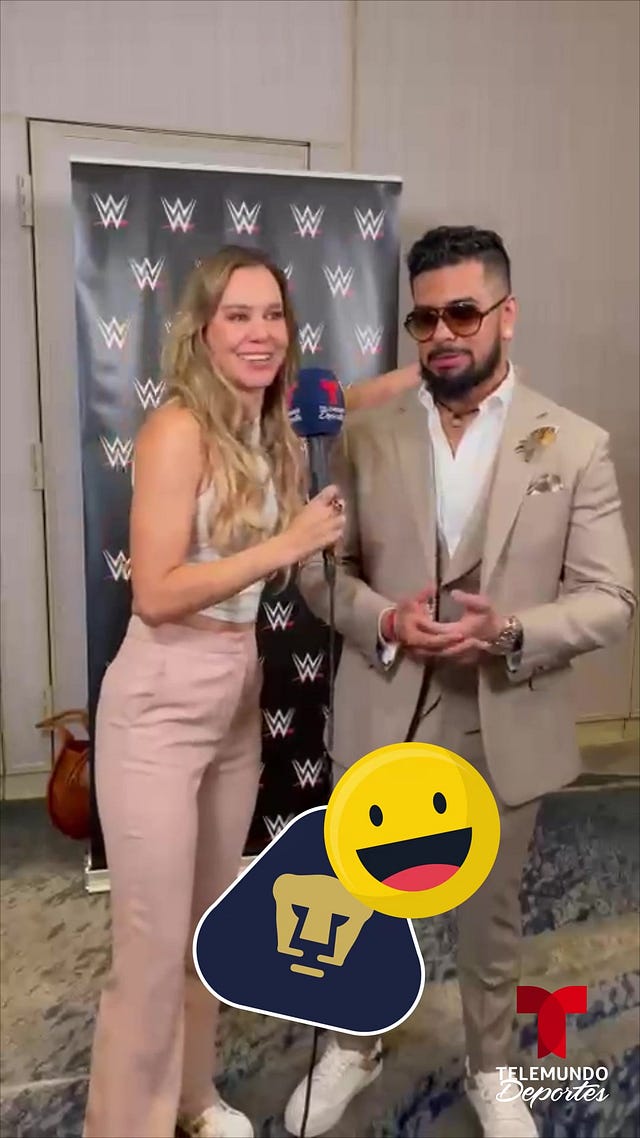 Tiktok failed to load.
Enable 3rd party cookies or use another browser
Fox Sports opened the door. Telemundo propelled her
Her early work in Mexico led to a major leap. “I was at a small channel called MVS,” she said. “Fox Sports called me, and that’s when my big career really exploded.” She spent 10 years there, and at the time, the network reached across Latin America. That era widened her range of sports, too, from fútbol to motorsports and wrestling.
But when Rodríguez talks about Telemundo, she talks about something else: institutional belief. Not just a new job, but a door opened without her having to beg for it.
She moved to the United States after marriage, with anxiety about what would happen to her career. Then, in one of those life moments that feels scripted, she got the call from Telemundo the same day she received her work authorization. “I got my Social Security, and I could work,” she said. “Like the best day in the world.”
Telemundo, she explained, required a different kind of sports storytelling. It is not a niche sports channel. It is a broad network where sports have to meet the whole household. “In a sports channel, it’s more analysis,” she said. “On a channel like Telemundo, you find all kinds of audiences, and you have to do your content so everyone can enjoy it.”
That means speaking to the superfan and the abuelita who stayed after the telenovela. It means making sports feel like a community, not a gated club.
Why Spanish sports coverage is not a “nice-to-have”
When Rodríguez explains the power of Spanish-language sports coverage in the United States, she talks about identity, not translation.
“The Spanish-speaking audience is one of the most passionate about sports,” she said. And if we are talking about fútbol, she insisted, it is not “something Latinos like.” It is “the identity we have.” It is “the excuse to talk to your grandma.” It is the reason you gather.
So when you deliver those stories “in the language you hear at home,” she said, it means everything. The references have context, and the jokes actually make sense. Even the emotional register shifts. She offered a simple example that made the point fast: “It’s not the same to curse someone out in English as in Spanish,” she said, laughing. “It doesn’t feel the same.”
In other words, it’s a way of cultivating a sense of belonging.
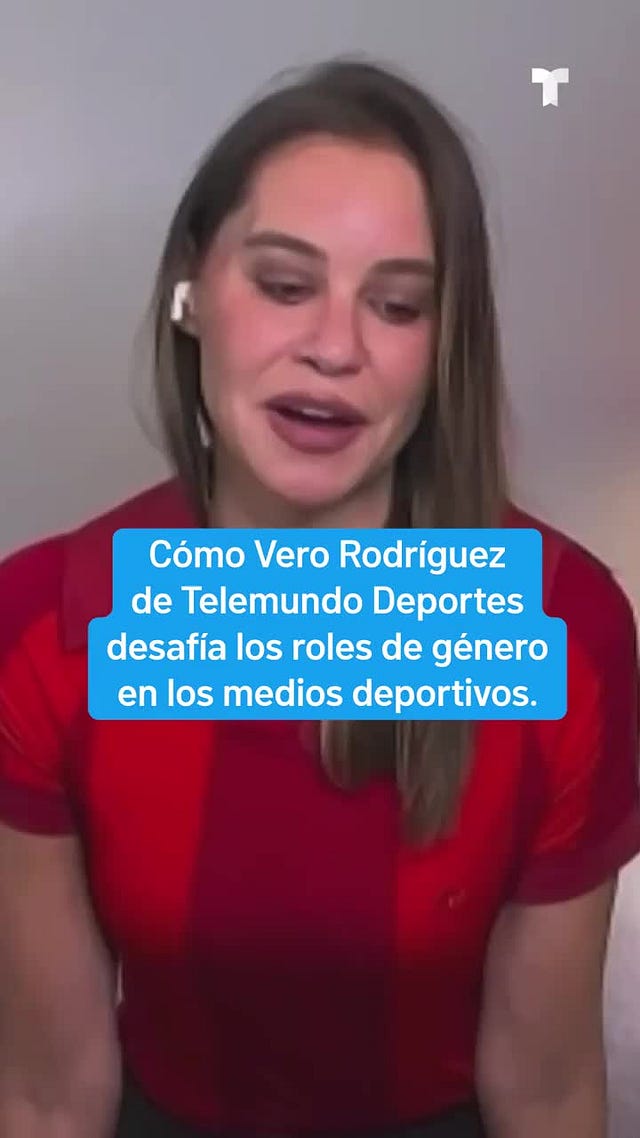 Tiktok failed to load.
Enable 3rd party cookies or use another browser
The women’s sports audience was never the problem. The industry was
Rodríguez rejects the idea that women are a niche audience for sports. What needed changing was not women’s interests, but the industry’s willingness to recognize them.
“I’ve seen how we’ve torn down those taboos,” she said. The numbers tell a story, too: women’s sports and women’s sports audiences keep breaking records. “The fans are there,” she said. “The knowledge and credibility on the other side are there. The success and the skills and the conditions as athletes, we’re there.”
What’s missing is access. “We need those spaces to open and for them to give us those seats,” Rodríguez said.
“Sí se puede” behind her career strategy
Toward the end of our conversation, we asked Rodríguez what she wanted included in the piece, what she wanted to be said clearly about her trajectory. Her answer was as simple as genuine.
“There’s something that has always accompanied me,” she said. A cheer that follows Mexican sports culture: “Sí se puede. Sí se puede.”
For her, it has run parallel to her career, especially in rooms where she felt like the first, the only, the test case. “I remember the first time I sat at the debate table, and I was shaking,” she told me. “I kept thinking, ‘Sí se puede.’’ A woman at the table.”
She remembers the surprise on the faces of people who had spent decades in sports media and had never had a woman sitting beside them in debate. And she remembers the grind behind every moment of competence: the extra reading, the extra research, the hours required to walk into a room of veterans and contribute something real.
Then Telemundo did something that crystallized her argument about what access can unlock. Rodríguez became the first woman to commentate on an NBA game on Spanish-language broadcast television in the United States, she said, after the network later confirmed it through research.
It was all the proof she needed.
“I was nervous,” she said. “I’d fall asleep watching basketball every night, because it’s one thing to know the topic and another to talk through it on a broadcast.” When the message came confirming she was the first, she cried on the plane. “I don’t know why I cry on flights about everything,” she confessed. But the emotion made sense.
The point of her story is bigger than one career
Sports media still tries to sell the idea that women are guests in a men’s world. Rodríguez’s career argues the opposite. Women have always been in the stands, in the living rooms, in the group chats, building sports culture in real time. The industry simply took too long to treat that truth as normal.
Rodríguez’s story also shows how Latina visibility changes the ecosystem. It changes who feels invited, the language, and even the reference points. It changes the future talent pool because younger women see a life that looks possible.
Or, as she would put it, the only way it ever moves: “Sí se puede.”