

Verónica Pérez Had No Role Models Who Looked Like Her in Professional Soccer. Now, She's That Person for Young Latina Players
Transitioning from professional play to mentorship, she's teaching young girls what no one taught her: you don't need permission to belong.
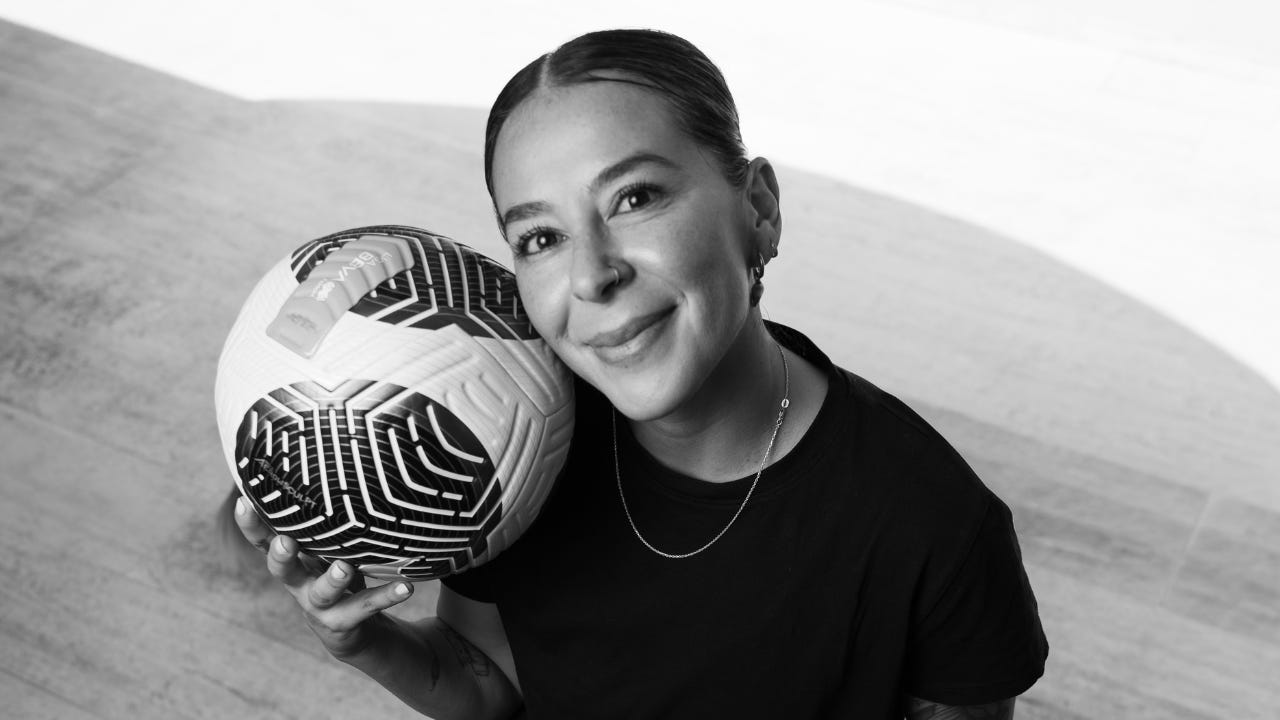
Verónica Pérez has spent her life proving she belonged in spaces that didn’t seem to want her. She built herself into a professional footballer—84 caps for Mexico, clubs across the United States, Europe, Australia, and Saudi Arabia. But now, as she transitions out of elite sports, she’s done proving herself and decided to do something different: showing young Latina girls that they don’t have to build everything alone.
The shift hasn’t been easy. “Being in this transition out of playing, it’s different. That’s been my whole identity for so long, being a footballer, and letting that go is so, so hard,” she told FIERCE. “At the same time, it’s made me realize I’m so much more than that, and I want to share that with others.”
That’s how she began the path towards mentorship, school visits across the Bay Area and Los Angeles, and a self-published children’s book written with young girls in Latino communities in mind. She wanted to make sure the next cohort of players doesn’t have to figure out the path alone, as she did.
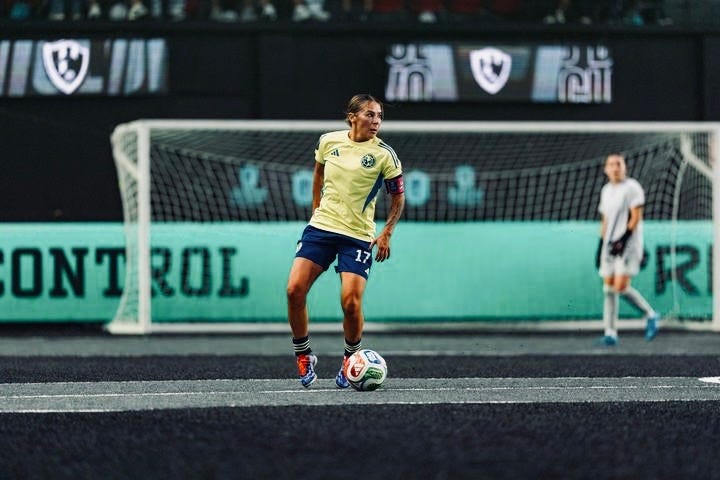
Built It on Her Own
To understand what Verónica is building now, you have to understand what she had to build then.
Her childhood wasn’t structured around soccer. Her parents didn’t come from a soccer background. In a way, soccer found her.
“Early on, it really was as simple as going to school and then going straight outside to play and be active,” she recalled. “We lived across from this lot. So I would cross the street, the curb was a bit high, then the sidewalk, then just a long stretch of wired fence. That became everything for me.”
The curb became a rebounder and the fence a goal. What she lacked in formal training, she made up for through repetition.
“There was no structure, no sessions, no plan…just repetition,” she said. “As I got older, some things changed. I didn’t always have a clear pathway early on, but even once I did find a pathway through club soccer, that mindset didn’t change. If anything, it grew stronger.”
Verónica stayed after practice, found extra fields, and worked on things alone that she knew she needed to improve. Soon, coaches began to notice and offered to train her.
The Absence She Lived With
When Verónica was young, her favorite athlete was Mia Hamm. Beyond that, the landscape was bare.
“Most of what I saw was men’s sports. That’s what was on TV, that’s what got covered. So even early on, you start to realize women, especially women like me, aren’t really being shown,” she explained.
This invisibility was the daily message that the game she loved might not have space for her. In fact, she didn’t see a Mexican woman playing at a high level until she was 20, when she was invited to a Mexico Women’s National Team camp.
“That was the first time I saw someone who looked like me in that space. So I was moving through all of this without really seeing myself reflected anywhere. I didn’t have a clear example to follow. I just had this feeling that I loved the game and wanted to keep going. It forced me to trust myself, to walk into spaces where I didn’t always feel as though I belonged, and figure it out as I went.”
What Young Girls Are Telling Her
Today, when Verónica enters schools and community spaces, the landscape looks different for young Latina girls. There’s social media, showcases, academies, and pathways that didn’t exist when she was their age.
However, there’s something more complicated happening in these spaces.
“What I hear from young Latina girls now is actually a mix of belief and hesitation,” she said. “On one hand, they really do believe they can go pro. They know there are pathways now, like social media, showcases, academies, and they understand there are ways to get seen that didn’t exist before.”
The hesitation, though, isn’t about capability.
“Not because they’re not capable, but because of things around them. The external factors, family expectations, financial realities, or just not always seeing themselves fully represented at the highest levels,” she explained. “I think what adults sometimes miss is that these girls are balancing both. They’re dreaming big, but they’re also carrying real-life considerations that affect how confidently they move.”
What stays with her most is what these girls are waiting for, the same thing that Verónica waited for and never fully received.
“My parents supported me, but if I’m being honest, it was still hard not hearing more encouragement or positivity along the way. I think a part of me was always waiting for someone to fully say, ‘You can do this, go after it all,’” she said. “So I had to learn how to give that to myself. I had to learn how to fight for my own dreams, even when it wasn’t being reinforced around me.”
Now, when she tells girls this—when she stands in front of them and says you don’t need permission, you don’t need a perfect situation to start—she’s speaking from experience.
That’s Why She Decided to Go One Step Further
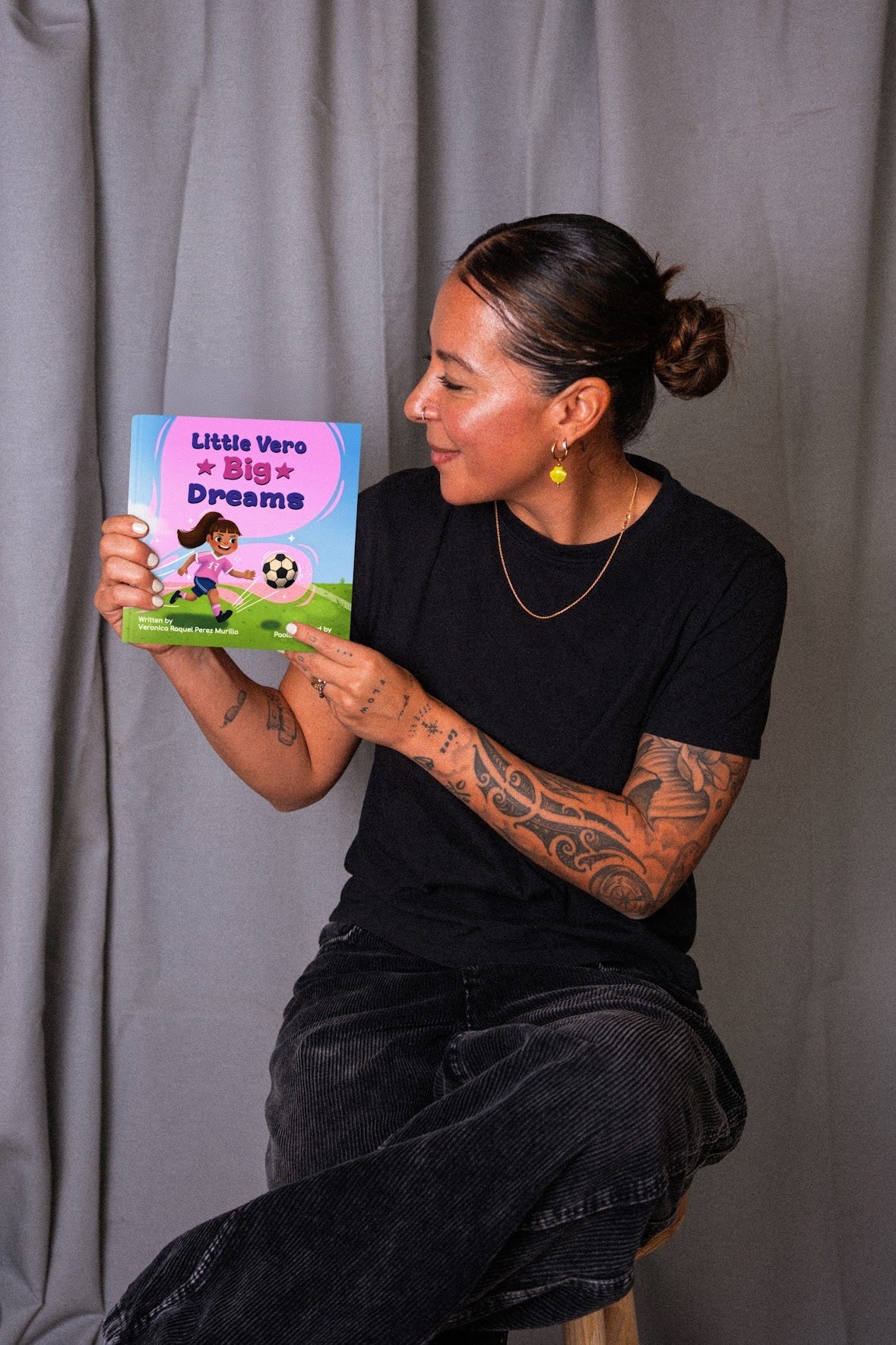
Verónica had never planned to be an author. For decades, people had told her she should write her story—childhood friends, college teammates, people she’d mentored over the years. She ignored it. After all, she was a footballer. That was her identity. And it was enough.
Then the identity began to change. “I wanted to put something in a child’s hands that the sports world doesn’t always show,” she explained. “Yes, it’s amazing, the games, the travel, being on TV, but there’s also sacrifice, doubt, and a lot of moments where you have to choose this path over everything else. I wanted kids, especially Latina girls, to see that you can dream big, but also understand that the journey is yours. That it’s okay to be different, to be you, to be quiet, to not have a perfect path, and to still believe in yourself anyway.”
What “Safe” Actually Means
When Verónica talks about building safe spaces for girls in football, she’s being specific about what safety requires.
“To me, ‘safe’ means a space where girls feel comfortable being themselves, without constantly comparing themselves to someone else, or trying to fit into one specific mold. We’re all different, and that’s actually what makes the game special. You don’t have to look or play like anyone else to make it to the top,” she said.
Safe means freedom within structure. It means trying something that doesn’t work and knowing that failure isn’t a referendum on your worth.
But Verónica also knows the structural barriers that keep girls from ever reaching a space where they can be safe.
“A lot of girls leave the sport not because they don’t love it, but because they stop feeling safe in those ways. They feel judged, compared, or like they’re not ‘enough,’” she said. “There are also real barriers, cost, access, family responsibilities, but I think confidence and environment are just as big. If we can create spaces where they feel supported, seen, and free to grow, they’re much more likely to stay and actually reach their potential.”
And that’s precisely what she’s doing.
“The path might not be clear, but if you love it and you’re willing to keep showing up, you can create your own way. And now more than ever, there are so many avenues and platforms to get there. The opportunity is real, you just have to trust yourself enough to take advantage of it.”