

Venezuela's Earthquake Left 680,000 Children Vulnerable. Predators Noticed Hours After The Ground Stopped Shaking
Venezuelans who survived the 1999 Vargas disaster know what happens to children in the chaos after a catastrophe. They are not waiting for it to happen again.
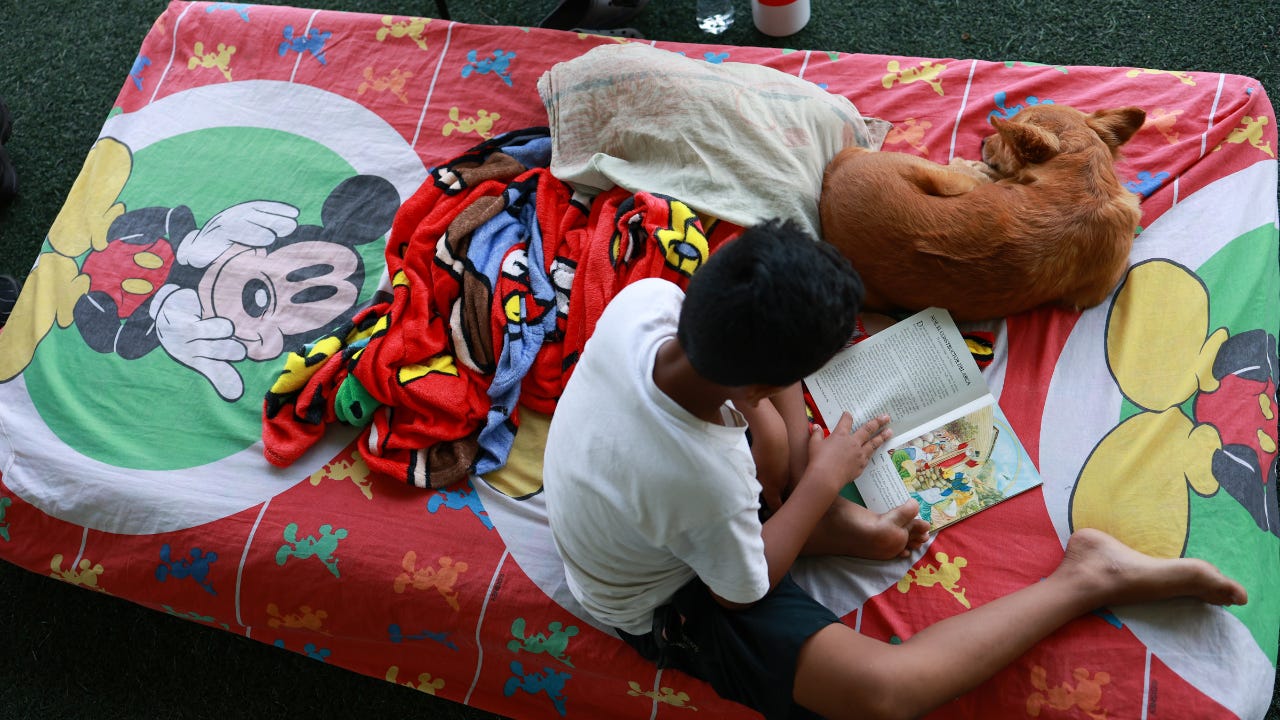
The ground in Venezuela was still shaking when the warnings began circulating through social media. People were posting simultaneous news reports and appeals regarding people trapped under the rubble and missing children.
Within hours of the magnitude 7.2 and 7.5 earthquakes that struck northern Venezuela on June 24, Venezuelans who lived through the 1999 Vargas catastrophe began sounding alarms that most international outlets have not covered: in the turmoil of a disaster of this scale, children get separated from their families, and that separation creates an opening that predators have exploited before.
And they knew what they were talking about.
Venezuela Has Not Forgotten What Happened to the Children of Vargas in 1999
In December 1999, the mountains above the coastal state of Vargas gave way after 15 continuous days of rain, sending roughly 20 million cubic meters of sediment crashing into the towns below. The disaster killed tens of thousands and displaced more than 100,000 people, according to officials cited by Cinco8, a Venezuelan investigative outlet. In the confusion of the evacuation, children were separated from their parents by the dozens.
“We searched for people who, even if injured, were alive,” Ángel Rangel, then-director of Civil Defense, recalled in testimony published in a university thesis and later cited by Cinco8. “We followed a procedure in which we first got out the elderly, children, and the disabled, then women, and finally men. Yes, children traveled even alone because of what their parents did. Parents handed them over, and one, as an officer, received them as part of the rescue effort, also out of humanity.”
The Association of Missing Relatives eventually counted 49 boys and 70 girls who had been separated from their families and never returned. As of 2006, 81 families were still searching, according to Cinco8. By 2019, researcher Rogelio Altez had compiled a list of only 20 minors he believed could still be alive based on cases he documented between 2002 and 2004. Among them: a girl named Cindy Yesenia Buitriago, who was last seen on December 9, 1999, at a passenger terminal in Cúcuta, traveling with her grandmother toward Caracas. Her mother, Rocío Vargas, was still searching for her in Colombia as recently as 2019.
Rumors of trafficking circulated from the beginning. Willmary Comus, a Vargas survivor, told Cinco8: “Even before the tragedy, there were people watching children. Then, amid the desperation of many parents who handed them over to be saved, it is likely that they fell into strange hands.”
No government agency, neither Civil Defense nor the Ministry of Interior and Justice, ever published confirmed figures on the number of children who disappeared. “It is hard to say it, but in people there persists this vague idea of having seen them,” Manuel Guacarán, the civil chief of La Guaira at the time of the tragedy, told Cinco8. “Over time, those stories faded.”
They have not faded for everyone.
680,000 Children Need Humanitarian Aid After Venezuela’s Earthquakes
Twenty-seven years later, the same conditions that made Vargas so dangerous for children are already in place. UNICEF estimates that 680,000 children are among the 1.8 million people who need humanitarian assistance following the June 24 earthquakes. Separately, demographic estimates place 3.9 million children in the regions directly affected by the earthquakes.
“Hospitals are functioning beyond capacity, thousands of children do not have reliable access to safe drinking water, and many schools have been damaged,” Manuel Rodríguez Pumarol, UNICEF’s representative in Venezuela, said in a statement reported by UN News. In the capital alone, preliminary reports indicate damage to 432 schools, more than a third of the total, some of which are now being used as temporary shelters for displaced families.
The destruction of public records offices, the collapse of health infrastructure, and the displacement of families into overcrowded shelters create the exact conditions that child protection experts say trafficking networks exploit. Eight hospitals in the affected areas have been evacuated, according to El Nacional, further disrupting any capacity to verify family ties or accelerate reunification.
Suspicious Messages About Children Appeared on Social Media Within Hours
The warnings did not come first from institutions since, to be honest, they don’t exist. They came from Venezuelans who remembered.
Among the first to raise the alarm was artist Soy Ange Rodríguez, who shared publicly that she had begun receiving messages from unknown accounts asking where children could be found in the disaster zone. “I have received many very concerning messages from very random accounts asking me: ‘Where are the children to take care of?’ ‘I want to take care of children and babies,’ ‘I offer to take care of children and babies,’” she said. “With so many ways to help, why so much interest in accessing children and babies?”
Venezuelan content creator El del Gorrito Azul also sounded warnings on social media, sharing screenshots of messages he had received that appeared to offer children for sale. The warnings spread rapidly through Venezuelan digital communities inside the country and across the diaspora.
“A lot of people are taking advantage of this situation to take children, girls, and babies,” Rodríguez said. “It is very sad that these children are now orphans, and it is our duty to care for and protect them, because unfortunately, anything that could happen to them would be much worse than a life as an orphan.”
Child Protection Organizations Are Demanding Protocols Be Activated Now
Cecodap, a Venezuelan organization dedicated to promoting and defending the rights of children and adolescents, issued a formal statement calling on national, state, and municipal authorities to incorporate an all-encompassing approach to child protection into all emergency response actions, according to Diario Las Américas.
“Family reunification must be a priority from the first hours after the disaster,” Cecodap said in its statement. “The urgency of the emergency can never justify procedures that increase the risks of disappearance, trafficking, or the irregular appropriation of children.”
The organization called for the immediate creation of a registration and identification system for separated children, the activation of search and reunification mechanisms, and the suspension of any adoption or permanent separation process for the duration of the emergency. No child, Cecodap stated, should be handed over to anyone claiming to be a relative without first verifying their identity and the relationship.
UNICEF and Save the Children have issued parallel warnings. Save the Children stated that without rigorous identification controls and safe spaces, children separated from their families “could be at risk of exploitation and abuse” by criminal networks that routinely exploit the chaos of disasters, according to El Nacional. The organizations drew on lessons from earthquakes in Nepal, Haiti, and, more recently, Turkey and Syria. International humanitarian law specialists have also recommended suspending any international adoption process or cross-border transfer of minors whose family situation has not been fully verified.
What People on the Ground Are Being Asked to Do
Content creator Karen Explora shared detailed protocols for shelter operators and volunteers in a widely circulated social media video. Her instructions are specific: shelters need a single, monitored access point so that no one enters or leaves without being identified. “Nobody enters or leaves that shelter without us knowing who they are,” she said. Every child must be registered with their name, age, and the data of the adult accompanying them. Children must be kept in a physically delimited area, visible and monitored at all times, where no adult can interact with them without authorization.
“We need one single access point under constant watch by a designated volunteer,” she said.
Mothers, activists, and volunteers have already begun putting those protocols into practice. A website, rescateinfantilvenezuela.com, was launched in the days following the earthquakes as a coordination point for tracking and protecting children across the disaster zone. People on the ground are following the instructions being circulated.
The Warning Is Not Hypothetical. Venezuelans Know That Firsthand.
El Nacional noted that, as of its reporting, there are no confirmed complaints or evidence of trafficking in the most affected areas, including La Guaira and northern Caracas. But the organizations sounding the alarm are explicit that the point is to act before the first case appears, not after.
“The protection of children cannot be considered a complementary action within the humanitarian response,” Cecodap said, according to Diario Las Américas. “It is a legal obligation of the state and a key condition to ensure that the emergency does not generate new violations of rights.”
Venezuela has already lived through what happens when those protocols are absent, when children disappear inside the chaos, and no one can account for where they went. The ground has barely stopped shaking in 2026, and the people who remember 1999 are not waiting for history to repeat itself.