

This Latina’s Love Letter to Her Parents’ Bodega is Already Our Favorite Book of the Year
Amaris Castillo spent a year inside her parents’ bodega collecting the stories of the people who orbit it. Her book, Bodega Stories, is the love letter we didn’t know we needed.
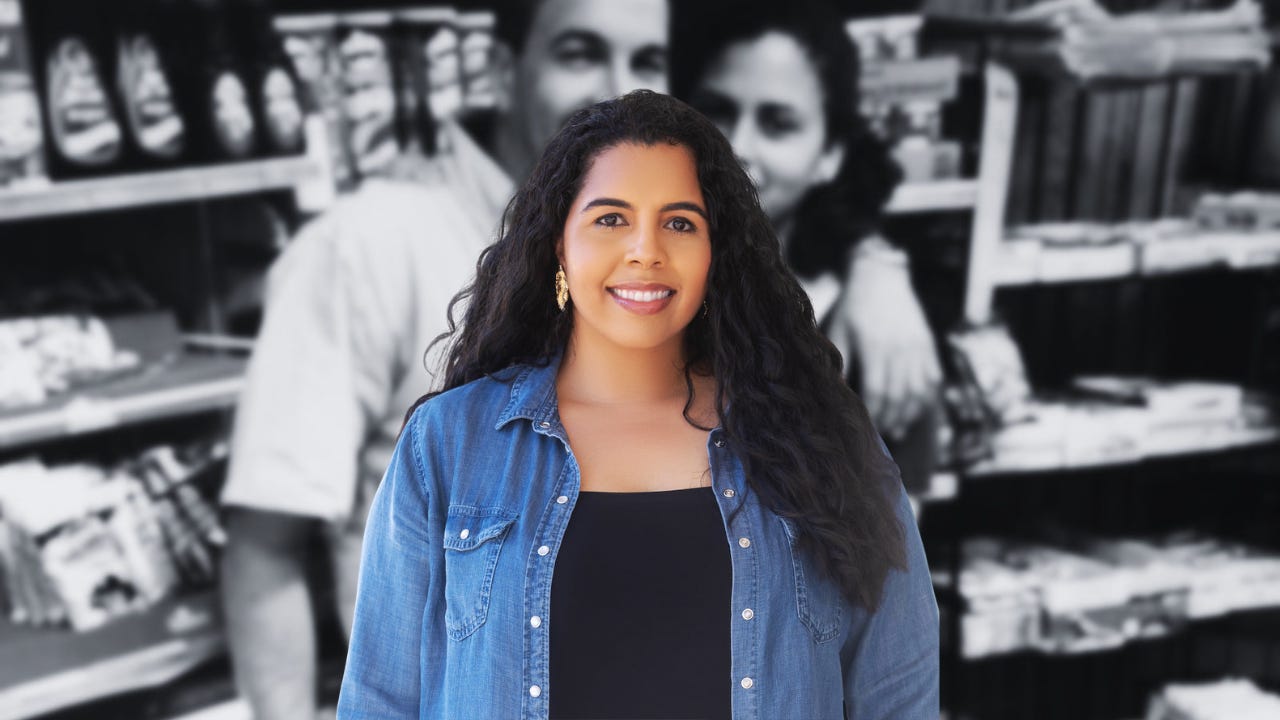
On a Sunday in St. Petersburg, Florida, Esther walks into Orlando Latin Market after church. She is a regular. She is there for the chicharrones, crispy and familiar. Deborah is there for linden tea because she has been having trouble sleeping. Yanick is looking for the ingredients to make a traditional Haitian soup. Three people, three stories, three specific reasons for being in the same room at the same time. And somewhere nearby, Amaris Castillo was watching.
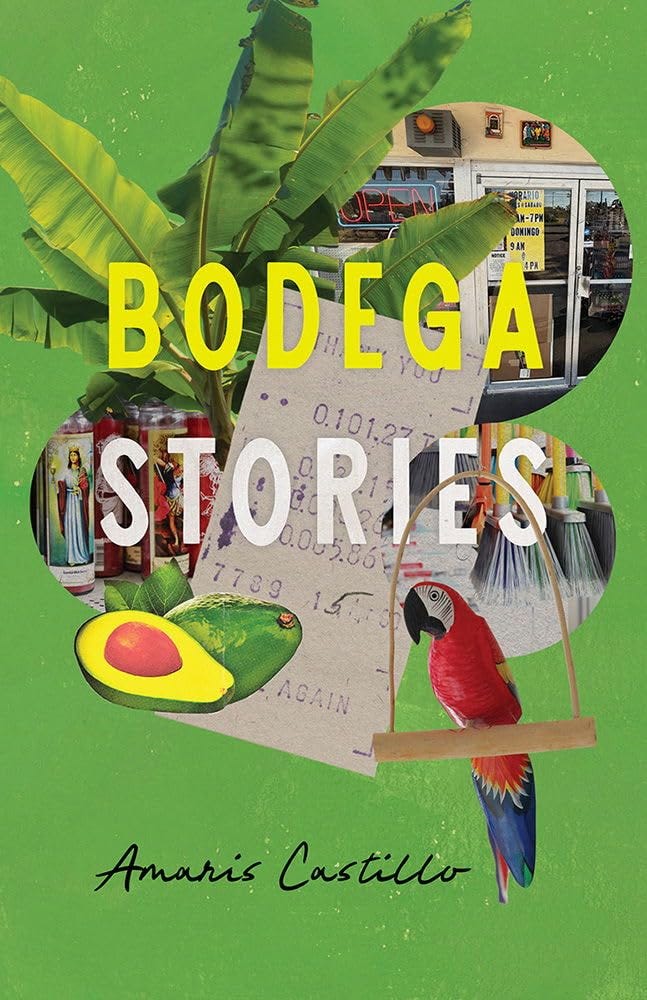
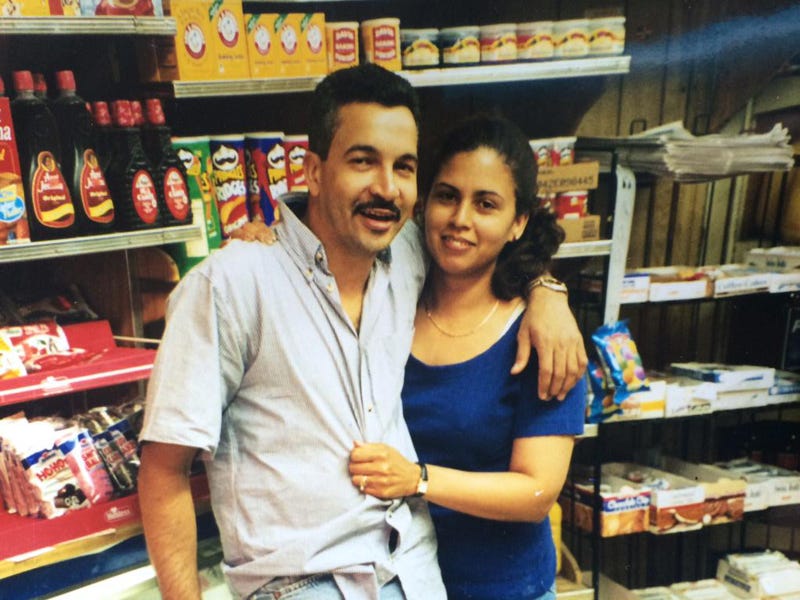
Castillo is a media journalist, the daughter of Dominican immigrants, and the author of Bodega Stories, a creative nonfiction collection of true stories from the people who orbit Orlando Latin Market, her parents’ store in St. Petersburg, Florida (University Press of Florida, September 8, 2026). She spent a year inside those walls collecting them, in a race against the clock before her parents retired. “There is so much life in this space,” she told FIERCE. “My hope is that anyone who reads my book will see that, if you pay close attention, it’s anything but boring.”
Inside Orlando Latin Market, Every Customer Carries a Country
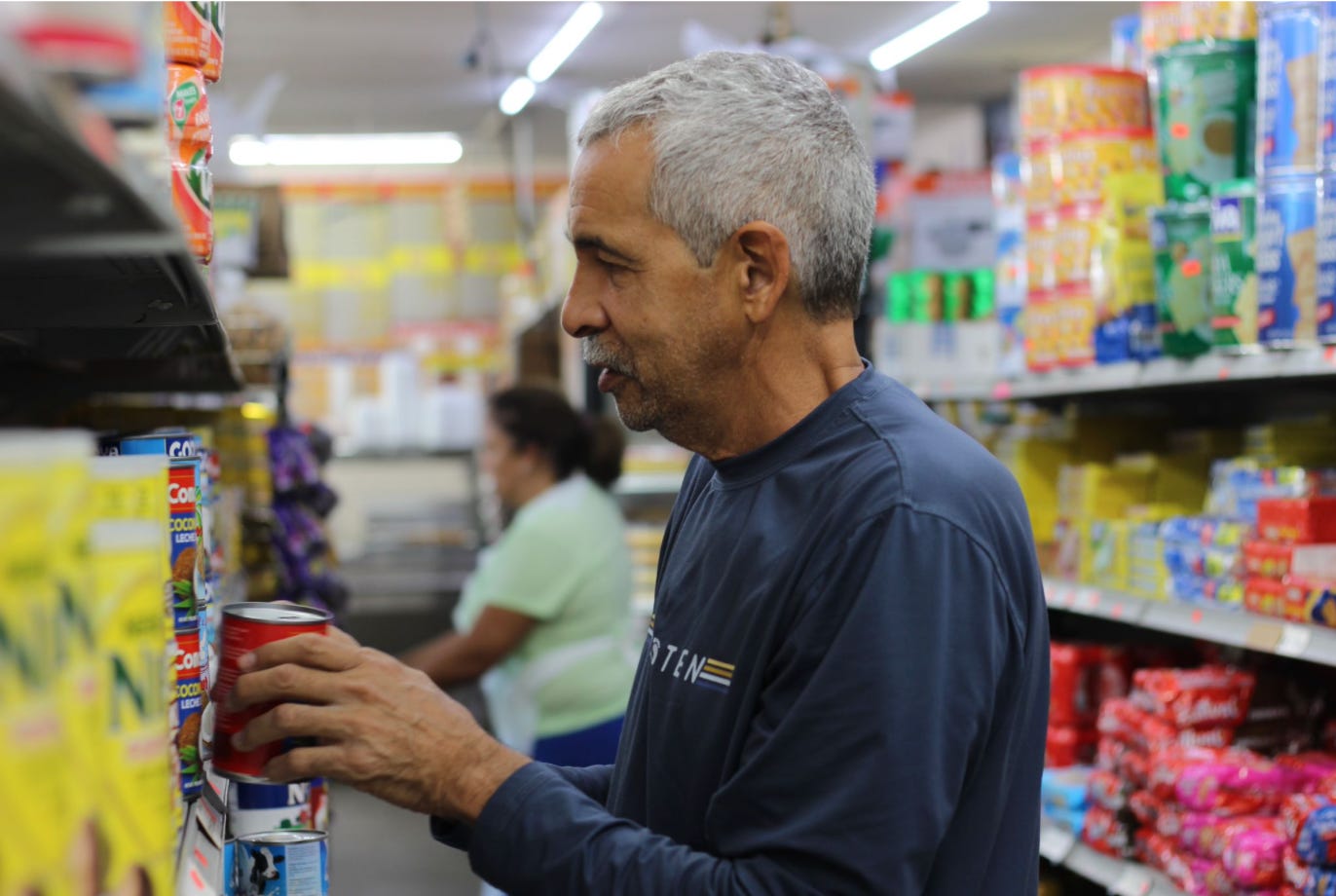
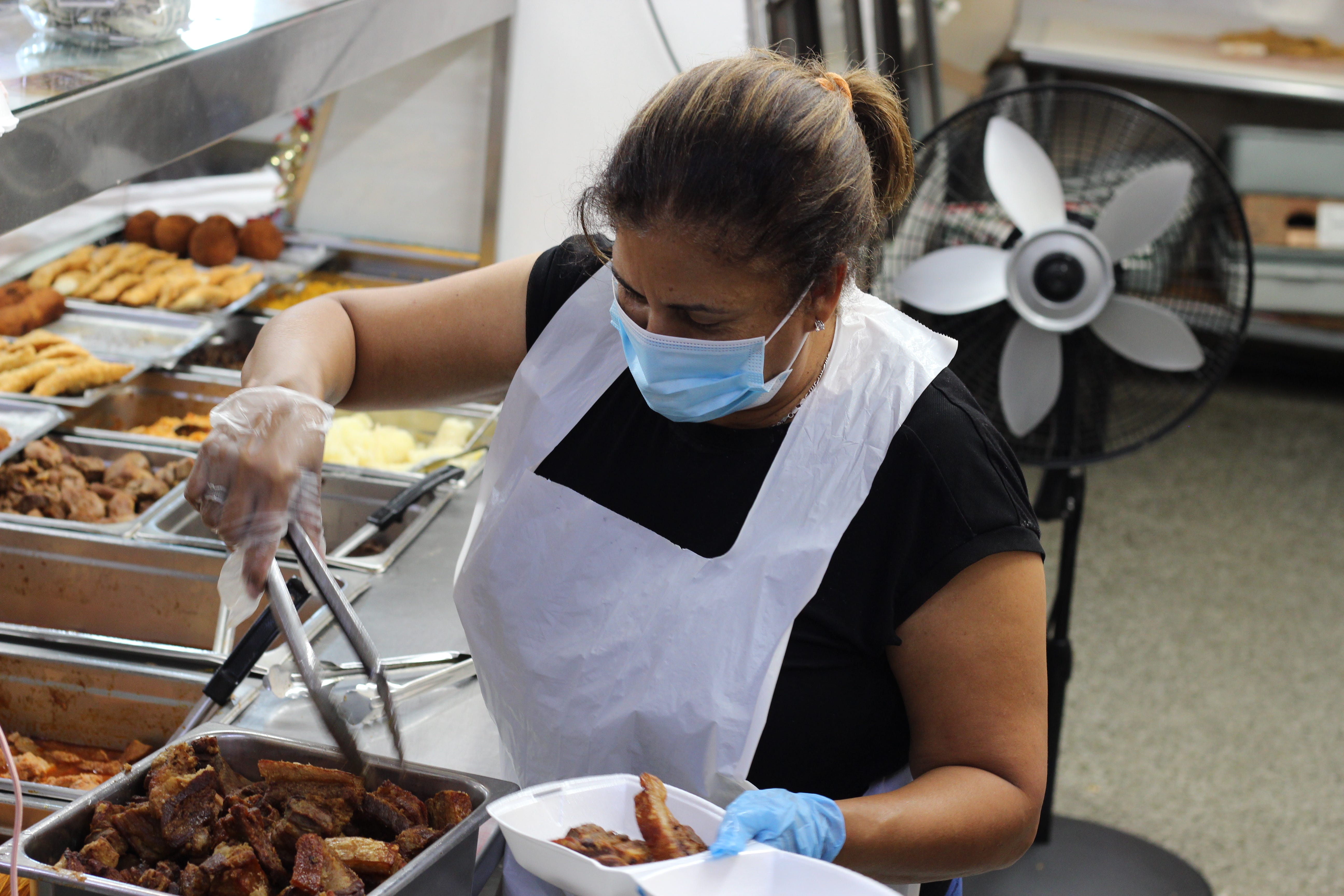
Orlando Latin Market carries products from Colombia, El Salvador, Honduras, Venezuela, Cuba, and many other countries. The cook, Alberto, arrives early to prepare rice, beans, empanadas, and croquetas. Chico, who owns the barbershop next door, is also a regular. Tía Margarita, one of Castillo’s mother’s older sisters, has worked part-time at the store for years. The bulletin board outside carries apartment listings from local residents. The Facebook page fields requests for hard-to-find items. Every surface is a record of someone’s particular need.
For Castillo, it was fieldwork aimed at understanding the beautiful tapestry behind that specificity. Deborah and her linden tea. Yanick and her Haitian soup. A customer from El Salvador looking for a specific product that kept them connected to home. “The things some people looked for gave me insight into what they liked and what they valued,” Castillo says.
Latinos know well that a bodega is not a grocery store. It is a place where time and space collide in the quest to preserve one’s roots. “By the end, I also realized just how unpredictable the bodega environment is,” she says. “You really never know what will happen, or what someone will say. Every moment is different, because the store is a place where different individuals meet or clash at a certain point of the day.” She told us she wishes she could spend a whole day there doing nothing but observing. “I bet I could write another book after hanging out there just for a few days.”
What She Didn’t Know About Her Own Family Until She Asked
Castillo’s parents came from the Dominican Republic and worked in bodegas in New York City before opening their own in Florida. Her father was the victim of several armed robberies during those years in New York. But she had not known the full weight of what he had carried until she sat across from him for this book.
“Only as I interviewed him did I realize what we were unearthing together were traumatic experiences,” she says. “It was hard to hear him speak all this out loud in more detail, but I really appreciate him doing so.” Today, as a parent herself, she understands why he protected her from it when she was younger. “Violence has long surrounded bodegas,” she tells us, “and it made me think about what would have happened if my father ever got seriously injured or worse.”
For her part, her mother offered a different revelation. She shared a glimpse of what it actually means to build a business alongside your spouse, and the particular weight that places on a marriage. “It made me see how she and my father have built a true partnership outside of being my parents,” Castillo says. “Which is something I admire.”
And then there was Tía Margarita. When we asked Castillo who surprised her most among the people she interviewed for the book, she named her tía. One of her mother’s older sisters, Tía Margarita has worked part-time at the store for years and appears several times throughout Bodega Stories, including one story in which Castillo trailed her on her last day as a part-time employee. “My Tía Margarita, perhaps unwittingly, modeled how to live as fully as one can,” Castillo says. “She squeezes the last drop of juice out of life.” She is unapologetically herself, a go-getter who does not settle for less in any aspect of her life. “In a way, my tía gave me permission to try to apply that to my own life,” Castillo says. “I don’t want to become a martyr mother or a martyr, period. I want to make the most out of this life I have.”
What a Journalist Does When the Story Is Too Personal
Castillo has spent the better part of two decades as a reporter, at the Bradenton Herald, at the Lowell Sun in Massachusetts, and now at the Poynter Institute for Media Studies, where she works as a research and writing assistant for the NPR Public Editor’s Office and as a staff writer covering journalism. By now, she knows perfectly well how to source a story, verify claims, and keep her distance. Bodega Stories required something different.
“Journalism is my profession,” she says, “so I had to adjust my mind a great deal.” Creative nonfiction gave her permission to use literary flair to tell factual stories. But it also demanded a different kind of trust. She did not consult second- or third-source materials for any particular story. When a subject shared something sensitive, she gave them room to speak, then went back afterward to verify that what she planned to include felt right to them. “My hope was that, when they read their story in the final version of the book, they felt it was an accurate portrayal of their story.”
As it often happens, some people said no. Castillo shares she received a healthy amount of rejections from customers who were too busy, too shy, or simply not interested. “Some people just aren’t interested in whatever it is you’re doing, even if what you’re doing is a very meaningful project to you personally,” she says. “And that’s perfectly OK. I respect that.” Being the owners’ daughter gave her an advantage with people who already knew her as “la hija de Damaris y Freddy,” and occasionally as “la heredera,” a joke that acknowledged her place in the store’s orbit even as she had chosen her own path. For customers who did not know her, she came as a stranger, and she treated their time accordingly. “It was an honor to listen to these stories,” she says, “and then try to shape them on the page.”
Bodega Stories as a Love Letter and a Gift
The book technically began as a website. In 2015, while working nights at the Bradenton Herald, Castillo would stop at her parents’ store before her shift, interview customers and employees, and then publish the stories herself alongside the portraits she took. She did it as a fulfilling lifeline of sorts. “In a way, I felt it was important work,” she says, “this act of documenting snippets of people’s stories to share with others.”
When Stephanye Hunter, an editor from the University Press of Florida, approached her after reading a piece she had written for Poynter about journalists who write books, it felt serendipitous. What finally made Castillo commit was her parents’ age. They are both in their 60s, and if they ever sold the store, she would lose the access she has as their daughter. “I ultimately decided the time was now to finally write this book,” she says. “I knew if I didn’t, I would probably regret it for the rest of my life.”
What some call the immigrant bargain runs through everything she says about her parents. “It’s like a moral contract, in a way,” she says, “and in my case it’s probably internalized. I don’t feel like I can ever repay my parents for all they’ve done for me.” Her parents paid off her graduate school loans. The book, she decided, was the most honest thing she could offer in return. “I dedicate Bodega Stories to my parents,” she says. “This book is, in part, an offering from a daughter saying, ‘I see all you have done, and I want to honor your story and what you have built.’”
Bodega Stories publishes September 8, 2026, through the University Press of Florida, with early praise from authors Angie Cruz and Claire Jiménez.