

The Last Bastion of Dissent: Sonia Sotomayor Says the Supreme Court Just Gave Trump the Power of a King
In a 49-page dissent, Justice Sonia Sotomayor accused her colleagues of handing Trump a power "unknown even to the English Crown," warning that "chaos will follow."
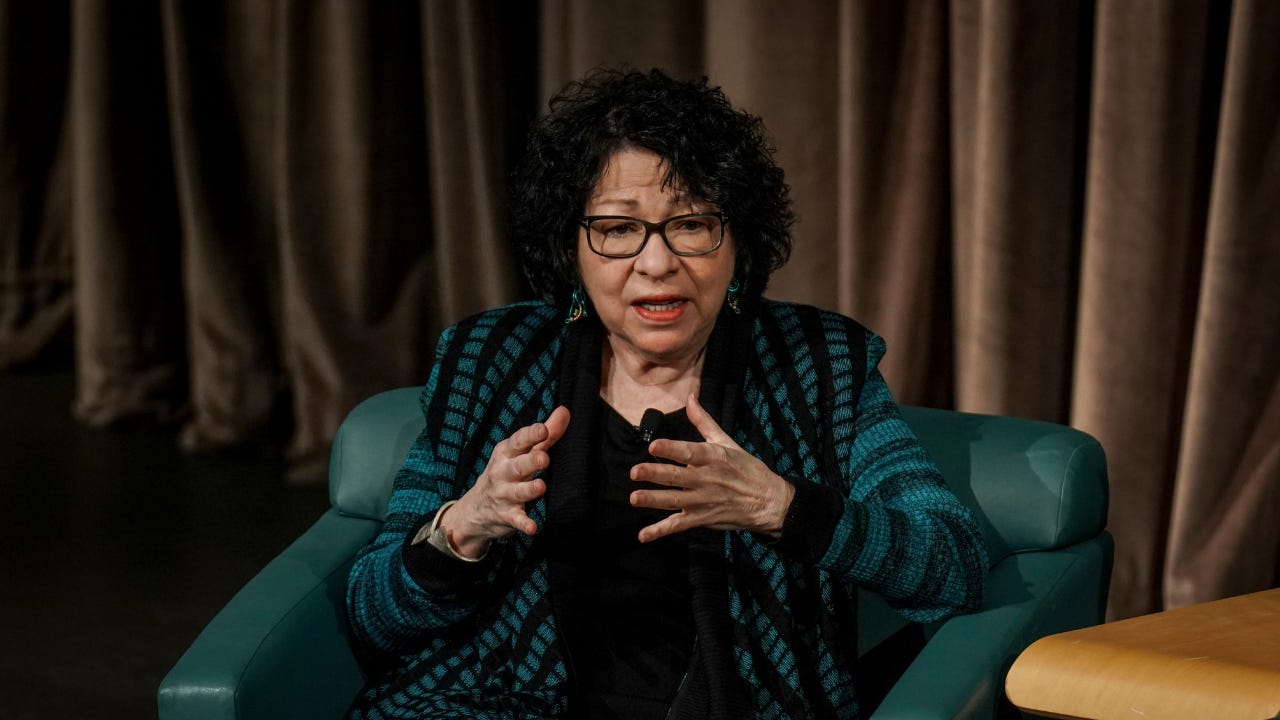
Justice Sonia Sotomayor kept her eyes on Chief Justice John Roberts as she read her dissent from the bench on Monday morning. He never met her gaze.
It was Sotomayor’s second dissent from the bench in four days, a step the Supreme Court reserves for its most serious disagreements. The case was Trump v. Slaughter, and she didn’t mince words in what she had to say. The ruling, she warned, handed President Trump more power than the English king the country’s founders revolted against.
What the Supreme Court Just Ruled in Trump v. Slaughter
The court ruled 6-3 on Monday that Trump can fire Rebecca Slaughter, a Democratic commissioner on the Federal Trade Commission, without cause, according to multiple reports. Chief Justice Roberts wrote the majority opinion. The decision overturned Humphrey’s Executor v. United States, a 1935 precedent that had allowed Congress to protect the heads of independent federal agencies, including the FTC, from being removed by the president without cause.
Sotomayor Says the Ruling Gives Trump Power the English Crown Never Had
In a 49-page dissent joined by Justices Elena Kagan and Ketanji Brown Jackson, Sotomayor wrote that the ruling gave Trump “a power unknown even to the English Crown against which the Founders revolted, elevating him above his once coequal branches.” She read that dissent from the bench for nearly 20 minutes. Sotomayor argued that the British Parliament had “often restricted the Crown’s ability to remove even high-level royal officers,” and that the Constitution’s framers had “never intended” to give the president “the complete set of powers” the English Crown held, let alone more.
Sotomayor wrote that the ruling transforms the president’s “duty to take care that the laws be faithfully executed into a license to act in defiance of those very laws.”
The 90 Year Precedent the Court Just Erased
For nearly a century, Congress operated under the understanding that it could shield certain federal agencies from direct presidential control, an understanding the Supreme Court itself had endorsed since Humphrey’s Executor in 1935. Sotomayor wrote that the majority pulled off “such a profound bait and switch on a coequal branch” that it amounted to telling Congress, after 90 years of relying on the court’s own precedent, that it had been operating in “open defiance of the Constitution all this time.”
“Its conclusion is wrong,” she wrote.
She also noted that the majority carved out an exception that protects the Federal Reserve from the ruling, but questioned whether that exception was rooted in principle or in convenience.
“Chaos Will Follow”
Sotomayor wrote that overturning Humphrey’s Executor will “unleash only chaos” for federal agencies, Congress, and lower courts because the majority “simply refuses to explain where its theory leads or where it ends.” She wrote that the ruling replaces “90 years of proven, workable practice with a half-baked theory of executive power that is simultaneously all-encompassing yet also subject to necessary but undefined exceptions.” Her closing line on the bench was just as direct. “The one thing that does appear to be clear going forward is that chaos will follow,” she said.
She warned that “dozens of independent commissions are now likely to become purely executive agencies, shifting tremendous power over broad swaths of American life into the President’s hands.”
Why Sonia Sotomayor’s Dissent Resonates Beyond the Courtroom
Sotomayor, the first Latina to serve on the Supreme Court, joined the bench in 2009 after President Obama nominated her. Her dissent on Monday came four days after she also read a dissent from the bench, that time after her Republican appointed colleagues allowed the Trump administration to turn away asylum seekers who had not set foot on U.S. soil.
Both dissents came from the same trio of Democratic appointed justices, Sotomayor, Kagan, and Jackson, the court’s current minority. With palpable anger, Sotomayor called Monday’s ruling “grievously wrong” and accused the majority of pushing an “absolutist” view of presidential power that leaves no room for what she called a necessary “counterbalance.”
A justice who has become the loudest voice of dissent on a court reshaped by a conservative supermajority is now screaming fire from the rooftops. Fealty to the Constitution, she wrote, means respecting “not just what it says, but what it does not say and by its silence leaves to others to decide.”