

Stephanie Vasquez Thought She’d Teach Forever, Then Coffee Changed Her Life
A trip to Costa Rica opened her eyes to coffee’s hidden costs, and she turned that awakening into Fair Trade Café and E.L.L.A., two mission driven spaces built on sustainability, community, and trust.
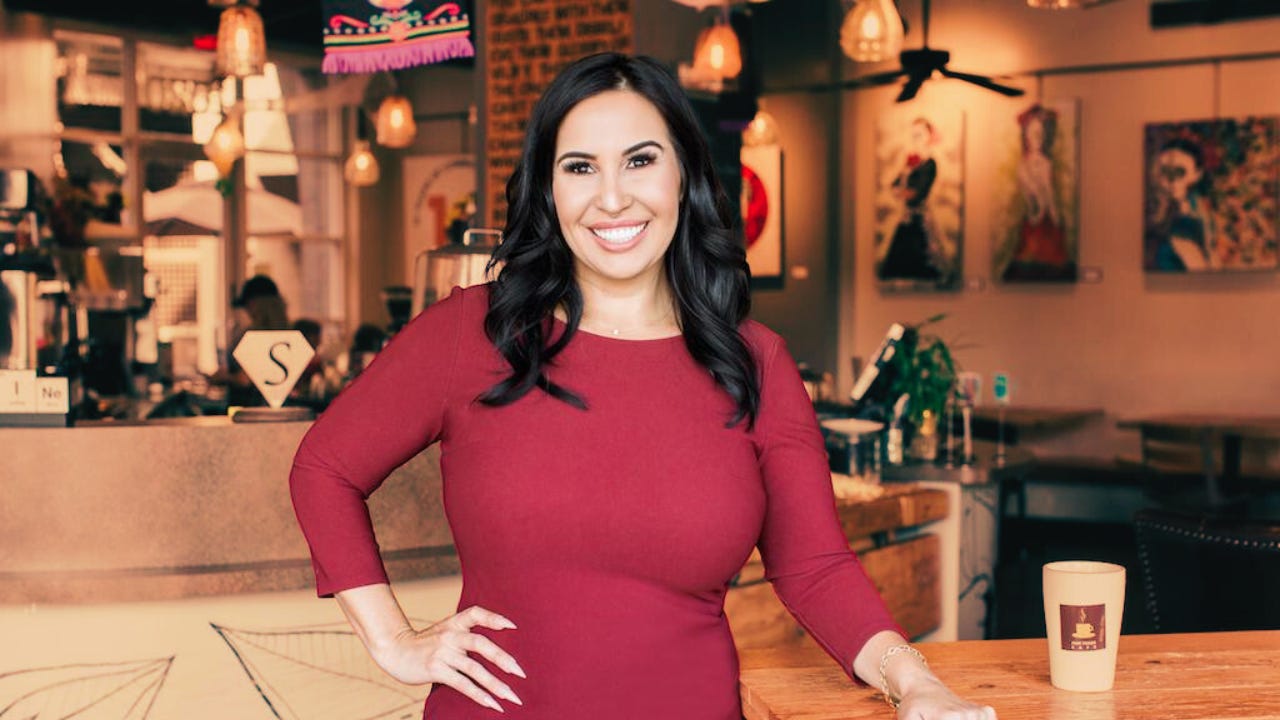
Before Stephanie Vasquez founded one of downtown Phoenix’s longest-standing coffee shops, she was a middle school science teacher who thought she had her life mapped out.
A third-generation Phoenix native, she grew up in a traditional Latino household and became the first person in her family to graduate from college. She was also a young mother, balancing responsibility early. But her dream was clear.
“All I wanted to do was be an educator,” she says. “That was my big dream in life.”
She began teaching in 2004 at Santa Maria, a migrant community, and dove in fully. At the time, she believed she would teach forever.
Which is why her journey into coffee still feels unexpected.
“You start out in life thinking you have goals,” she reflects. “And you pursue those goals, and then life just takes you in a completely different direction.”
That turn happened during a trip to Costa Rica in 2006. On her last day, she joined a tour of a coffee plantation.
“I didn’t even know coffee came from a plant,” she says, laughing. “Entrepreneurs feel this pressure that they need to know everything. And I’m a case in point that you don’t. You just need passion and desire.”
What she learned during that visit stayed with her. Coffee, she discovered, is the second-most-traded commodity in the world after oil, the second-most-consumed beverage after water, and one of the most exploitative industries affecting both people and the planet.
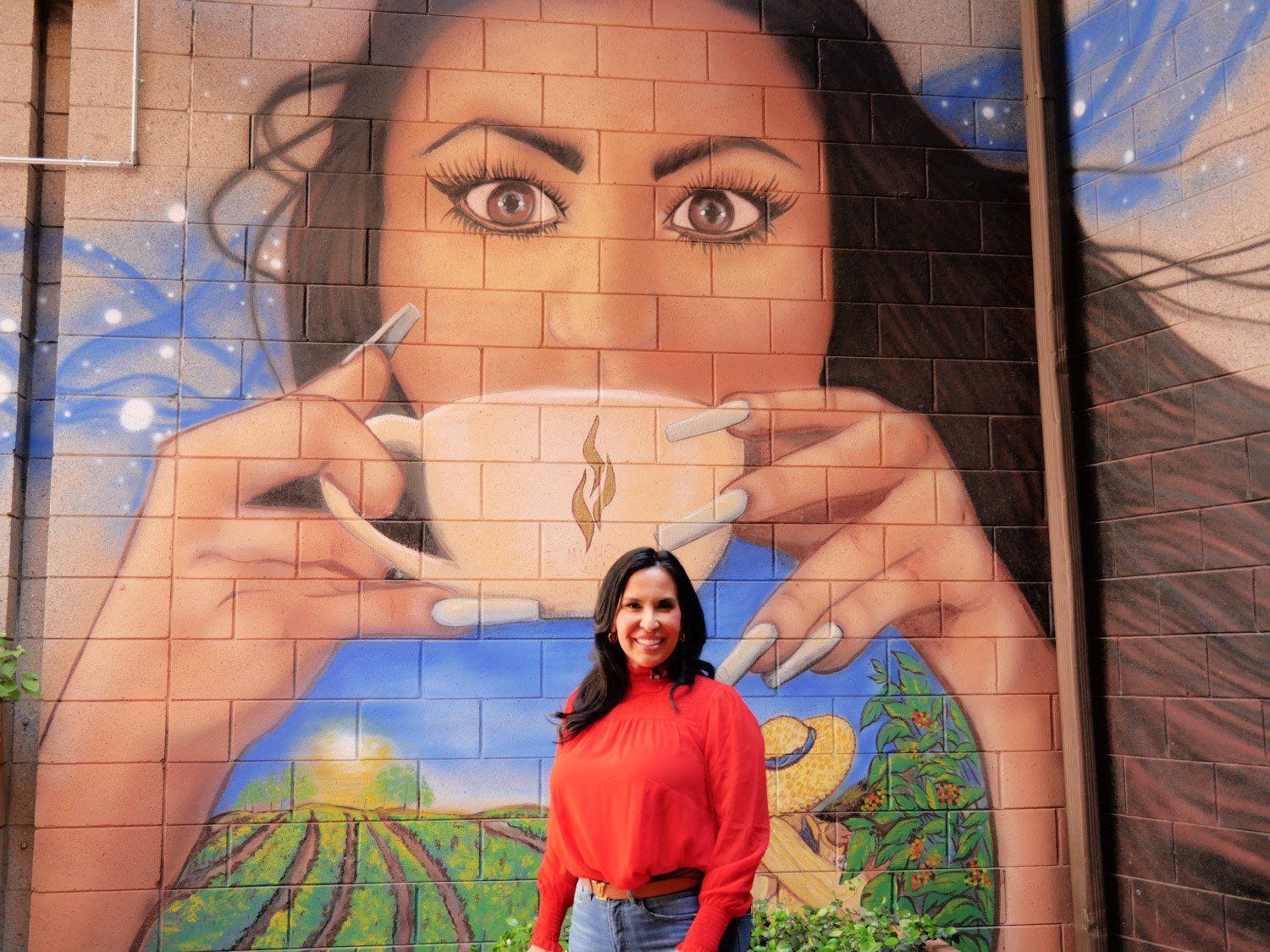
“Once I learned that this thing I was doing every day — drinking coffee— was impacting our people and our planet in a negative way, I thought, there has to be another way,” she says.
That question became the foundation of Fair Trade Café.
Today, the café diverts more than 700 pounds of waste from landfills every week. Composting is embedded into daily operations. Cups and straws are recyclable. Every coffee and tea served is fair-trade certified, shade-grown, and organic.
But for Stephanie, sustainability was never about optics. It was about alignment.
What keeps a mission alive when everything tries to break it.
Fair Trade Café didn’t just survive time — it survived timing.
Stephanie opened the café in 2007, right before the economic downturn. Then came downtown construction that placed the light rail directly on her street. Years later, a global pandemic. And in between all of that, the everyday, invisible challenges that come with running a small business.
What carried her through wasn’t optimism or luck. It was clarity.
“What’s kept me going is my commitment to my mission of creating a positive impact in this world,” she says.
For Stephanie, the café was never just a business; it was an extension of how she wanted to move through life. Her work as a founder, a community builder, and later as the leader of a nonprofit supporting Latina entrepreneurs all stem from the same personal goal: to leave the world better than she found it.

That lens shaped how she learned to see difficulty.
“During all these challenges, the way that I look at them is that this is simply an opportunity for me to learn and to grow,” she explains.
It didn’t come naturally at first. Stephanie describes growth as something that mirrors education itself, where each level is unfamiliar, uncomfortable, and demanding more than the last. But once she accepted that challenges weren’t signs to stop, but signals of progression, something shifted.
“I’m a mission-driven person,” she says. “I’m living in my life’s purpose, and these challenges are getting me to the next level.”
Doing the right thing before it was popular
When Stephanie opened Fair Trade Café in 2007, sustainability wasn’t a buzzword.
Ethical sourcing, compostable materials, and organic ingredients weren’t trends yet. At the time, even finding recyclable cups felt like a challenge. Compostable options were nearly nonexistent locally, forcing her to source from outside the community, which conflicted deeply with her commitment to staying hyper-local. For someone trying to build a values-driven business from the ground up, it meant constant compromise, creativity, and resistance.
“I’m a social entrepreneur by true definition,” she says. “That’s who I am, and that’s how I operate my business.”
In those early days, Stephanie often found herself defending her choices. At business roundtables, other owners questioned why she was willing to pay more for organic ingredients or eco-friendly materials.
One mission, many lanes.
On paper, Fair Trade Café and E.L.L.A. (Empowering Latina Leaders in Arizona) are separate entities. Different structures. Different goals. Different audiences. But when Stephanie talks about them, the separation feels almost technical, not personal.
“Everywhere I go, there I am,” she says.
The same personal mission powers both the café and the nonprofit: creating positive impact.
Stephanie’s work with E.L.L.A. began in 2015, sparked by a statistic that stopped her cold: the gender pay gap. At the time, conversations around pay equity weren’t mainstream, especially not conversations centered on women of color. What she discovered was deeply unsettling: Latina and Indigenous women were among the lowest-paid groups in the country for the same work.
As a woman, a mother, and a business owner, the reality felt unacceptable.
What started as a single community event, a pop-up market highlighting Latina-owned businesses on Latina Equal Pay Day, was never meant to become an organization. It was supposed to be one-and-done. But the community's response said otherwise. People showed up. They asked for more. They needed more.
Nearly a decade later, that “simple act” has grown into a full-fledged nonprofit with three flagship programs serving Latina entrepreneurs across Arizona.
While Fair Trade Café focuses on ethical consumption and community space, E.L.L.A. centers economic empowerment and visibility. Together, they reflect the same belief: systems don’t change unless people build alternatives.
“This is how I’ve curated my life,” she says. “There’s a lot of responsibility in it, but it feels really good to look in the mirror at the end of the day and say, I did good work today.”
Loosening the grip
When the conversation turns to the future, including what’s next for her and for Fair Trade Café, Stephanie pauses. She’s been asked this question many times before.
Earlier in her journey, she was intensely goal-driven. Every milestone had to be reached. Every box had to be checked. And she did it by working relentlessly and pushing through no matter the cost.
But over time, she noticed something unsettling: the work was getting done, but there was a growing disconnect between her mind and her heart.
That realization changed everything.
Today, she still has goals for her businesses, her nonprofit, her family, and her health. But she approaches them differently. Instead of forcing outcomes, she allows things to unfold in their natural order.
“The looser the grip, the tighter the hold,” she says, a reminder she gives herself often.
As a natural doer, letting go doesn’t come easily. But she knows now that control isn’t where her power lives. Alignment is.
And from that place, the future doesn’t need to be forced; it reveals itself.
One step at a time
Stephanie’s advice to young Latinas or anyone looking to carve their own path is to start. “My power is to allow things to flow in the order that they are supposed to flow,” she says. “Yes, I have revenue goals for my business. Yes, I’ve got goals for my nonprofit. However, I don’t know what’s next. And if we are all honest with each other, none of us knows what’s next. None of us does. However, I am fully equipped and capable for whatever is to come next for me.”
That philosophy of trusting yourself and your journey shapes how she lives, leads, and guides others. For anyone overwhelmed by the fear of starting, she has a clear take: take one step at a time.
“A lot of times, what happens is we get caught up in our heads,” she explains. “We tell ourselves, ‘I can’t do this because of that,’ or we get paralyzed by fear, excuses, and overthinking. So we do nothing.”
Her advice? Move. Even if it’s small. Even if it’s imperfect. Looking back years later, you’ll see the results, growth, progress, and perhaps a thriving business, community, or life you never imagined.
For Stephanie, that’s the essence of being a Jefa: starting, stepping forward, and trusting that each step counts.