

She Stood Alone First, Then Brought Everyone Else Along: Meet Eunisses Hernandez
At 35, Eunisses Hernandez is the youngest LA council member, and she's proving that the next generation of power doesn't come from money, it comes from being rooted.
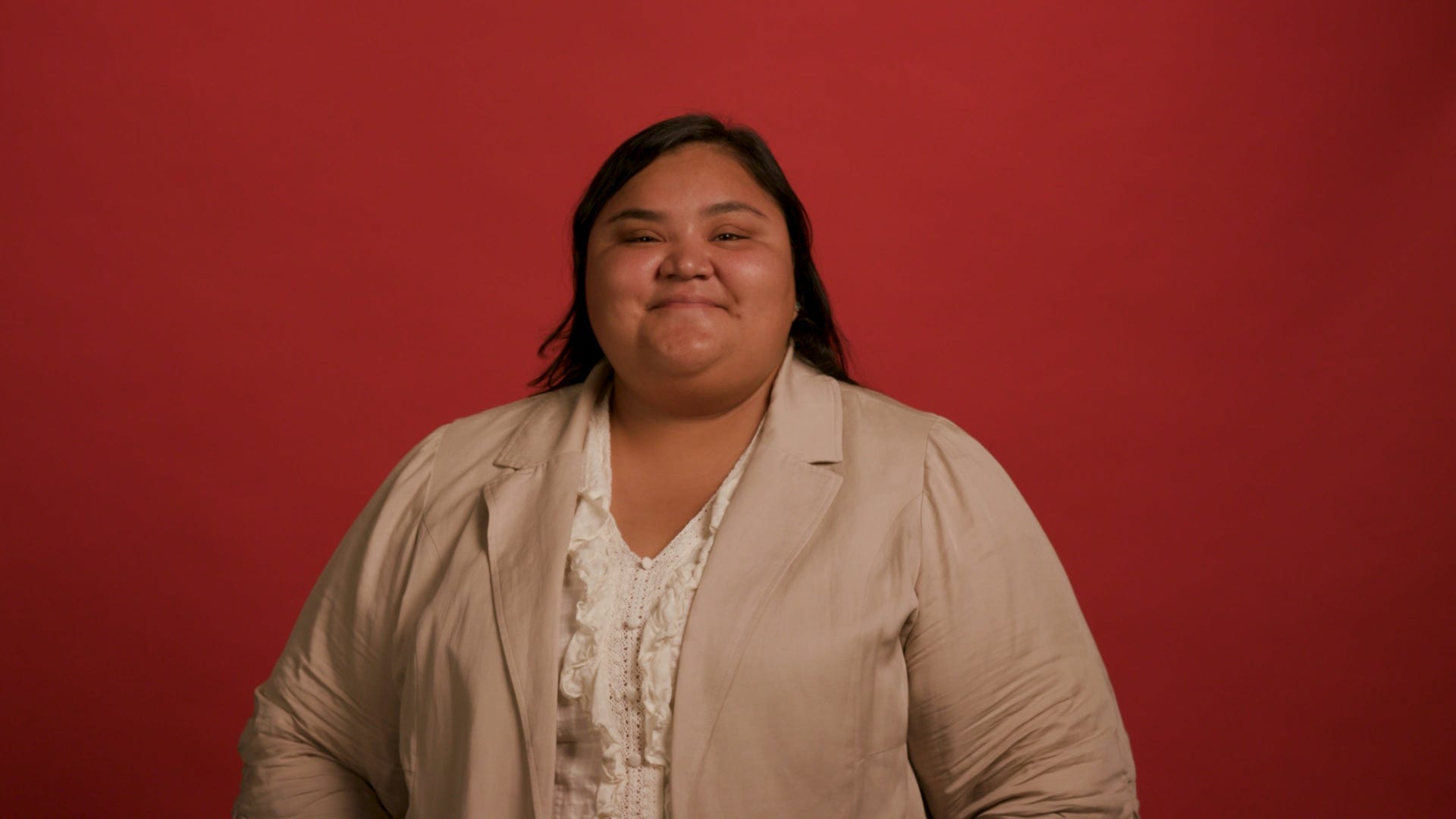
When Eunisses Hernandez sits down to remove her makeup after a long day, the first question she asks herself is whether that day was as productive as possible. Whether she fought for her community or was a voice for people who don’t have one.
It’s a question that reveals everything you need to know about this 36-year-old councilmember who is running for re-election on June 2. You know from the first second she’s not chasing power and is well aware there is still so much work to do. Like many Latinas who put unrealistic pressure on themselves, Eunisses knows she can do it better now than she did four years ago when she first took office as the youngest member of the Los Angeles City Council.
In her first year, Eunisses Hernandez stood alone.
When she voted no on the city budget—the only councilmember to do so—she opposed it because the city was dedicating over 45% of general funds to the LAPD while cutting social services that her community desperately needed. She was voting no because that budget didn’t reflect the priorities of the people who elected her, and she was the only one to do so. She voted no on a decision that the mayor and her colleagues were pressuring her to reverse.
“I stood by myself,” she told FIERCE during our latest episode of Baring It All. “But the following year, when we voted on the budget, I was one of three no votes.”
And this might sound like a cliché, but it’s true, nevertheless: that’s what real leadership looks like. Not the one that relies on billionaire PACs or corporate endorsements. The kind that might cost you politically in the short term but builds the foundation for actual change. It’s the kind of leadership that requires you to stand alone until other people realize you were right all along.
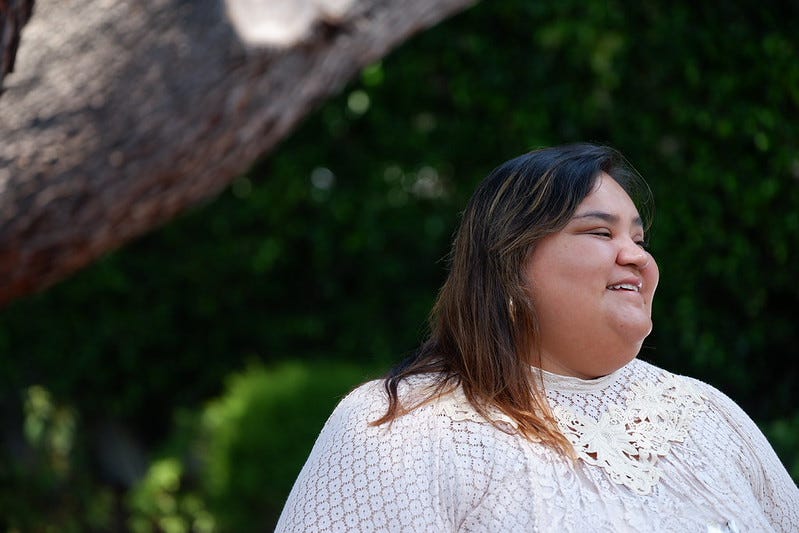
Eunisses didn’t come to politics through traditional routes.
At first, Eunisses didn’t enter politics through traditional routes. She heard her mother’s voice in her head, telling her that if she could, she had to fight for her community, especially for people who don’t have a voice. She grew up in Highland Park, Los Angeles, as the daughter of Mexican immigrants. And she understood early what it means to live in a neighborhood where your family has less power, less access, and faces more barriers.
That understanding crystallized into her life’s work when she discovered the real challenges undocumented immigrants face in this city—many of them neighbors, community members, people who share her family’s experience of being marked as outsiders in their own country.
She started as a policy coordinator at the Drug Policy Alliance. She became a community organizer. She co-founded La Defensa, a women-led organization fighting to reduce incarceration in Los Angeles County. She worked on Measure J, which reallocated resources into community reinvestment and alternatives to incarceration—a measure that passed with 57% of the vote and, after legal battles, fundamentally changed how Los Angeles approaches justice.
And then, in 2022, she ran for City Council against an incumbent everyone thought would win. She beat him with 53.9% of the vote. It was a political upset. She was a threat to the status quo.
The first year in office nearly broke her.
“There were moments where I questioned whether we could move government to do the right thing,” she said. “Whether it could transform itself, stop doing the same thing over and over again, and expect different results.”
What she discovered, though, kept her going. Eunisses saw how organized people can make government do the right thing. Beyond the romanticized idea, one that, by the way, the establishment has indoctrinated us to discard, she brought that knowledge into City Hall.
She started bringing busloads of community members into City Council chambers. She co-authored the Sanctuary City ordinance that passed with unanimous support, protecting immigrants and making sure LA will not cooperate with federal immigration enforcement. She opened Northeast New Beginnings, an interim housing model that has already helped people experiencing homelessness transition into permanent housing. And led the effort to pass the strongest tenant protections in over 40 years.
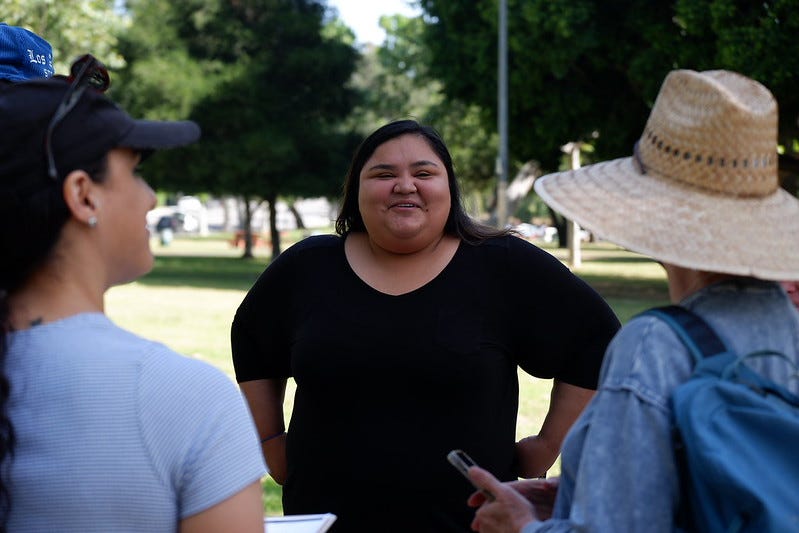
But the work that she is most proud of—the work that defines what she believes real leadership looks like—is the unarmed crisis response program.
When people call 911 for help with mental health crises, behavioral health issues, or suicidal ideation, they don’t always need police. They need clinicians and peer navigators. They need people trained in trauma-informed care.
The program costs $35 per call to respond. Police cost $85.
In two years, the unarmed crisis response team has answered 20,000 calls. Less than 4% needed LAPD backup.
“These are not radical ideas,” she told FIERCE. “But doing the work to keep people alive, save us money in our ERs, and make sure we’re not spending millions on liabilities when people get killed by police.”
Just a few months ago, her colleagues voted unanimously to make this program permanent in the city of LA. Now, you can call 911 and get one of these teams, no matter where you are in the city.
She also transformed MacArthur Park—a neighborhood that people had given up on.
In one year, Eunisses reduced fatal overdoses in that area by 32%. She secured over $25 million in public and private funding to improve safety, cleanliness, and access to services. The densest neighborhood west of the Mississippi is now a place where people can survive and have a shot at dignity.
But none of this came without a cost.
“There’s a lot of personal sacrifices,” she said. “Mental health, behavioral health, physical health, time with my family, time with friends, seeing my nephews and nieces grow up, sometimes family events.”
What’s worse, she got doxxed. She had to change her phone number and implement security measures because she took a stand on protecting immigrants in a moment when the federal government was conducting raids in her district.
However, Eunisses persists in her mission.
What keeps her grounded through all of this is not the recognition or the title. It’s her family. It’s her dogs—“I go home, the first thing I do is pick up my dogs, and I just hug them, sometimes two at a time.” It’s going to senior centers, dancing with elders who are some of the city’s most vulnerable, reminding herself why she throws down every single day.
“These are people who know on SSI that if we don’t support them, they’re not gonna afford to live in this city that they’ve worked their entire lives to support and maintain,” she said.
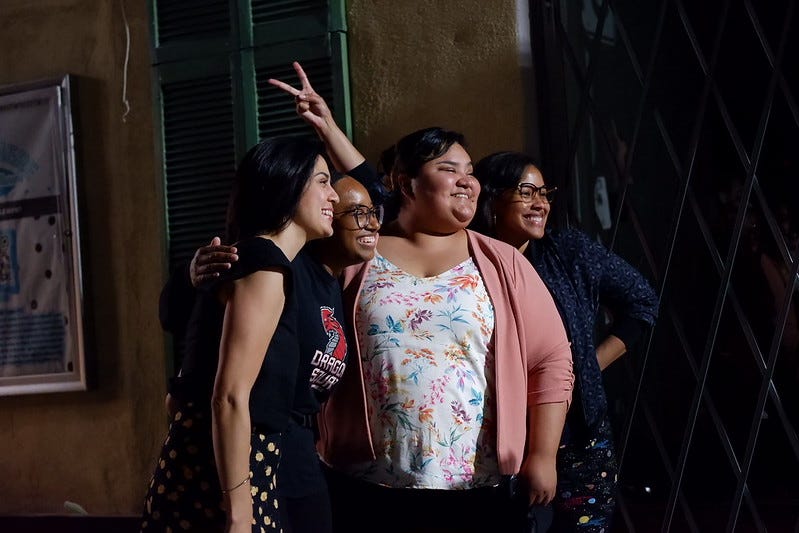
The fact that Eunisses Hernandez is running for re-election in 2026 is not a small thing.
She is running in a moment when authoritarianism feels like it’s closing in. She is running while special interests and billionaires try to buy city council seats. She is running when every decision she makes is scrutinized, when she faces pressure from all sides, when the work feels like pushing a two-ton rock up a slippery slope.
But here’s what she knows that most politicians don’t: the power is with the people. Not the billionaires. Not the special interests. The people.
“Organized people can make the government do the right thing,” she said. “I’ve seen it happen. I’ve been a part of building that in City Hall, and I wouldn’t keep doing this if I didn’t think the system could change.”
When young people watch her, when they see her standing in chambers as the youngest, plus-size, Latina councilmember—breaking the system from the inside because “these seats were not built for us”—she wants them to know something: “You have what you need to change your community, this country, and this world already within you. The way you do it is by building with people.”
She invites them to become storytellers, artists, musicians, and organizers. She needs them to understand that everything in their life is political—their sidewalks, their streetlights, their rent, their ability to breathe clean air. And she needs them to know that they don’t have to accept the status quo.
“Politics is everything in your life,” she said. “You might say, ‘Well, I’m not into politics.’ But that’s a privilege. Every day of your life is dictated by politics, and it can either be run by people that are looking out for the best interests of you, or by people looking out for the bottom line of special interests, corporations, hotels, and billionaires.”