

She Became a First-Time Mom at 41. Then Mercedes Sánchez Built the Space She Couldn’t Find
Mercedes Sánchez turned years of misdiagnosis, miscarriage, and cultural judgment into a platform for Latinas navigating motherhood on their own timeline.
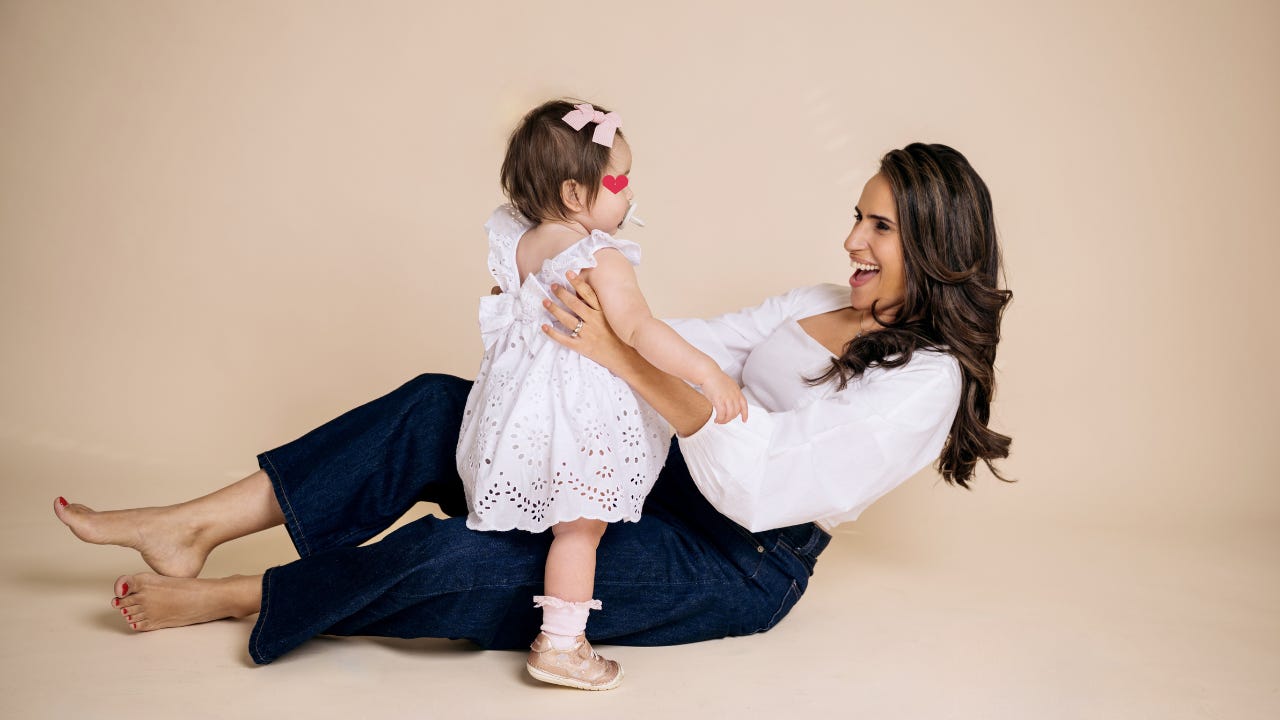
Mercedes Sánchez did not set out to become a spokesperson for late motherhood in the Latino community. She became one despite the silence and taboo around it.
For years, late motherhood has been framed in mainstream culture as either a glamorous lifestyle choice or a cautionary tale. Inside many Latino families, however, it still lives somewhere far less comfortable. It gets whispered about, judged. It gets turned into a side-eye at a baby shower, a raised eyebrow in conversation, and the eternal warning from las tías.
Mercedes knows that first-hand.
After years of pain, endometriosis, IVF, miscarriage, and being repeatedly dismissed by doctors, she became a first-time mother at 41. And instead of keeping that experience tucked away as a private triumph, she decided to build what she had not been able to find herself: a space where Latinas could talk openly about “delayed” motherhood, fertility struggles, grief, and the complicated reality of arriving at motherhood later than the culture expected.
That space is “Soy Nueva Mamá.”
The damage of silence.
Mercedes says the taboo around late motherhood brews like a rotten concoction. It is even more painful in our community.
“It hit me when a señora or two responded ¿a esa edad? after I proudly told them I’d had my first baby at 41,” she says. “For anyone unfamiliar, ¿a esa edad? translates literally to ‘ at that age?’ In our culture, it carries a whole world of meaning. It’s the raised eyebrow, the slight pause, the tone that says: “ Shouldn’t you have done this sooner?”
That is such a specific kind of Latino shorthand. It feels like an affection trap, often from elders, and can sound almost harmless. Yet what it carries is unmistakable.
“It’s not always mean-spirited. Sometimes it comes from people who love you. But it lands like a judgment every single time.”
Most people, she says, were genuinely happy for her. But the few comments that were not still mattered. They told her something was missing from the conversation.
“Those two reactions were enough to make me think: Oh snap. We need to talk about this.”
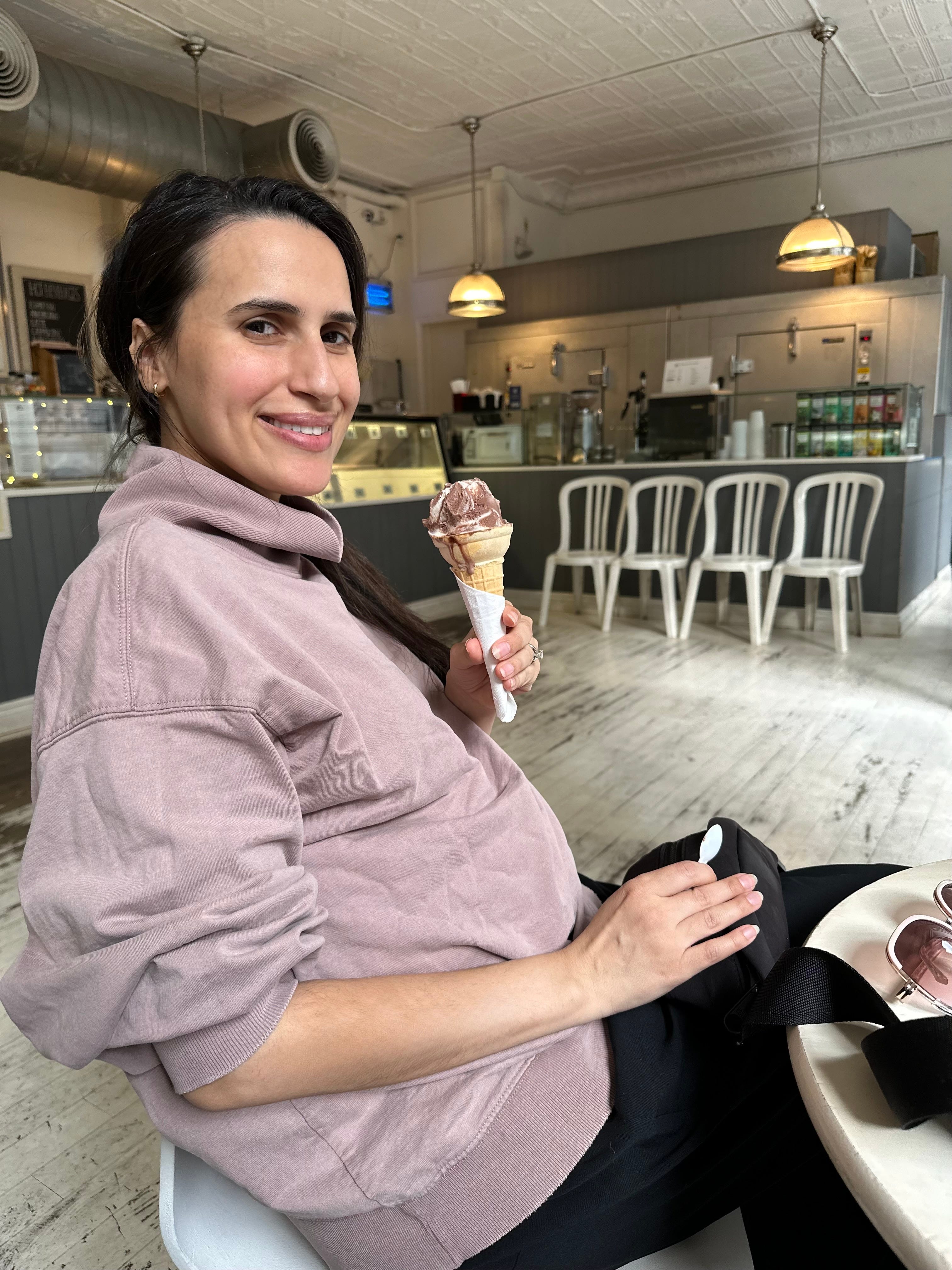
The deeper wound, though, came earlier.
Mercedes remembers being at her sister’s baby shower, dancing, celebrating, living fully inside someone else’s joy, when an aunt suddenly pulled her aside and asked, “Mercedes, ¿pero cuándo va a ser tu turno?”
The question became a trigger.
“I wasn’t even thinking about me that day,” she says. “But in that one second her question sent me flashing back through everything, the IVF from 2016, the miscarriage that came years later, like a ten-year highlight reel in three seconds flat.”
Her response was immediate. “Tía, when it happens, you’ll be the first to know. Pero jamás me preguntes eso.”
But, for a Latina, behind boundaries, there is always guilt.
Not because she had been wrong, but because so many Latinas are raised inside a cultural structure where defending your own pain against an elder can still feel like a violation. She describes walking a full circle around the venue, then coming back, sitting next to her aunt, and asking about wedding plans as if nothing had happened.
“That’s how deep it runs in our culture,” she says. “You don’t talk back to your elders, even when they’ve just cracked your heart open in the middle of a dance floor.”
What’s more, Mercedes is clear about what sits underneath moments like those.
“What they’re really policing is the idea that a woman’s worth is tied to when and how she becomes a mother.”
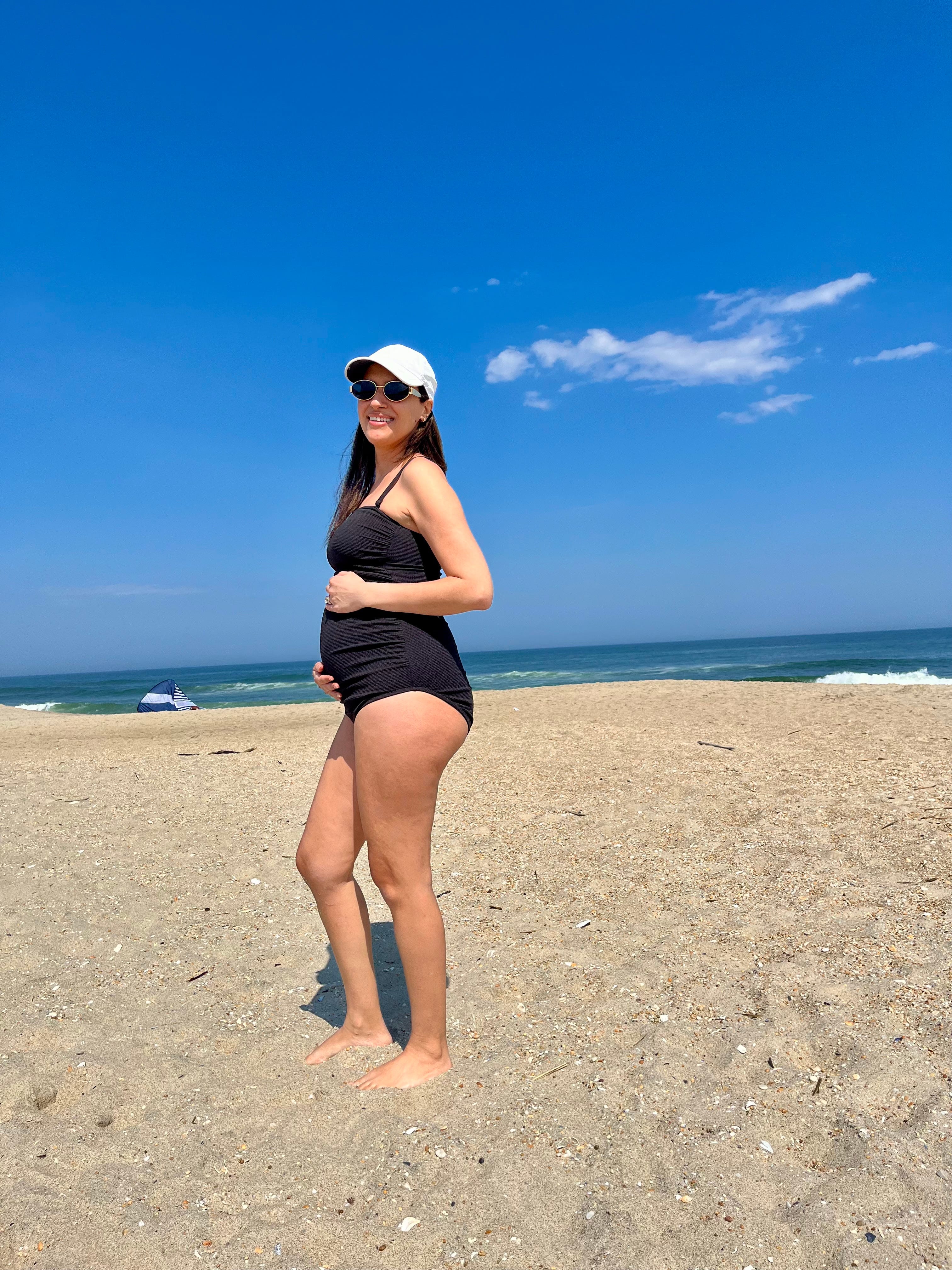
For fifteen years, medicine kept treating the pain and missing Mercedes, the woman.
For Mercedes, long before motherhood, the journey began in her own body. Or rather, the body in pain, and the long years of being told that pain was “normal.”
Mercedes was 16 the first time the cramps hit hard enough to upend everything.
“I was on the subway coming home early from school when the cramps hit me so hard I could barely move. Vomiting, nausea, the kind of pain that makes you question everything.”
For years, she missed class. Later, she missed work. And like many girls and women are taught to do, she interpreted that suffering through the cultural frame she had been given.
“Through most of my teens and twenties, I thought this was just what periods were. Nobody told me otherwise.”
Doctors prescribed naproxen, Aleve, and anything else to quiet the pain after twenty or thirty minutes. But the relief came with a cost: it ended the inquiry.
“That was the whole conversation. No curiosity. No follow-up questions. Just: take this.”
It was not until she and her husband began trying to conceive when she was 33 that she started pushing harder for answers. A laparoscopy in 2016 finally confirmed endometriosis. The specialist’s answer was birth control, which made no sense given that she had been referred there because she wanted to get pregnant.
“I asked, but what causes this? Can we get to the root of it? The doctors had no answers.”
“I learned to push through pain in a way that built a certain resilience,” she says. “But I also spent nearly two decades being told that what I was feeling was normal, manageable, controllable with a pill. Nobody was curious about why. I had to become my own advocate.”
If she could speak to her younger self now, the girl on the subway, the one who still thought agony might be part of the deal, she knows exactly what she would say.
“Your pain is not normal. Ask the hard questions early. Find someone willing to look for the root, not just treat the surface. And trust yourself, because if something feels wrong, it probably is.”
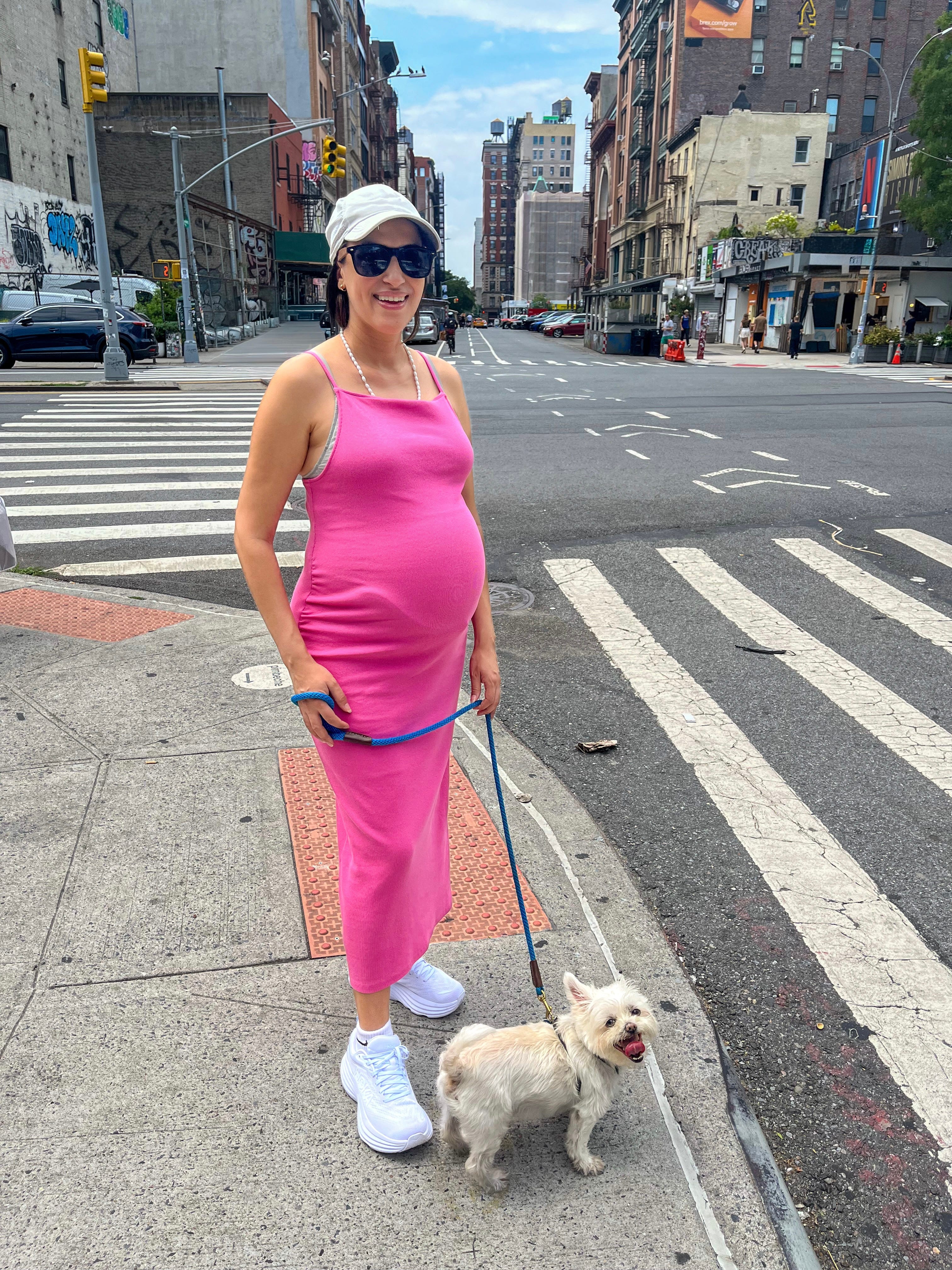
Miscarriage, and a long relationship with grief.
In social discourse, miscarriage carries a violent baggage. People either do not speak about it at all, or they rush to turn it into resilience and speed past grief.
For her part, Mercedes wanted neither performance nor premature redemption. She and her husband chose privacy.
“The miscarriage had begun about a week before we hosted a small New Year’s Eve party at our place,” she says. Immediate family was there, and an aunt and her family were visiting from out of town.
“Before I got dressed, I put on a pad, just in case. I wore a cute, short, shiny purple romper. Nobody knew what we were carrying. We were smiling and hosting and being present, and underneath all of it, there was this thing we hadn’t told anyone about yet.”
Eventually, she told a small number of people, much later. But at the time, and for a long while after, the grief remained between the couple.
“After the miscarriage, I was devastated. I stopped thinking about having kids entirely. I told myself that was it for me, closed that chapter in my mind, and refused to go back there for a long time.”
“Miscarriage is one of those things our community doesn’t talk about. There’s no script for it. No one brings it up at the dinner table. You grieve privately while showing up fully everywhere else. And somehow that becomes normal.”
Years later, however, something shifted. Mercedes let herself reopen the question of motherhood. And she is grateful she did.
“The loss is real. Give yourself the space to feel it, however that looks for you. And when you’re ready, you’ll know.”
Holistic medicine as contention.
Where most people would be cautious, Mercedes is practical. She talks about holistic medicine as the first place someone actually asked a question.
A fellow blogger mentioned acupuncture after becoming pregnant with twins following IVF. Mercedes researched it, found an acupuncturist named Deb who specializes in reproductive health, and booked a consultation.
“That first consultation changed everything,” she says. “It was about an hour long. She wasn’t a therapist, but she asked about my sleep, stress, relationships, and work. She wanted to understand my whole life, not just my symptoms. I remember thinking: finally. Someone is actually listening.”
With Deb, she says, the conversation turned. They talked about stagnant blood and inflammation. About the role of diet, Chinese herbs that could support specific issues, from cysts to fibroids. She began adding more leafy greens and moving toward a Mediterranean diet.
“Look. I love my pizza, tacos, and fried food,” she says. “Deb never told me to give those up entirely. But she helped me understand that some of my favorites cause inflammation and that adding the good stuff matters as much as cutting things out.”
Prayer became part of it, too. So did silence, boundaries around noise, and anxiety during pregnancy. And the sudden awareness of the healthcare system.
“We need healthcare providers and insurance companies to cover acupuncture and holistic medicine the same way they’re now starting to cover IVF and egg freezing.”
Her husband’s insurance covered acupuncture for a while. Then they changed plans, and she began paying out of pocket. That, she says, needs to change.
“Conventional medicine is necessary. We need it for labs, imaging, and testing. But its information is often limited. Chinese medicine tries to find the root of the problem, not just manage the symptom. Both should be accessible.”
Her Latino family, she says, did not fully understand the holistic route at first. But they supported it anyway. And eventually the results spoke for themselves.
“Now, most of my immediate family and even some cousins have gone to see Deb for various things. That says everything.”
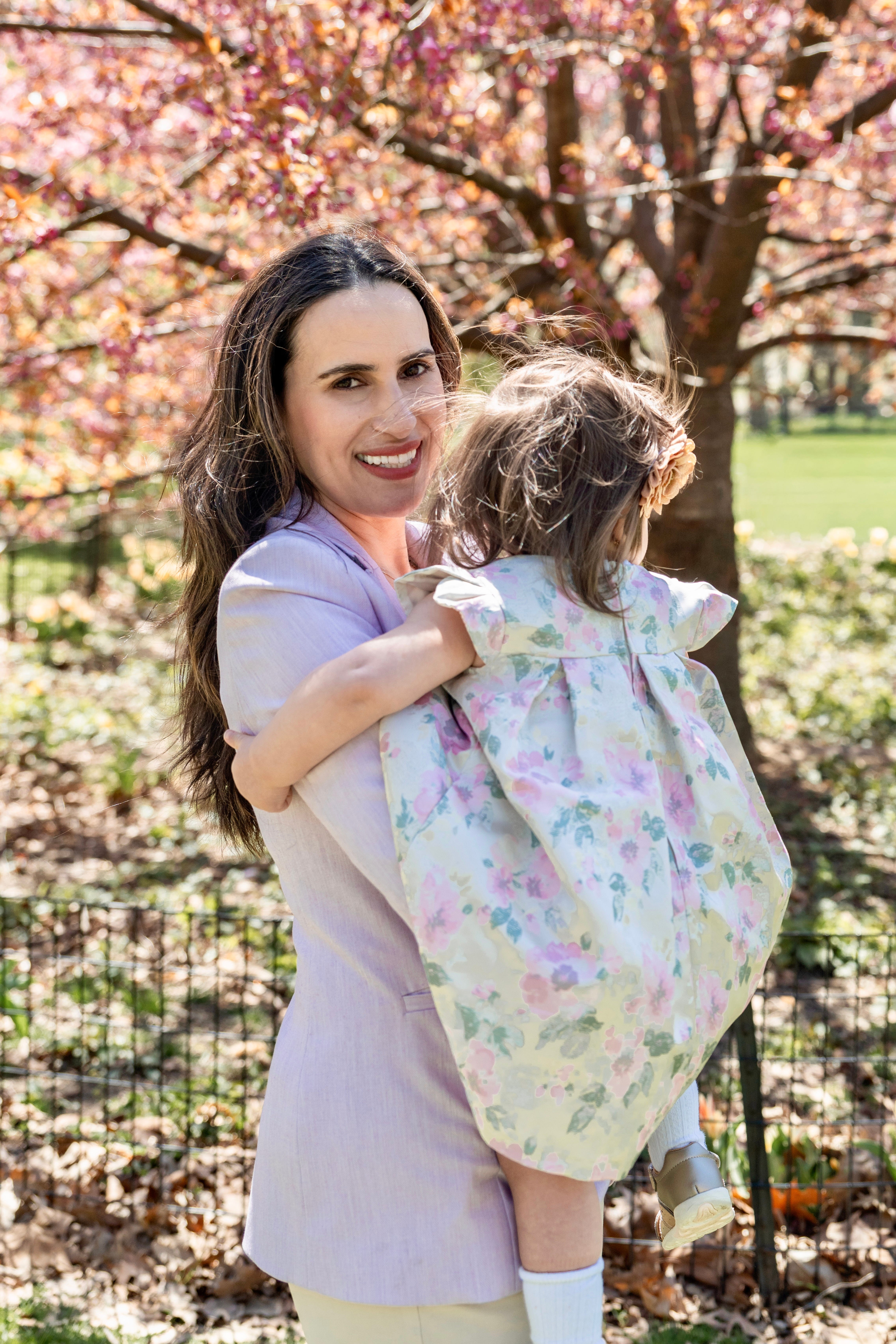
Soy Nueva Mamá was the natural next step.
Mercedes says she looked around and realized that, while English-language spaces had begun making room for conversations about fertility, miscarriage, delayed motherhood, and reproductive health, there was very little in Spanish that spoke directly to Latinas navigating these same realities.
“The need feels more urgent in Spanish-speaking communities,” she says. “The silence runs deeper there.”
That silence is exactly what she wanted to interrupt.
“Because I looked around and realized there was no space in Spanish where a Latina could talk openly about having a baby later in life. Not about the fertility challenges, not about the endometriosis, not about the miscarriage, not about the holistic healing. None of it.”
The response has confirmed what she already suspected.
Women comment that their daughters are going through the same thing. Others say they lived it themselves. They ask about acupuncture, about natural conception, about what helped and what did not.
“I couldn’t be the only one going through this. I knew I wasn’t.”
She points to a recent New York Times report noting that nearly half of American women at 30 have never had a child, while by 45, 88 percent are mothers. The headline, she notes, has often been framed around women intentionally delaying motherhood. But her own story points to another truth that doesn’t have the lobby system behind it.
“For a large percentage of us, this wasn’t a choice. We didn’t wait by design. Life, health, and circumstances brought us here.”
That is part of what makes Soy Nueva Mamá feel so necessary. It widens the frame beyond the neat empowerment language that often dominates late motherhood discourse. It makes room for grief, delay, pain, confusion, ambivalence, and the long detours that shape women’s lives, whether they asked for them or not.
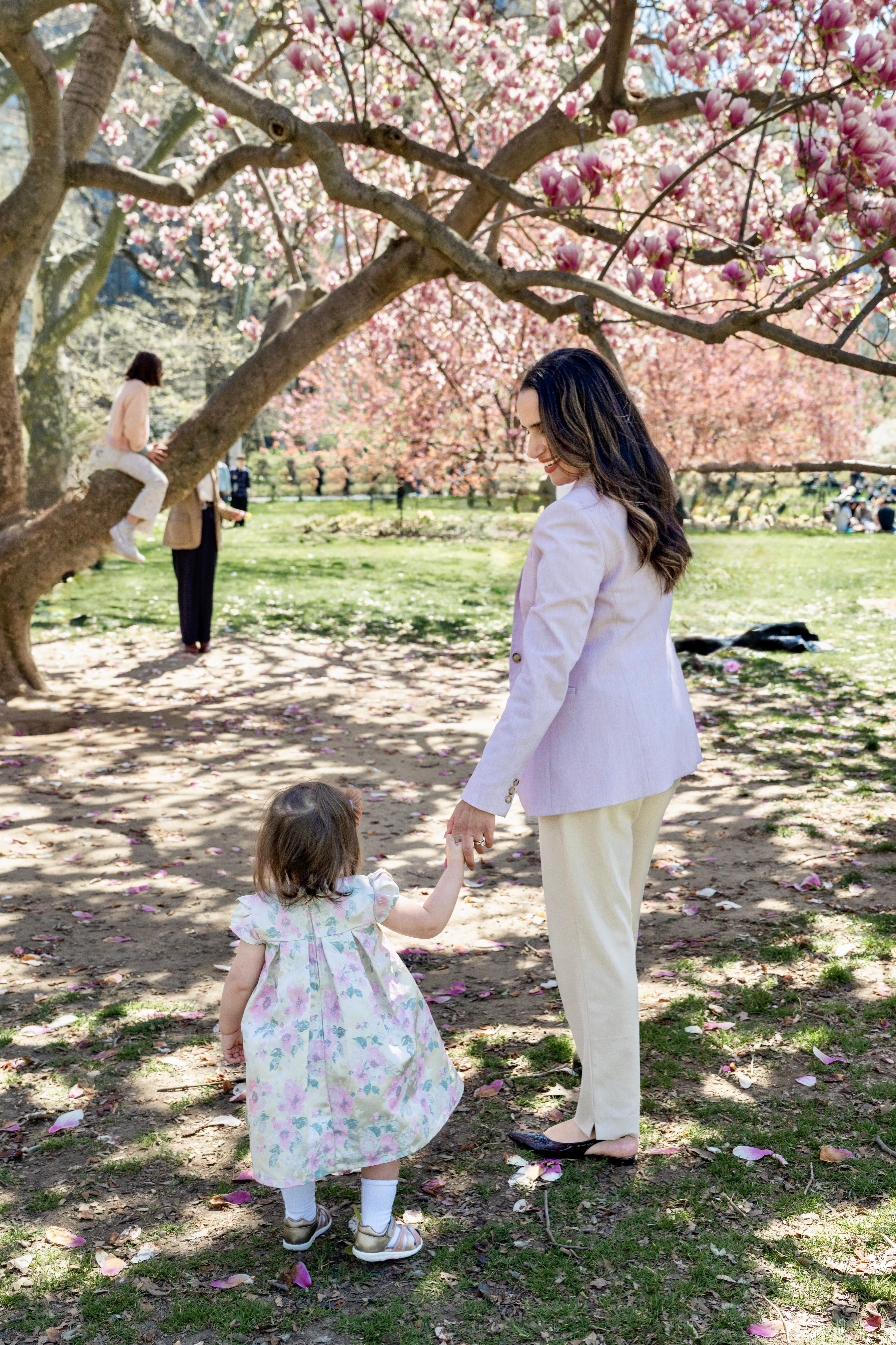
What she wants is simple and radical at once.
“I want women to feel less alone.”
Emotionally, she wants women to have a space where they do not have to perform strength before they are ready. Medically, she wants them to know they have options, that asking better questions can change everything, that a whole-person approach is not a fantasy. Culturally, she wants to give Latinas permission to arrive at motherhood on their own timeline without needing to defend it to the family, the community, or the culture.
And she is clear that this conversation is not only for younger women.
“I also want to reach the older generation. Not to shame them but to open the conversation.”
This way, Mercedes is not writing a revenge story against the aunties and señoras who asked the wrong questions. She is trying to widen the script they were handed, too.
Disruption and a new language.
What makes Mercedes’s story resonate is that she is not simply offering inspiration. She is naming a cultural tension many Latinas know by instinct but rarely hear articulated.
Motherhood in our communities still carries an imagined timeline. There is the right man, the right age—a perfectly knitted script. When a woman falls outside it, by choice or by circumstance, the culture still offers very few generous ways to understand her.
Mercedes is trying to change that, publicly and in Spanish. Without pretending the road was simple or the pain was noble, like an Instagram grid.
And maybe that is the best gift of Soy Nueva Mamá. It does not ask women to become symbols. It lets them remain human, an individual whose body hurts, who carries grief in secret while hosting dinner. People who found answers outside the institutions that failed them.
“You are not behind. You are not broken,” Mercedes concludes. “Your body is not a clock that someone else gets to set.”
As someone who suffered a miscarriage recently and lived with the pain and guilt of not knowing if I'd be able to carry my own children, this story was so powerful. Thank you.