

Op-Ed: Why Sharing Latina Stories Is Essential Right Now
What began as one writer’s search for herself in the classroom became a deeper reckoning with the Latina and Indigenous women history was designed to leave out.
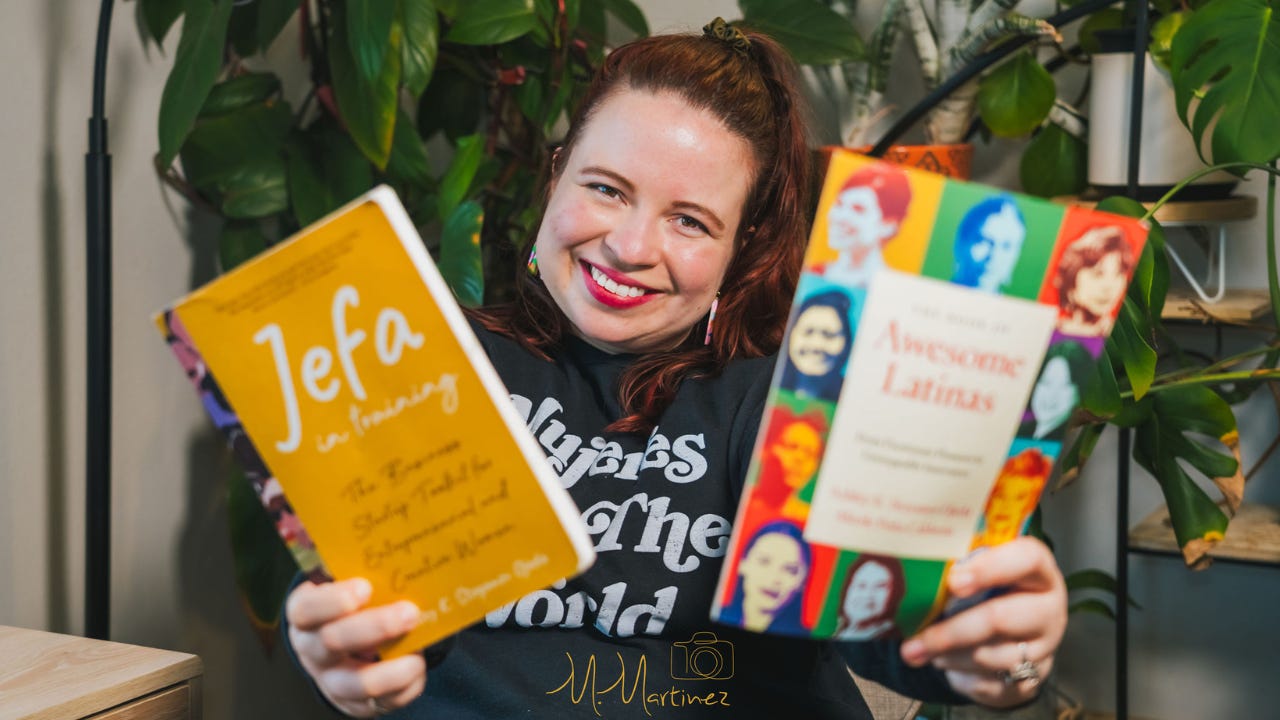
By: Ashley K. Stoyanov Ojeda
I used to think I wasn’t a history person. Turns out, I just didn’t see myself represented in the history that the teachers taught me. I went through my entire education in New York City public schools without a single Latine teacher or learning the name of a single Latina who changed history. The textbooks, I realized, didn’t include us. The timelines skipped over us. And when you’re a kid, you don’t question what’s missing. You just assume there’s nothing to find.
Then, in college, I took a class called Latina Women. It analyzed how Latinas are portrayed in the media, how we’ve been reduced, flattened, and made invisible. And something clicked. I got an A. One of my only As in school. (The others were music business, PR, and publishing, go figure.) It wasn’t that I couldn’t do the work; it’s just that no one had ever given me material that had anything to do with me.
When I finally saw myself reflected in what I was learning, I showed up differently.
As I was co-writing The Book of Awesome Latinas with Mirtle Peña-Calderón, the memory of growing up in the United States school system kept coming back to me, over and over again. Profile after profile, I kept finding women whose stories I’d never heard, women who changed the course of history in their countries and were then deliberately written out of it. Not forgotten by accident but erased on purpose.
This made me so angry. As a Latina who understands how powerful we women can be, I wanted to yell.
But as I was researching, one story stopped me in my tracks: Margarita Mbywangi’s. She is an Indigenous Aché woman from Paraguay who was taken from her community as a child during a period when her people were being systematically hunted and enslaved.
She was separated from her family, stripped of her language, raised in a world that tried to erase her people. By the time she returned to the Aché community as a young woman, she no longer spoke her own language. She felt like a stranger among her own people.
But she didn’t let that stop her. She trained as a nurse and went on to become a leader. She was elected cacique of her community, guiding forty families. She fought illegal logging and defended Indigenous land. And in 2008, she became Paraguay’s first Indigenous cabinet minister.
Latina stories are brimming with fire, spirit, redemption, and a serious amount of grit
When I read her story, I had to sit with it. I thought about what it means to have your identity taken from you and still find a way to lead. I thought about how many women like her I’d never heard of, and how that silence was never an accident. When you look at the pattern, it’s undeniable.
Across centuries and countries, Latina and Indigenous women have built, fought for, and created things, and then watched as their own nations tried to make them disappear.
In the 1880s, Peruvian writer Clorinda Matto de Turner founded her own press staffed entirely by women and wrote a novel so powerful in its defense of Indigenous communities that the Catholic Church excommunicated her and mobs burned her books. Peru exiled her.
In the 1930s, Argentina’s Victoria Ocampo founded Sur, one of the most influential literary magazines in Latin American history, and became the first woman admitted to the Argentine Academy of Letters.
In the 1970s, Cristina Peri Rossi fled Uruguay after a military regime banned her name from the media. She kept writing from exile. Teresa Martínez de Varela became the first Afro-Colombian woman to publish literary works in her country, yet when she passed, her decades of literary work were all but deleted.
These women published, created, and led. Their countries punished them for it, silenced them, or refused to remember them on their own terms. That pattern, unfortunately, didn’t end with them.
Dolores Huerta co-founded the United Farm Workers and coined the slogan “Sí se puede.” At 95, she is still using her voice, most recently to tell a truth she carried in silence for sixty years. Her courage is a reminder that our stories don’t expire, and neither does our right to tell them.
What we’re seeing here is a vicious cycle, and right now, it’s accelerating
Book bans are rising across the country, disproportionately targeting stories by and about communities of color. DEI programs are being dismantled. Latino history remains barely a footnote in most U.S. classrooms. And in the rooms where publishing decisions get made, only 4.6% of staff identify as Hispanic or Latino.
We’re not just underrepresented in the stories being told. We’re underrepresented among the people deciding which stories get told at all. Here’s what I want to push back on: the idea that advocacy has to look one way. That fighting erasure means you have to be on the front lines of a march or leading a protest.
Some of us will do that, and we need them. But we also need writers and educators who refuse to skip over our history. We need artists who keep documenting what happened so the next generation doesn’t have to start from zero. We need the person who isn’t afraid to pick up the phone and call a government official. We need the tía who tells stories at the dinner table so her nieces know where they come from.
Every woman I just named resisted in her own way. Some picked up pens. Some picked up megaphones. Some built entire institutions from nothing. The through line wasn’t the method. It was the refusal to be silent.
The prolonging of our history depends on all of us preserving our stories
So what can you do right now? You can start writing your own story. I don’t mean that in the abstract, inspirational poster sense. I mean literally. Write it down. Your family’s story. Your abuela’s story. The things that happened that nobody ever recorded because nobody thought they were important enough.
They are. They always were. And then share someone else’s. Talk about these women at dinner. Bring them up in a classroom. Post about them. Recommend a book. Refuse to let the silence win.
Because erasure only works when we cooperate with it. It wins when we accept that the stories aren’t there and move on. It wins when we don’t ask why we were never taught this. It wins when we let the silence feel normal.
It’s not normal. It was designed. And the moment we stop telling our stories is the moment someone else decides whether they matter.
They matter. They always have.
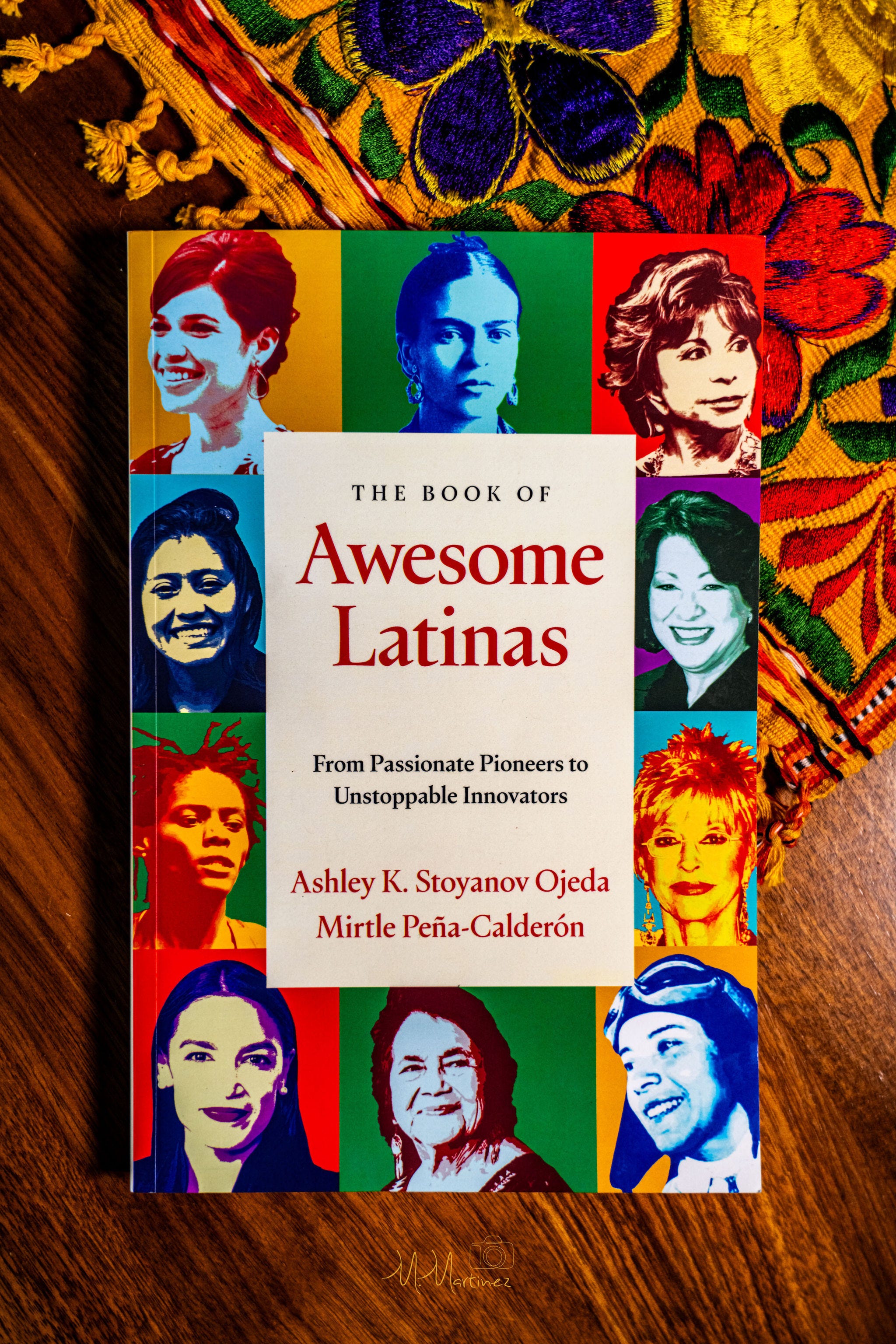
Ashley K. Stoyanov Ojeda is a first-generation Latina author, business strategist, and community builder. She is the author of Jefa in Training and co-author of the recently released The Book of Awesome Latinas with Mirtle Peña-Calderón. She writes about identity, entrepreneurship, and what it means to build something from scratch — for yourself and for your community.
 | A guest post by
|
💜❤️💜❤️💜❤️
Such an amazing take! Much success to you in this second book baby.