

"Obsession" Has Become the Ultimate Relationship Red Flag Test of 2026
Women across social media are calling the $443M horror hit an inkblot test for the men they’re dating. Reddit has the receipts.
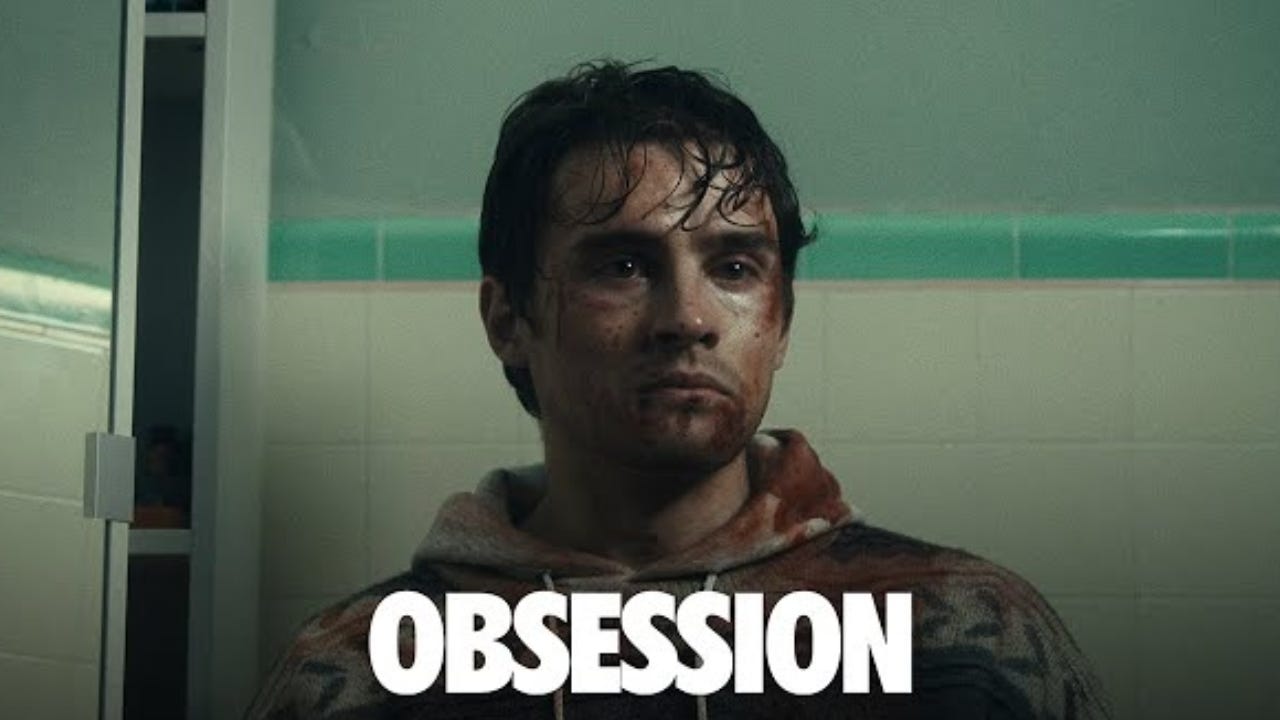
Reddit user layyslayy thought they were posting about a movie. They ended up posting about their relationship.
They had gone to see Obsession with their boyfriend and a group of friends. When the credits rolled, his verdict was that a man clearly directed the film, because the real horror was what Bear, the male protagonist, had to endure. He had completely missed that Nikki — the woman stripped of her body, her mind, and her free will — was the victim. The post went up on Reddit, and the comments arrived in the hundreds. The general consensus? Run.
Layyslayy is not alone. Since Obsession opened on May 15, the $750,000 indie horror film has become the accidental relationship litmus test of 2026, grossing $443 million worldwide and drawing the kind of couples-night-out energy usually reserved for romantic comedies. What happens in the theater and afterward has been revealing things women did not necessarily intend to learn about the men sitting next to them.
In Case You Haven’t Seen It, Here’s the Plot
Directed by 26-year-old first-time theatrical filmmaker Curry Barker and starring Michael Johnston and Inde Navarrette, Obsession follows Bear, a music store employee who uses a supernatural toy called the One Wish Willow to wish that his friend Nikki would fall in love with him. The wish works. Nikki, stripped of her autonomy by supernatural force, becomes consumed by an all-devouring obsession with Bear, one that escalates into violence, self-harm, and murder. As the film progresses, Bear learns the full extent of what he has done to her and repeatedly chooses to do nothing. He wanted the relationship. He does not want to give it up.
The film holds a 94% on Rotten Tomatoes, and its audience skews toward Gen Z and younger millennials, and word of mouth drove it to become Focus Features’ highest-grossing film of all time. It arrived with viral marketing, including an interactive text hotline where Nikki’s character could reach you directly, and unhinged billboards, per the Wall Street Journal. Across the internet, viewers joked that it “was supposed to scare me, not expose me,” identifying with Nikki’s desire for total devotion before the horror of what that actually looks like fully registered.
The Inkblot Test Nobody Asked For (Spoiler Alert)
The film’s power as a relationship test lies entirely in one question: who do you see as the victim?
“This film is like an inkblot test for potential incels,” wrote user iampachyderm on r/TrueFilm. “There’s a lot of leeway and projection going on in the interpretations of this movie in regards to Bear.”
On r/obsessionmovie: “I saw a comment that said, ‘This movie is an inkblot test for problematic men — if a man can’t see Bear is the problem — run.’”
The pivotal moment for most viewers is when Bear calls the One Wish Willow customer service line and asks to alter the wish rather than cancel it. He does not ask how to free Nikki. He asks how to change the way the possession affects him. “He didn’t care that he’d stripped her of autonomy,” wrote user cockaskedforamartini on r/TrueFilm. “He just didn’t want to suffer himself.”
Later, when the real Nikki briefly surfaces from the spell and begs Bear to kill her and end her suffering, he responds by asking what would be so bad about being with him. “He knows what’s right but is a coward,” wrote user PinkJenni on r/TrueFilm. And user can_u_tell_its_me added: “Even when he’s trying to undo it all, his first instinct is to manipulate her behavior again. Throughout the whole film, he never really cared about her.”
Couples watching the movie together have reported that the experience became uncomfortable in ways unrelated to the on-screen horror. Women noted boyfriends giving knowing, hostile side-eyes during the film, a wordless signal that they viewed normal emotional requests as unhinged. After the movie, some men argued the film was about a dangerous woman. What Bear had originally done to her had stopped registering as the inciting act.
The Specific Red Flags
Women online have mapped the patterns to watch for.
The first is siding with Bear outright: rooting for him while bypassing the fact that his wish, made without Nikki’s knowledge or consent, is what set everything in motion. On r/TrueFilm, user Jorlung broke it down: “You go from viewing the events of the first night as ‘a guy who was confused and overwhelmed’ to ‘a guy who was willfully overlooking major red flags to be with the girl he was obsessed with.’ The eventual contextualization of Bear as an irredeemable character makes you look back at the earlier scenes with a more critical lens.”
The second is weaponizing the film: suggesting that your normal emotions — hurt feelings, a request for reassurance, frustration — are equivalent to the literal supernatural possession on screen. Equating those two things is not a joke, and it is not a small thing, per the online conversation around the film.
The third is the “women are crazy” reading: watching Obsession and arriving at the conclusion that it is a cautionary tale about a dangerous woman, rather than a story about a man who decided another person’s autonomy was his to override.
Director Curry Barker has said he did not set out to make a film about entitlement. “He just makes some bad decisions, but I think it starts from a really innocent place,” Barker said. He added that he was not even familiar with the term “incel” when he wrote the script. But the audience found the themes anyway. Ms. Magazine has placed Obsession within a growing genre of “incel horror” — alongside films like Companion (2025) and Don’t Worry Darling (2022) — in which the real source of terror is a man who believes he is owed access to a woman’s body, attention, or affection.