

Nicole Fernandez Uses Sports to Tell Stories, and Stories to Open Doors
She grew up searching for herself in books, found her edge in Spanish, and turned her love of the athlete behind the stats into a decade of reporting, service, and bilingual storytelling.
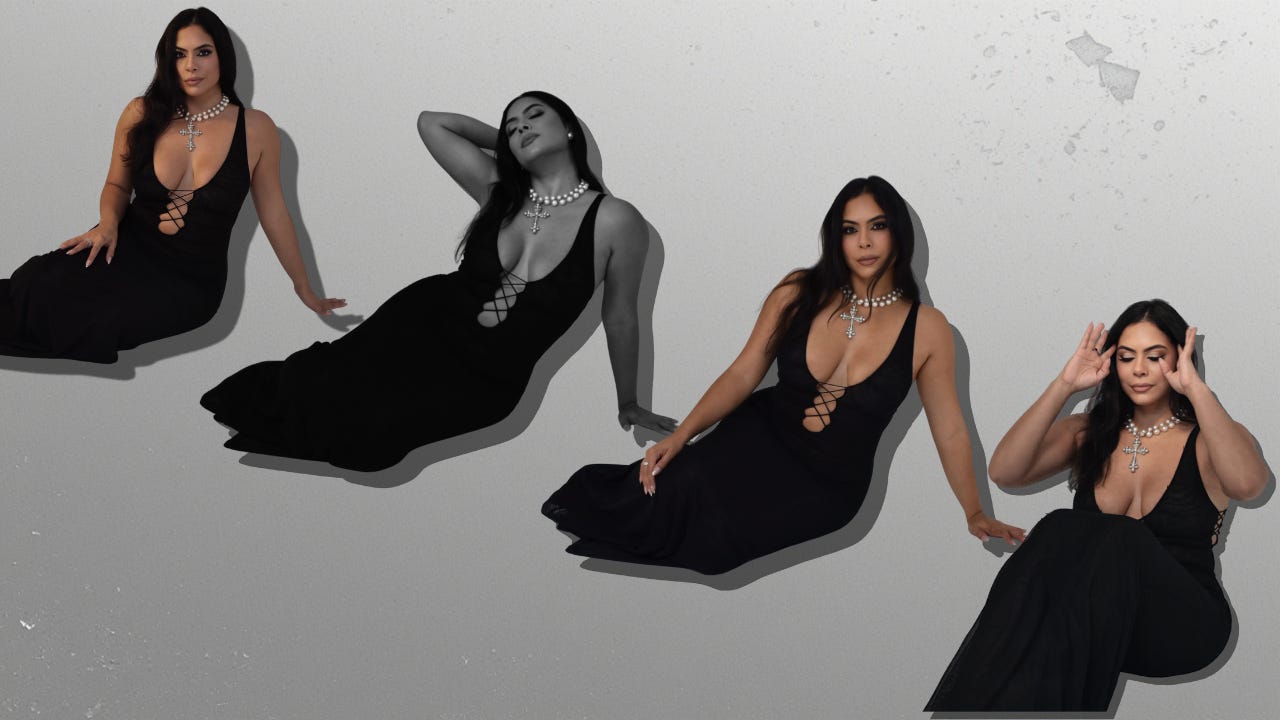
Nicole Fernandez has spent more than a decade in sports media, but her work has never been only about the game. She’s a bilingual journalist and creator who cares about what athletes carry with them long after the scoreboard fades: their values, their families, their origin stories, the parts of them that never fit neatly into a highlight reel.
She’s also a first-generation Colombian-American, born and raised in Miami, with family roots in Barranquilla. And like a lot of us who grow up between languages, between cultures, between expectations, she learned early how complicated the identity crisis can feel even when you’re surrounded by people who look like you.
That tension, between where you come from and how the world sees you, now runs through everything she builds. It shows up in the way she reports, in the way she shows up online, and in the decade-long commitment she has poured into Game Time Foundation, her sports nonprofit that collects baseball and soccer equipment in Miami and delivers it to kids in Colombia and other Latin American countries.
She grew up in Miami, but still wondered where she fit
Fernandez described the cultural tug-of-war that can come with being born in the United States, surrounded by Spanish, but still feeling pressure to perform “American” correctly.
“You go to school, you wanna be American,” she said.
Then she offered a detail we know very well.
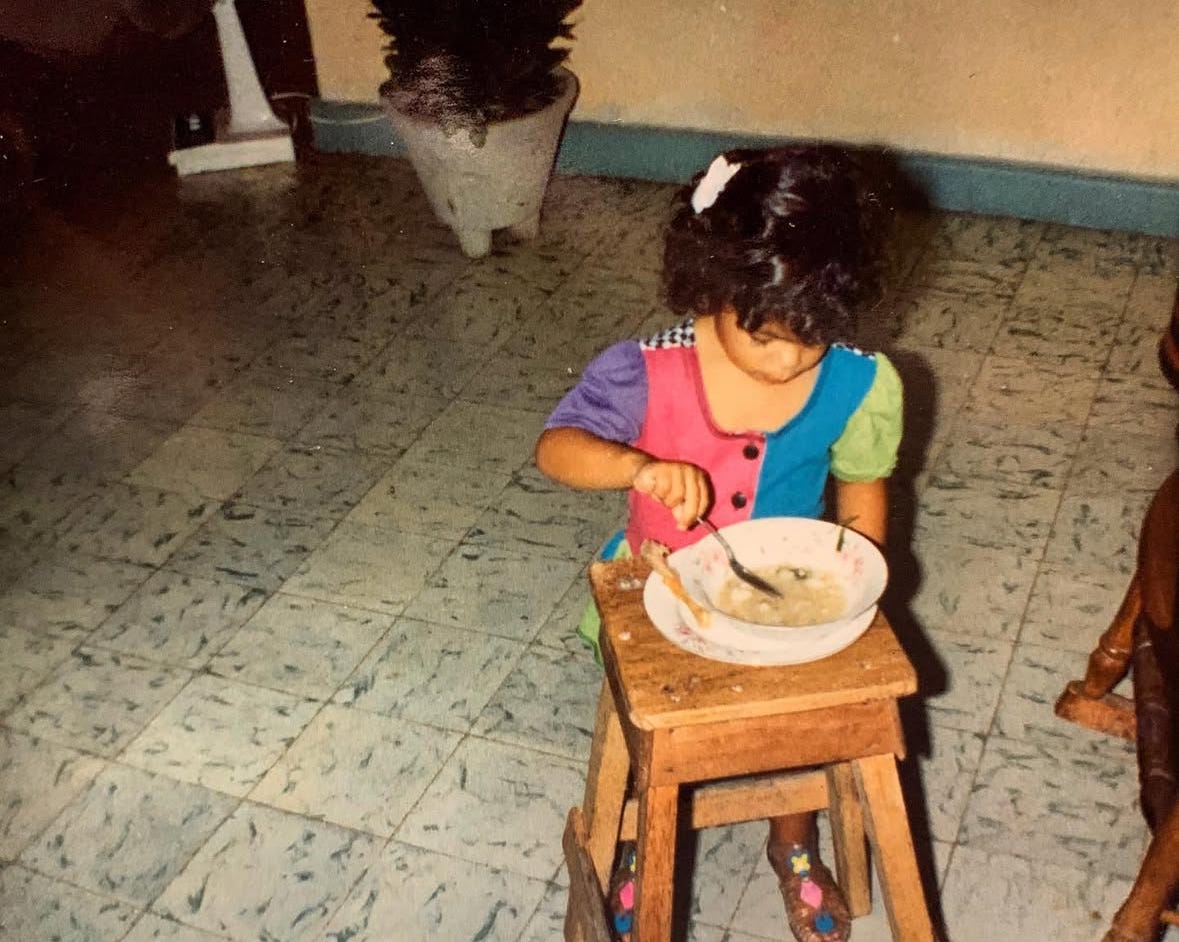
“I remember going and reading, like going to the library,” she said. “And I would get books, but I’m like, all these girls are blonde. And I was like, I don’t see anyone like me.”
Even in Miami, where Latinidad often feels like the default setting, she still carried questions. “It was hard to [answer the questions] ‘Am I American? What’s a Latina?’ I didn’t know what Latina was,” she said.
Over time, that confusion evolved into something else. “As I got older and now giving back to Colombia, it’s like, okay, I’m really proud of my roots and where I came from,” she said. “It makes you think back on everything your parents have gone through so we can have a better future.”
Spanish became her edge, even when she didn’t realize it would
Like many first-generation kids, Fernandez once treated bilingualism as something to neutralize. No accent, no extra attention. Just blend in.
Then life did what it does: it flipped the script.
“When I started journalism,” she said, “I saw so many people learning Mandarin or Spanish.” And that’s when she realized she had a skill under her belt that many would pay for.
“All the jobs I’ve gotten in sports are because I know Spanish,” she said.
The thing she once tried to smooth out became the thing that made her stand out. “Now I’m grateful that I have that right and that’s what makes you different,” she said.
That’s also where her storytelling lens deepened. Language is not only about communication. It’s about empathy and understanding what it feels like to navigate a world where you cannot order lunch without translating yourself.
Sports never interested her in the stats. She wanted the human story
Fernandez told FIERCE she always felt drawn to journalism, even as a kid. “I think I [always] did,” she said. “I just didn’t know how to do it.”
She described early curiosity, the instinct to record, to ask why, to capture reality as it is. Later, in college, she said she had to find a niche, and she kept circling back to sports. She felt it was a natural equalizer.
And soon, she knew what she wanted from it.
“I don’t like the stats so much,” she said. “I like more the human side of it, how each athlete has a story.”
That perspective shapes how she moves through sports today. “Even now, I don’t like to follow certain teams,” she said. “I like to follow the athlete.”
Because for her, the point has always been the person behind the performance.
She built a career anyway, even when the industry made her prove herself twice
Fernandez described the grind as constant. The need to stay visible and the pressure to self-promote could take their toll, especially the reality of being a Latina in spaces where you still feel like an exception.
“I’m 36 years old,” she said. “[And it is still] hard to know your worth, and you get tired of proving yourself.”
Then she said something many women will recognize in their bones. No matter the obstacles, “you have to be constant,” she said. “Trying to put your work out there, and you are the only one who believes in yourself. You’re the only one who can celebrate your victories so that you can open more opportunities.”
Her résumé reflects that range. She earned a Bachelor of Communications with a minor in Marketing from Florida International University, and studied abroad in Seville, Spain. She has worked in journalism, production, and social media, including a role with major Spanish-language departments in the sports industry, where she has focused on social media marketing and innovation.
Even in moments that looked glamorous on paper, she described a familiar internal battle
When she spoke about recently attending the Super Bowl as a journalist, she confessed she still felt the imposter syndrome creep in. “I felt like I didn’t deserve it,” she said. “I felt like I was too old.”
Then she looked around and saw what she had seen too many times.
“There was maybe like a hundred different media outlets from all over the world,” she said. “And even being there, I’m like, wow, I’m still one of the few Latinas here.”
Game Time Foundation started as an instinct, then became a decade of work
If Fernandez’s journalism focuses on the human side of sports, her nonprofit makes that belief tangible.
She started Game Time Foundation in 2014. The foundation provides sports equipment for kids who play baseball, softball, and soccer, and it has helped more than 5,000 children across Colombia, Puerto Rico, Honduras, and Venezuela.
Fernandez was only 24 and ready to give back to her community and help others see the opportunities beyond the horizon. However, doing good work does not mean doing easy work.
“Funding is hard,” she said. She described how she learned the unglamorous parts too: the laws, the taxes, the logistics, the shipping, the documentation.
Still, she did what so many mission-driven women do: she learned anyway.
The kids she met pushed her into authorship
Fernandez’s reporting and her nonprofit work eventually led her to a new format: a bilingual children’s book.
She self-published A 9-Inning Dream Un Sueño de 9 Entradas in late December 2022, describing it as a culmination of her professional and philanthropic experiences and a story about the impact of sports, bilingualism, and celebrating your roots.
In our interview, she traced the origin back to childhood, to the library, to representation, and to the books that didn’t have a character who looked like her.
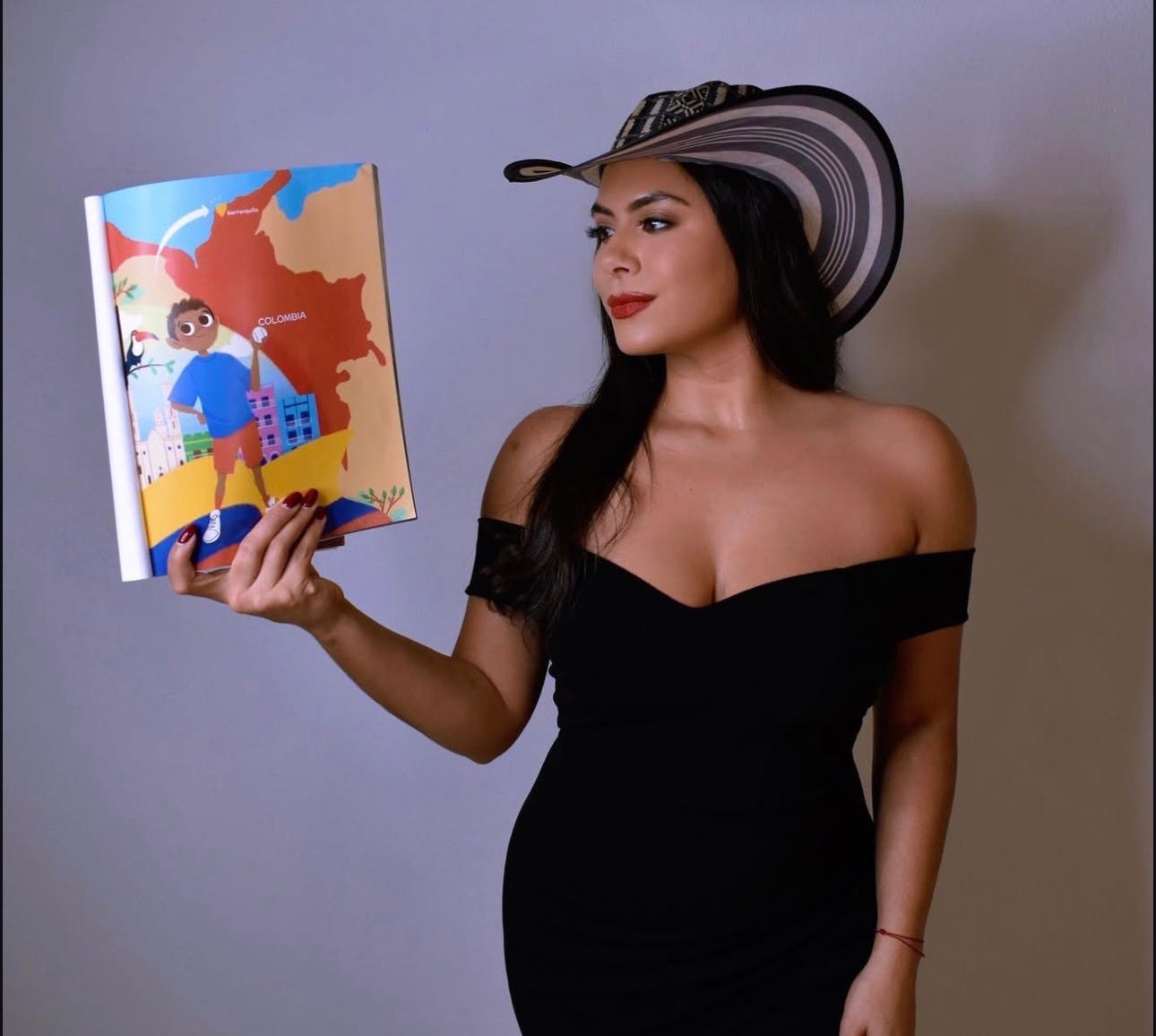
Then the adult version of that childhood question returned: where are the stories that look like us?
So she wrote what she wanted to exist, and she did it in English and Spanish. She self-published and taught herself how to do it, the same way she taught herself so many other things.
And she made an intentional choice about who would visually bring it to life.
“I wanted an illustrator from Colombia,” she said. Then she explained why. “It’s an homage to my family, what I saw growing up when I was little.”
The through line is simple, even when the work isn’t
Fernandez’s story is full of moving parts: sports media, social platforms, major leagues, travel, nonprofit logistics, and book publishing.
Still, the emotional engine stays consistent.
She wants girls to see themselves in stories earlier than she did. She wants athletes treated like humans, not as stat sheets. She wants kids in small towns to have equipment, dignity, and a reason to show up to the field with pride.
And she wants Latinas who feel stuck in the proving cycle to know resilience and identity are our superpowers.