

Mexico’s 1971 Women’s World Cup Team Finally Got Its Parade, 55 Years Late
Before the parade made strangers cry on Paseo de la Reforma, this team filled Estadio Azteca for a World Cup final and the world made sure nobody remembered.
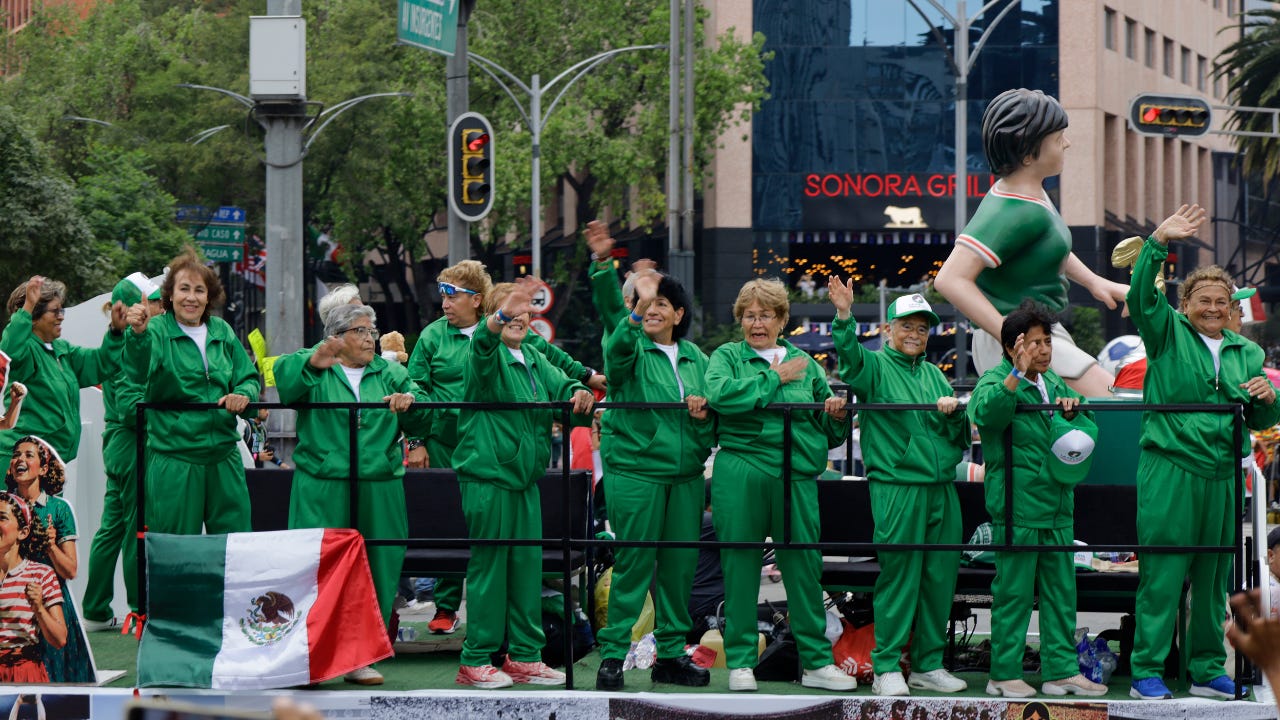
The 2026 World Cup has literally taken over the world. But last Saturday, in the middle of all that excitement, a float rolled down Paseo de la Reforma during Mexico City’s World Cup parade carrying a group of elderly women in tricolor jerseys, waving to a crowd chanting “México, México, México.” Some of the women cried. So did some of the people watching. Almost nobody in that crowd knew who they were.
They were the 1971 Mexican women’s national soccer team, the one that played a World Cup final at Estadio Azteca in front of more than 110,000 fans, more than half a century before anyone officially decided to remember them.
Before Mexico Hosted a World Cup, It Hosted a Secret One
Organized women’s soccer in Mexico has roots that go back further than most people assume. Interest took off after a Costa Rican women’s team toured the country in 1963, inspiring Mexican women to form their own clubs. By 1969, there was enough momentum to hold the country’s first women’s championship, with 17 teams competing around Mexico City.
That same energy was building in Europe, where an organization called FIEFF, the Federación Internacional y Europea de Fútbol Femenino, began organizing its own unofficial women’s tournaments outside FIFA’s control, with backing from the Italian beverage company Martini & Rossi. In 1970, FIEFF staged the Coppa Martini & Rossi in Italy, a tournament now widely considered the first unofficial Women’s World Cup. Mexico was not originally invited. The team only got a spot after Argentina and Brazil dropped out.
Mexico made the most of it. The team’s opening match in Bari ended in a 9-0 win over Austria, with Alicia Vargas scoring four goals. Vargas, who had grown up playing street soccer and joined a Guadalajara club at 13, kept scoring throughout the tournament and picked up the nickname “La Pelé.” Mexico went on to lose to the host, Italy, and beat England, finishing the tournament in third place.
Mexico City Built a Women’s World Cup FIFA Refused to Recognize
FIEFF’s organizers decided the 1971 tournament would be held in Mexico, and this time at full scale: Estadio Azteca in Mexico City and Estadio Jalisco in Guadalajara, with six national teams competing.
The Mexican Football Federation wanted nothing to do with it. FIFA had already moved to ban member federations from involvement in unsanctioned women’s tournaments after the success of the Italy event, and Mexico’s federation threatened fines against any club that let women play in its stadiums, Sports Stories reported. Organizers got around the threat by booking stadiums that the federation did not control, since Azteca and Jalisco were privately owned, and their operators wanted the broadcast revenue.
What followed was a marketing campaign built almost entirely on novelty and spectacle. Organizers created a mascot named Xóchitl, a cartoon girl with pigtails in a tricolor uniform, splashed across posters and keyrings across Mexico City, and painted the goalposts pink. Sponsors included Martini & Rossi, the beer brand Carta Blanca, and the diet soft drink Dietafiel, according to the BBC. One tournament organizer told The New York Times at the time that the appeal was simple: “It’s a natural combination of the two passions of most men around the world: soccer and women.” The New York Times’ own coverage carried the headline “Soccer goes sexy south of the border.” Organizers had told the press the players’ uniforms “will be as close as possible to hot pants,” according to Women in Sport’s review of the documentary “Copa 71.”
Behind the spectacle were real players who had fought just to get on the field. Silvia Zaragoza of Mexico had loved the game since childhood, but had to play in secret because her father would beat her if he found out.
A Final Watched by More Than 110,000 Fans, by a Team That Wasn’t Paid
Once the tournament began, crowds showed up in numbers nobody had predicted. Mexico’s opening match against Argentina, a 3-1 win, drew 100,000 fans. Mexico also beat England in the group stage, then beat Italy 2-1 in the semifinal in front of 90,000 spectators.
The final, against Denmark on September 5, 1971, drew more than 110,000 fans to Estadio Azteca. Denmark won 3-0, with 15-year-old Susanne Augustesen scoring all three goals.
Before that final, the Mexican players asked organizers for a bonus. They had been playing for more than a year without pay while the tournament generated significant ticket and sponsorship revenue, and the request leaked to the Mexican press, which turned on them. Rather than risk disappointing the country that had filled Azteca for them, the players decided to take the field anyway.
The Welcome Home That Took 55 Years
The cameras and crowds disappeared almost as fast as they had arrived. FIFA technically lifted its ban on women’s soccer after 1971, but offered no funding or support, leaving the sport in the hands of federations that mostly ignored it. England’s Football Association banned the players who had taken part in the tournament, including Leah Caleb, though the ban did not last. “By taking part in the event, we jolted the FA. We were banned from playing for taking part in an unofficial World Cup,” Caleb told the BBC. “But they realized very quickly they were being ridiculous, and our bans were lifted.” Harry Batt, the English team’s organizer, was blacklisted by the Women’s Football Association for going around it, and his club folded.
Denmark’s federation eventually took over the women’s game but never called up Augustesen, the final’s hat-trick scorer, for an official cap. In Mexico, the players returned to dusty fields and volunteer coaching, with no institutional backing to build on what they had just done. It would take another two decades before FIFA staged its first officially sanctioned Women’s World Cup, in China in 1991.
The story stayed largely forgotten in Mexico until 2023, when documentaries including “Copa 71,” produced by Venus and Serena Williams, brought the tournament back into public view.
Mexico Finally Gives the 1971 Team Its Parade
That renewed attention has slowly turned into formal recognition. In March, Mexico City Mayor Clara Brugada led a tribute to the players, saying they “changed the fate of women’s soccer and should never have remained forgotten.” The team was honored earlier this month again at a Mexico-Serbia friendly in Toluca, Los Angeles Times en Español reported, before Saturday’s parade put them in front of the biggest crowd they had seen since 1971.
Among the players who once filled Estadio Azteca and have now been formally recognized are Lourdes de la Rosa, Eréndira Rangel, Alicia Vargas, María Eugenia Rubio Ríos, Patricia Hernández Montoya, María de la Luz Hernández, Silvia Zaragoza Herrera, Yolanda Ramírez Gutiérrez, Bertha Orduña, Martha Coronado Díaz, Sandra Tapia Montoya, Elsa Huerta Méndez, Elvira Aracen Sánchez, Irma Chávez Barrera, Cristina García Gómez, Guadalupe Tovar Ugalde, Elsa Salgado Pérez, María Acela Nila Mejía, Rebeca Lara Pérez Tejada and María de la Luz Cruz Martínez, along with teammates Paula Pérez Padierna and Teresa Aguilar Alvarado, who have since died. Récord singles out Vargas, Rangel, Rubio Ríos, and Esther Mora as the team’s standout figures from that run to the final.