

Meet Kica Matos, the Afro-Latina on TIME’s List Who’d Rather Talk About Justice Than Herself
The NILC president traces her path from Puerto Rico to death penalty organizing to immigration fights, and explains why joy and democracy now sit inside the same struggle.
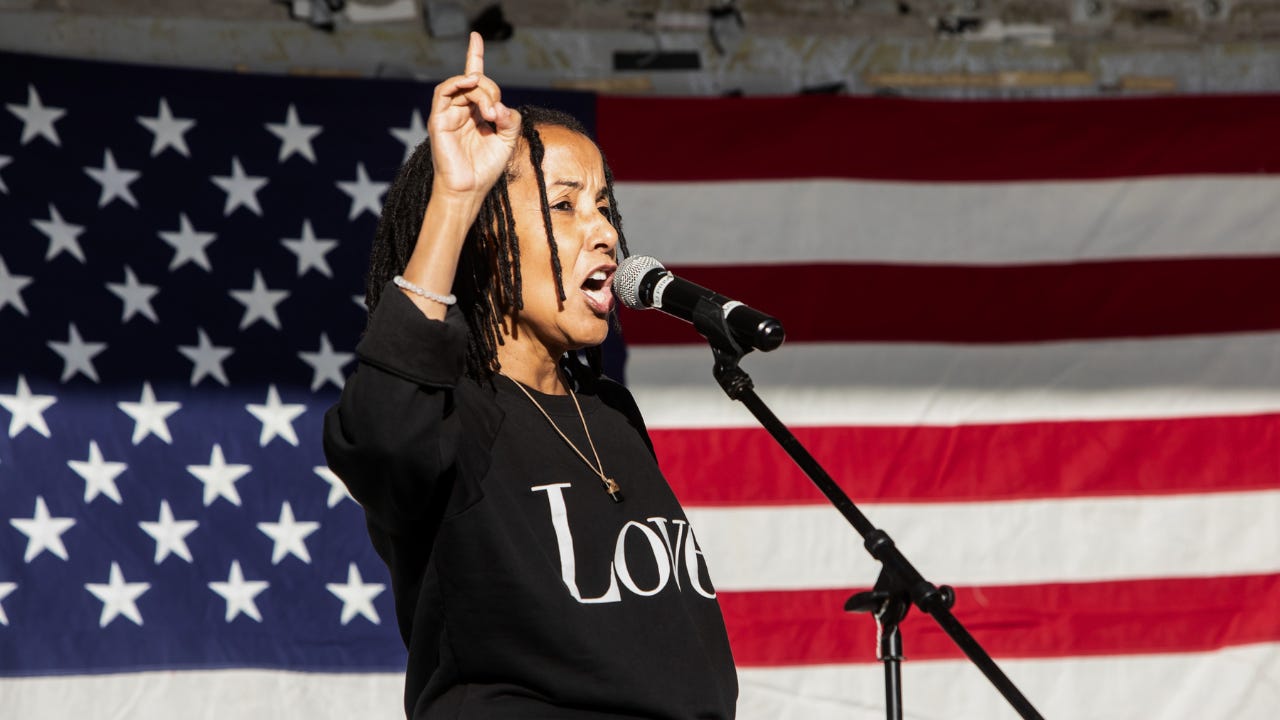
Kica Matos is the kind of woman who knows that work—especially work that comes from the heart and from absolute conviction—doesn’t need to be seen to be effective.
Having lived in Puerto Rico, Trinidad, Fiji, and New Zealand, and with decades of work for social justice and hundreds of miles spent on the streets doing community work, the only thing that has truly felt surreal to her has been being recognized by TIME magazine as one of the most influential people in the world.
“I admit I feel a slight sense of discomfort because I’m not someone who seeks attention,” she told me. “When I seek attention, it’s to fight for a cause and for justice.”
That should tell you everything you need to know about this amazing woman. However, I want to tell you a little more.
From Puerto Rico to Fiji to New Zealand, she learned the world early.
Kica Matos was born in Puerto Rico. Her father was the island's founding cabinet secretary for the environment. Because of her father’s work, the Matos family moved to Trinidad when Kica was nine years old. Four years later, they moved to the Fiji Islands, where Kica completed her schooling.
“When it came time to go to college, my dad gave me three options. He said, ‘You could go to Australia and New Zealand,’ because they were close to Fiji, or the United States.’ And I thought, since I have an American passport, I could always come to the US. AU.S I had a bunch of friends from New Zealand, so I thought, ah, let me go to New Zealand [and] check it out.”
She earned her B.A. from Victoria University of Wellington in New Zealand, an M.A. from The New School, and a J.D. from Cornell Law School.
The death penalty is where she found her life’s work.
She began organizing with the NAACP Legal Defense Fund, focusing on death penalty cases.
“There was a team of lawyers who represented people on death row whose cases were rife with racial discrimination,” she explained. “And my job was when the inmate was nearing execution […] My job was to go to those states to organize, so I was mostly organizing in the Deep South, which is where most of those cases came from.”
In her own words, that’s when she knew what she was going to dedicate her life to: fighting for the abolition of the death penalty and organizing.
She went back to law school because she wanted to represent people on death row, and she began working in Pennsylvania.
And then, well, life intervened.
“Life has a way of taking the reins when you think you’ve got it all figured out, and you know exactly what you’re going to do,” she said with a laugh. “And I ended up falling in love.”
She married her now-husband and had to negotiate the next move.
“I wanted him to move to Philadelphia. He wanted me to move to New Haven, and I said I would move to New Haven as long as the next move was mine,” she said. “And that was in 2002. I lost the battle, but won the war, and we still haven’t moved from New Haven.”
But it was in New Haven where she became aware of the real challenges that undocumented immigrants face in the United States.
While Kica Matos had some familiarity with immigration issues, New Haven revealed a new layer of social injustice to her.
Kica grew up in Puerto Rico, a country she describes as a colony through and through. “When I was young, what I felt most was racism,” she told me. “Puerto Ricans like to talk about our ancestry—the Taíno, Africans, and Spaniards—and I’ve heard Puerto Ricans say sometimes that Puerto Rico is ‘a race-blind country.’ Most of the people who say that are white people. And what I felt growing up in Puerto Rico was just a lot of discrimination.”
She then recalls how, as “the one with the darkest skin” in her family, people at social gatherings would immediately refer to her as “la negrita.” And while her father used the expression as a term of endearment, she knew what it meant from a very young age.
“Children aren’t deaf,” she said. “I remember the racism, and I would watch TV and the soap operas, and anything associated with high society in Puerto Rico was always associated with whiteness. The people who were elevated, the people who were exalted, the people who were celebrated—the culture that Puerto Ricans chose to truly elevate was mostly white.”
It wasn’t until she graduated from college that Kica really began to analyze and understand the status and the plight of Puerto Ricans. “And I am an unapologetic independentista,” she said without hesitation. “It’s way past time for Puerto Rico to liberate itself.”
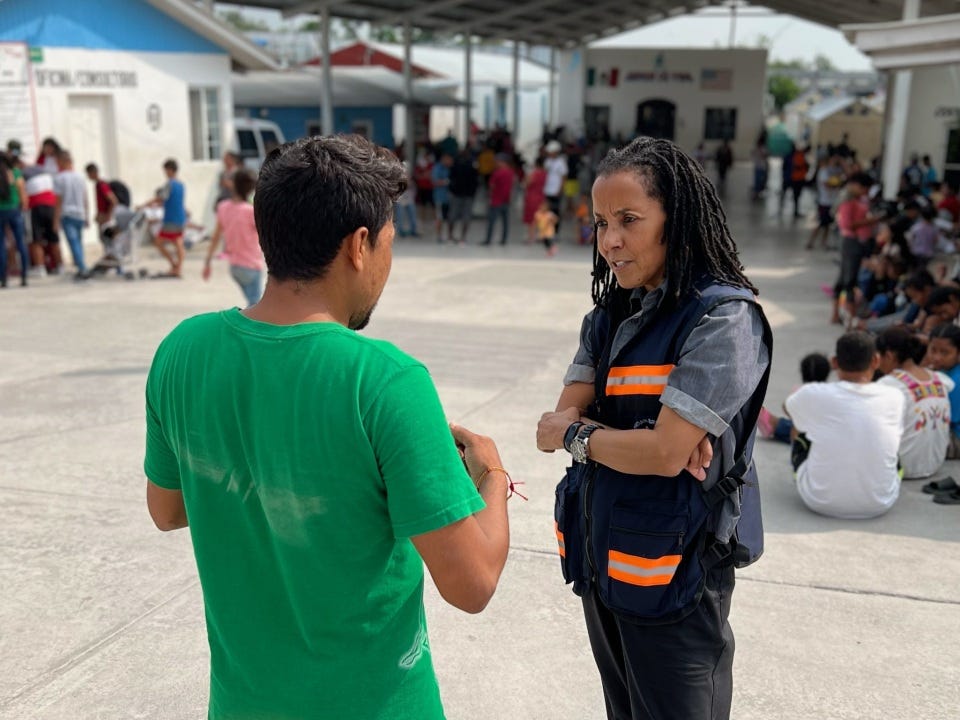
Her résumé is long. The meaning behind it matters more.”
Kica Matos’s work led her to become deputy mayor of New Haven, where she oversaw community programs and launched new initiatives, including prisoner re-entry and youth and immigrant integration. Kica previously served as executive director of JUNTA, New Haven’s oldest Latino advocacy organization. She was vice president of initiatives at the Vera Institute of Justice. She also served as director of immigrant rights and racial justice at the Center for Community Change. She has extensive experience as an advocate, community organizer, and lawyer. Kica has also led the U.S. U.S.nciliation and Human Rights Program at Atlantic Philanthropies. Her work led her to join NILC and IJF as executive vice president of programs and strategy in January 2023, and she is now the president of the National Immigration Law Center (NILC) and the Immigrant Justice Fund (IJF).
But in our conversation, we didn’t focus so much on her resume as on the meaning behind the work. Just as we discussed colonialism or the casual use of terminology, my central question for Kica was: “What is social justice?”
“If you were to ask people on the street, even activists themselves, what social justice means, you’re likely to get a different response,” she said, arguing that she doesn’t think “there is one definition for what social justice means.”
“What does it mean to me? It means that it is a fight for equity for people. It is a fight for justice. It is a fight for freedom,” she said. “That, to me, really encapsulates social justice.”
Throughout her career, Kica has focused on and fought tirelessly for the most marginalized people.
She has fought tooth and nail for the disenfranchised in the United States, and for people on death row, where she first witnessed the country’s inequalities.
“None of them are rich,” she emphasized. “You never find a rich person on death row. These are people who have grown up in the most horrific circumstances. Predominantly, people of color were rejected by society from an early age, often have upbringings that are truly terrible, neglected by society, and then inevitably they commit a terrible crime.”
However, as Kica points out, “That very same society [is the one] that chose not to invest in them at an early age. They had the opportunity to offer a productive way of life. All of a sudden, we’re pouring hundreds of thousands and millions of dollars into executing them.”
Looking back, Kica believes her dedication to social justice “wasn’t something I decided one day that I was going to do. It was really an evolution of the way I lived my life and my own lived experiences.”
And working with undocumented immigrants was the natural evolution of her career.
“Undocumented immigrants in this country today are among the most vulnerable people who, despite the many contributions they make to this country and the tremendous sacrifices they make, this administration has chosen to demonize and vilify them and subject them to the most terrible treatment,” she said.
In this way, for Kica Matos, the fight for social justice involves a commitment to ensuring that the barriers erected against the most marginalized are addressed, so that “people can then live the lives we all want to live.”
At a time when the struggle seems uphill, and when many of us think daily of giving up the fight against the tide, Kica Matos remains steadfast in her calling. And although she doesn’t know exactly how, the only way she can describe it is: “the fire in my belly, caffeine, and dark chocolate,” she says with a sense of humor that is uniquely hers and deeply contagious.
However, she also adds that she is aware of her privilege in being able to work with “people who are badasses, and that fills me with great joy.”
“I will say, particularly in this moment, one of the things we are all reminding ourselves of is the need to find joy despite the darkness surrounding us,” she says. “Because if they take away our joy, they’ve taken just about everything away.”
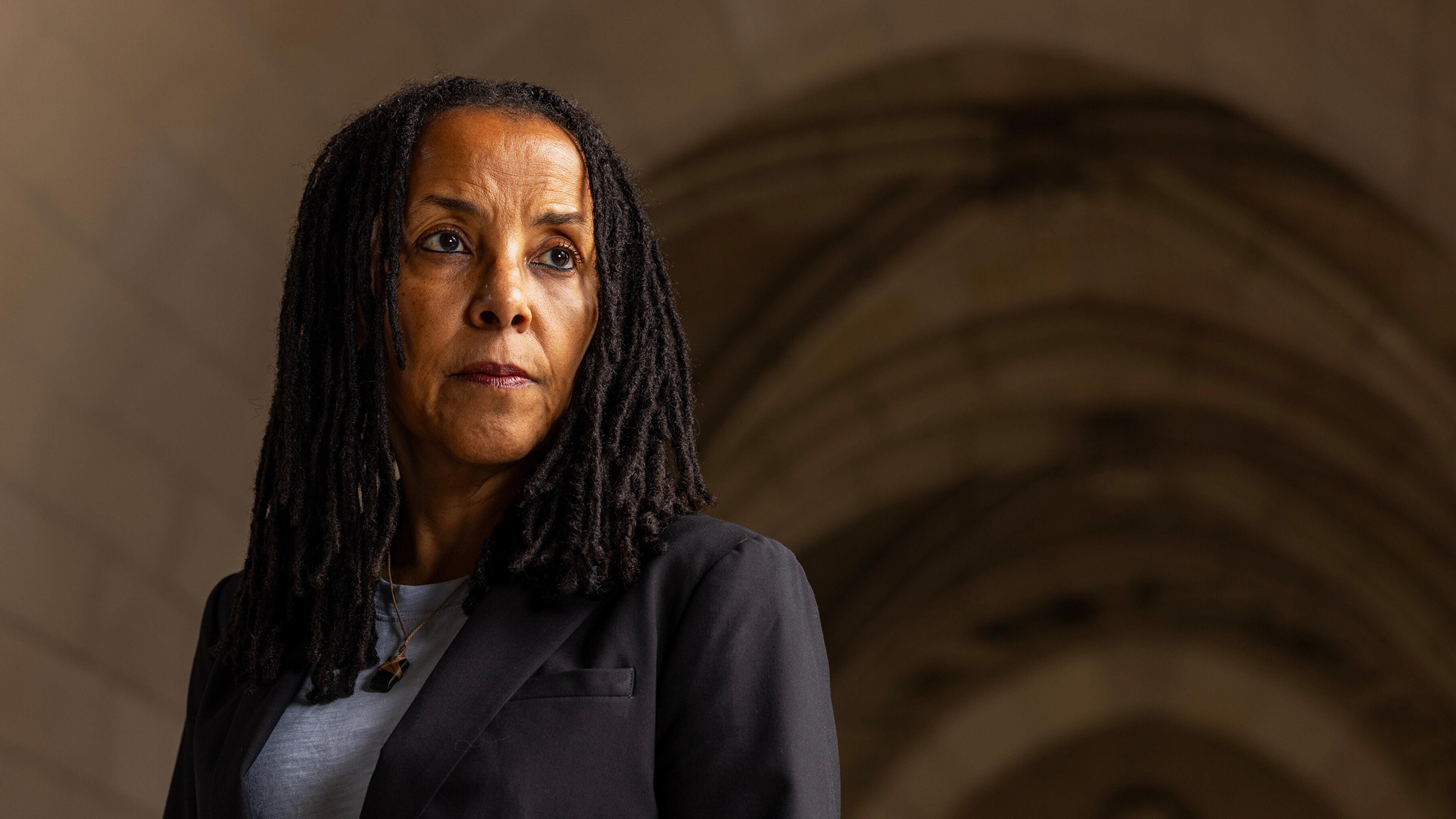
For Kica Matos, this is the moment when our strength and conviction must not fail us.
For a couple of years now, alongside the NILC and the IJF, Kica and her team have been preparing for every possible scenario. Recognizing the Biden administration’s failure to address immigration, in 2024, her organization spent 10 months doing “scenario planning.”
“And quite frankly, we spent most of our time looking at what Trump and his colleagues were threatening to do. We looked at Project 2025, we looked at Stephen Miller’s ‘America First,’ and we paid close attention to everything Trump said.” In October, Kica and her team concluded that if Trump won, he would advance authoritarianism at the expense of immigrants.
“And as an organization, we thought that we needed to begin to prepare and to do work at the intersection of democracy and immigration because our stance was that if he advanced authoritarianism, the rest of our work would fall apart.”
That is why, today, the fight for social justice goes hand in hand with the fight to save democracy.
And although the current administration seems to be engaging in more “window dressing,” Kica asserts that the process of mass deportation is not going away.
For Kica Matos, there’s only one thing we have to do: “the very simple exercise of highlighting what’s happening in this country and analyzing what this means, so people understand the need to care and the need to get involved,” she said. “That, in itself, is a step in the right direction.”
“And then the final thing I’ll say is, since I’ve lived in the United States, [I’ve felt] that we have all taken American democracy for granted. I don’t think any of us thought that we would ever be on the brink of losing our democracy. And this is the first time that I have felt that sense of urgency. And I truly understand the fragility of our democracy. And democracy is not a spectator sport. Everyone has to get involved because you could lose it. And we’re seeing it happen here. You could lose it so fast.”
And whether you see her on the TIMES list of most influential people or not at all, Kica Matos is walking the talk, every day, fighting for what matters most: justice and freedom, for all.