

Meet Jennifer Muñoz, the Former Pro Asking Bigger Questions About Women’s Soccer
The former Club América midfielder and Mexico international opens up about identity, visibility, and why women’s soccer deserves more than trend-cycle attention.

Jennifer Muñoz talks about soccer as if she were describing a life that has never existed solely within one language, whether in terms of words or structure.
The field, in her telling, has never been only a field. It has been a place where questions of belonging, femininity, labor, and visibility have all come together. A place where being Mexican-American was never a demographic box but a negotiation. A place where being a woman athlete did not simply require talent, but a kind of stamina that extended far beyond the ninety minutes. And now, as a former professional player, former Mexico international, and founder of Sporty Spice Collective, Muñoz is looking at the sport from the other side of the line, still inside it, but with a wider lens.
Jennifer Muñoz learned early what it means to live in the in-between
Muñoz was born in Montebello, California, and grew up in the United States. Still, she chose to represent Mexico internationally. For Muñoz, the choice carried the kind of friction that many children of immigrants know in their bones long before they have words for it.
“I grew up in the U.S., so there were moments where I felt like I had to constantly explain myself,” she told FIERCE. “Like I was too American in one room and not Mexican enough in another.”
That sentence is a full social lesson. She adds that she knew and took part in the culture, and her grandparents spoke only Spanish. The question was never if Mexico was part of her, but if others would let that fact stand without question.
That kind of pressure leaves a mark, but it can also produce clarity. “What did it give me? A level of pride and identity I don’t think I would’ve found anywhere else,” she said of representing Mexico. “Representing Mexico wasn’t just about soccer, it was about honoring my family, my roots, and every little girl who’s ever felt in between cultures and wondered where she fits.”
This way, Muñoz is not asking permission to occupy both worlds. She is naming the false choice for what it was. “Now, I don’t feel like I have to choose between two worlds; I get to represent both. And that’s my superpower.”
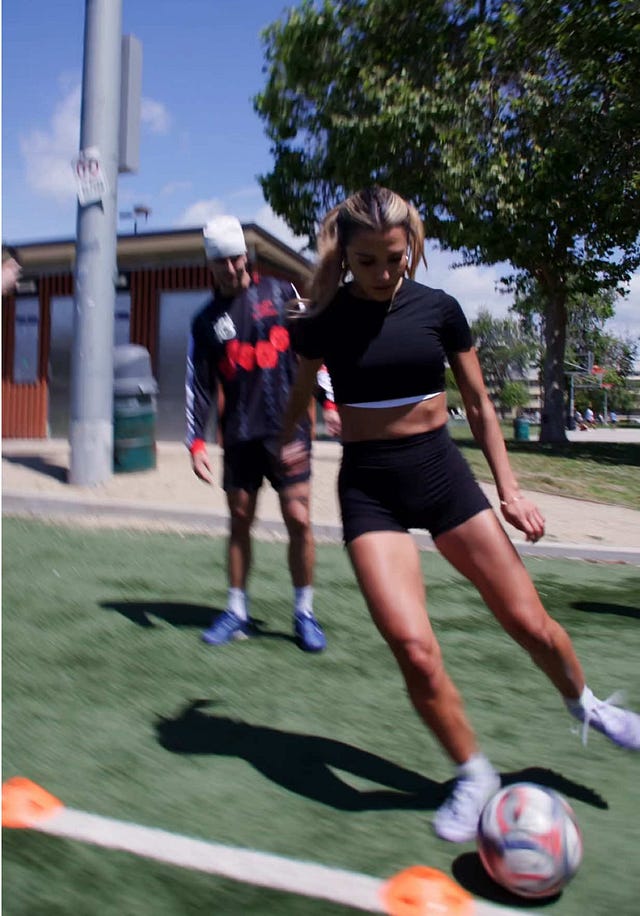
 Tiktok failed to load.
Enable 3rd party cookies or use another browser
Club América gave her a platform, but the system gave her a lesson
Muñoz played for Club América in Liga MX Femenil. The league is a clear sign of how fast women’s soccer has grown in Mexico. It has grown quickly, gained attention quickly, and become part of a bigger talk about the future of the women’s game in Latin America. But, like many quickly praised groups, growth is not the same as value.
Muñoz is careful here. She does not speak about her time at América with bitterness. Quite the opposite. “I think my experience was actually really fortunate and I don’t take that lightly,” she said. “Being one of the first American-Mexican players at Club América, I was welcomed with open arms. They saw me, they trusted me, and they gave me a platform I genuinely don’t think I would’ve had anywhere else. I wouldn’t be in this space today without them.”
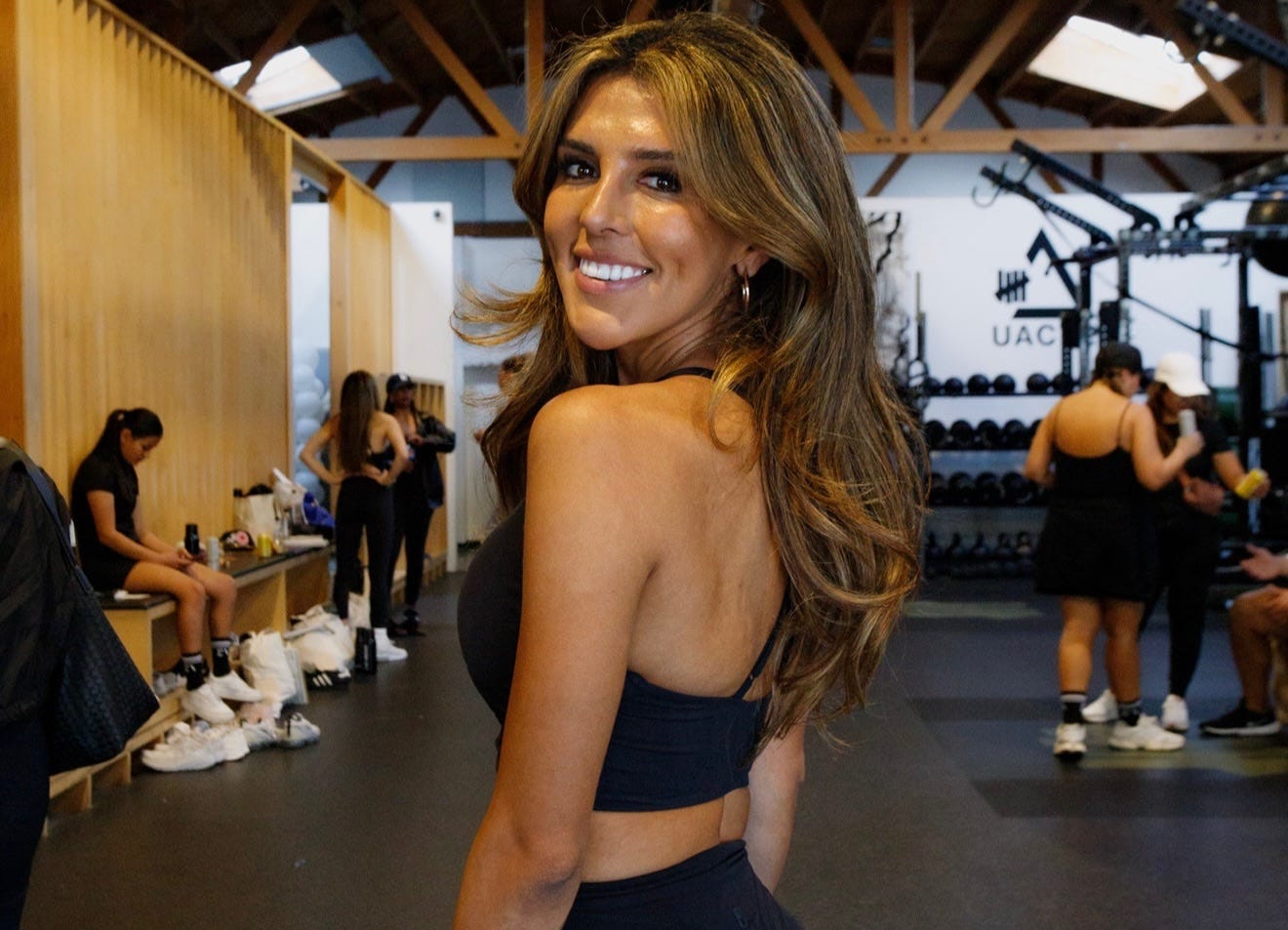
That gratitude is real, yet so is her willingness to widen the frame beyond her own luck.
“But at the same time, being inside the league opened my eyes to the bigger picture,” she continued. “It taught me that institutions don’t always invest in women athletes the way they celebrate them.”
There lies the reality that people in sports still find a way to act surprised by, even though women athletes have been saying it in various forms for years. Women’s sports are increasingly used as proof of progress, proof of modernity, proof that a club or federation understands the future. But when the cameras move, the structural gap remains. “There’s still a gap between the passion you see on the field and the resources behind it.”
What Muñoz wants fans to understand is that the game they watch is built on labor they rarely see. “The game doesn’t start at kickoff,” she said. “There’s a whole layer of unseen labor—early mornings, recovery, second jobs for some players, fighting for visibility and respect. That’s what makes those 90 minutes possible.”
Fans often treat performance as if it just happens when the game starts. But in women’s sports, unseen work is needed to make top performance look normal.
 Tiktok failed to load.
Enable 3rd party cookies or use another browser
The pressure on Latina athletes starts early, and it is never only about sport
There is a certain script Latina athletes often face. They hear: “Be grateful. Work hard. Be strong. Represent well. Don’t be too loud. Don’t be too feminine unless that femininity seems harmless.”
Muñoz felt that pressure early, especially from media and online reaction. “There’s this expectation that Latina athletes have to look one way: always grinding, always ‘on,’” she said. Yet, in her words, Muñoz has always been “a girly girl.” That in itself brought challenges. “When I’d post in a dress on an off day, actually enjoying what I worked for, people were confused. They acted like I couldn’t be both.”
That confusion tells you a lot about what people still want from women in sports. They want discipline without visible pleasure. Strength without softness. They want women athletes to be inspiring, but only within the aesthetic limits that keep them intelligible. Muñoz understood what was happening quickly. “That’s when I realized the pressure wasn’t about me, it was about their idea of me.”
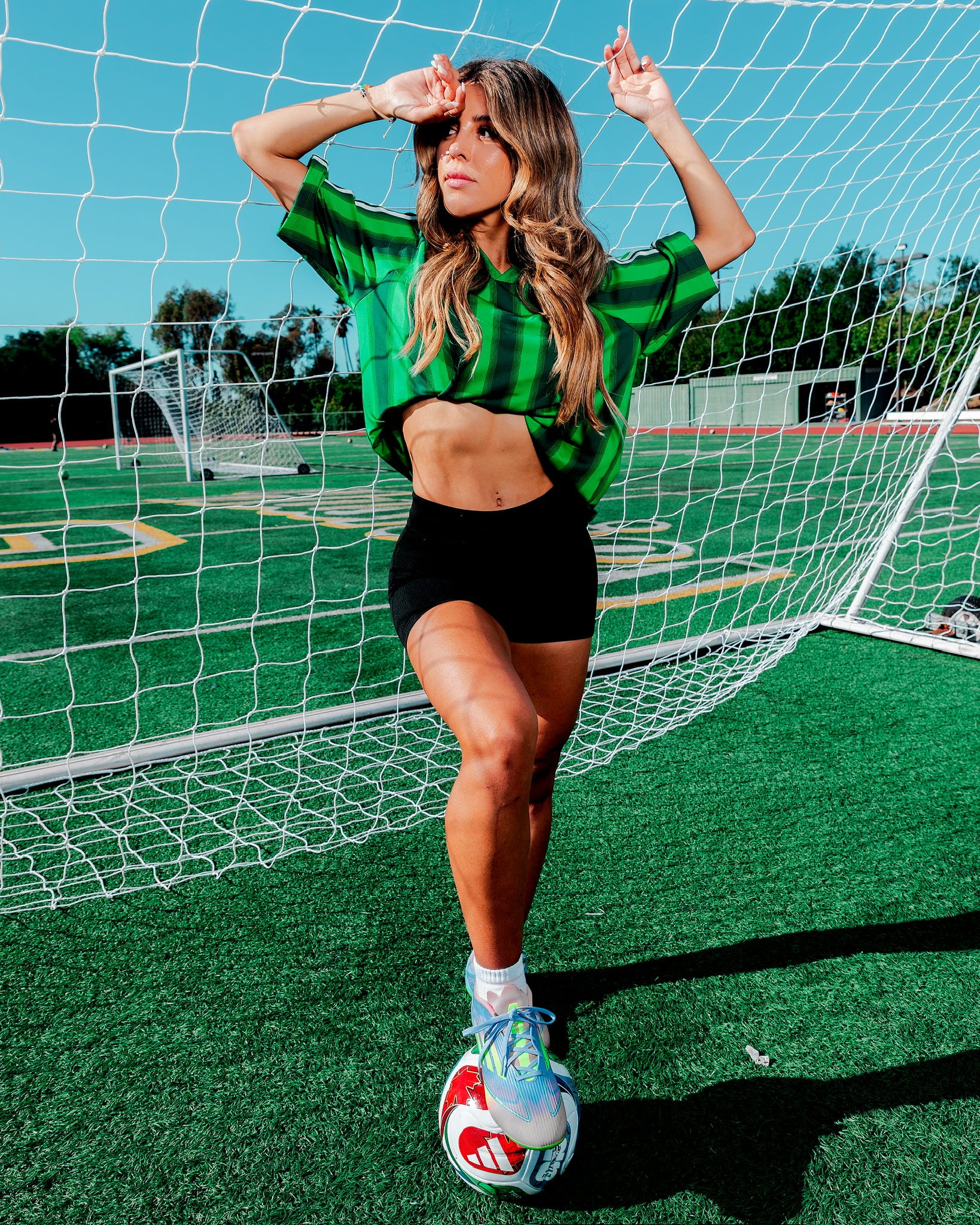
That realization seems to have shaped how she moves in public now.
“I protect my sense of self by not shrinking it,” she said. It is one of the strongest lines in the conversation because it rejects a survival tactic women are often taught to mistake for maturity. Shrinking is presented as professionalism. As humility. As a strategic restraint. Muñoz refuses that framing. “I can show up polished, feminine, and still be taken seriously in sport and in business.”
She is not dismissing the burden of representation; she is working around it. “Being grateful and representing something bigger than me is part of who I am. But I’ve reframed the pressure. Pressure is a privilege. If I’m feeling it, it means I’ve earned my place on the field, or now in rooms with some of the biggest brands in the world.”
“And I’m not toning myself down to fit in. I’m expanding what an athlete and a woman in this space gets to look like.”
 Tiktok failed to load.
Enable 3rd party cookies or use another browser
Sporty Spice Collective is not only about soccer
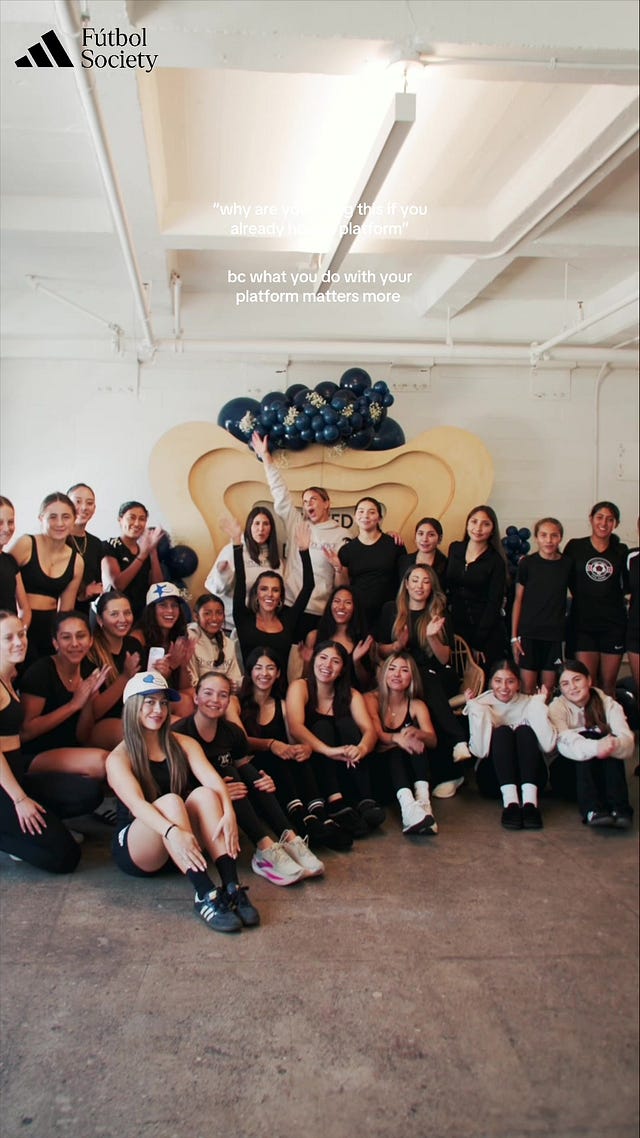
Muñoz’s nonprofit, Sporty Spice Collective, is easy to summarize in the language people often use for youth sports initiatives: access, training, opportunity, underserved girls, and early support. All of that is true. But if you listen carefully to how she talks about it, you’ll see the project is aimed at something else.
“Sporty Spice Collective isn’t about creating better athletes first,” she said. “It’s about creating more whole women.”
Too often, support for girls in sport is framed solely in terms of performance outcomes: more scholarships, more elite players, more professional prospects. Muñoz is naming a more intimate problem. “A lot of girls grow up feeling like they have to pick, be the athlete or be feminine, be serious or be expressive, be disciplined or actually enjoy their life. And that’s where girls start to lose themselves.”
In this way, sport can risk becoming a place where many young women learn to divide themselves. Recognizing this, Muñoz wants to interrupt that process early.
“So what we’re building is a space where they don’t have to choose,” she said. “They can show up confident on the field, and just as confident off it. It’s a community. It’s confidence. Its identity. Because if you get that part right early, everything else, including the soccer, levels up naturally.”
Watching the World Cup now, she sees both the game and the machinery around it
Muñoz is attending the World Cup this year, having already lived the sport from the inside and now building around it from the outside. This double perspective gives her a different way of seeing the tournament.
“When you watch this tournament, I won’t just be watching the game. I’m watching everything around it,” she said. Casual viewers, she argues, see the goals and the highlights. She sees “the details, the movement off the ball, the decisions under pressure. She also notices the branding, the storytelling, and the moments being built in real time.”
“Because the World Cup isn’t just about what happens on the field anymore,” she said. “It’s about the stories behind the players that make the game feel human. The content, the viral moments, the way fans connect to personalities—those carry the game beyond 90 minutes. That’s what people miss. The game is only part of it. The story makes it last.”
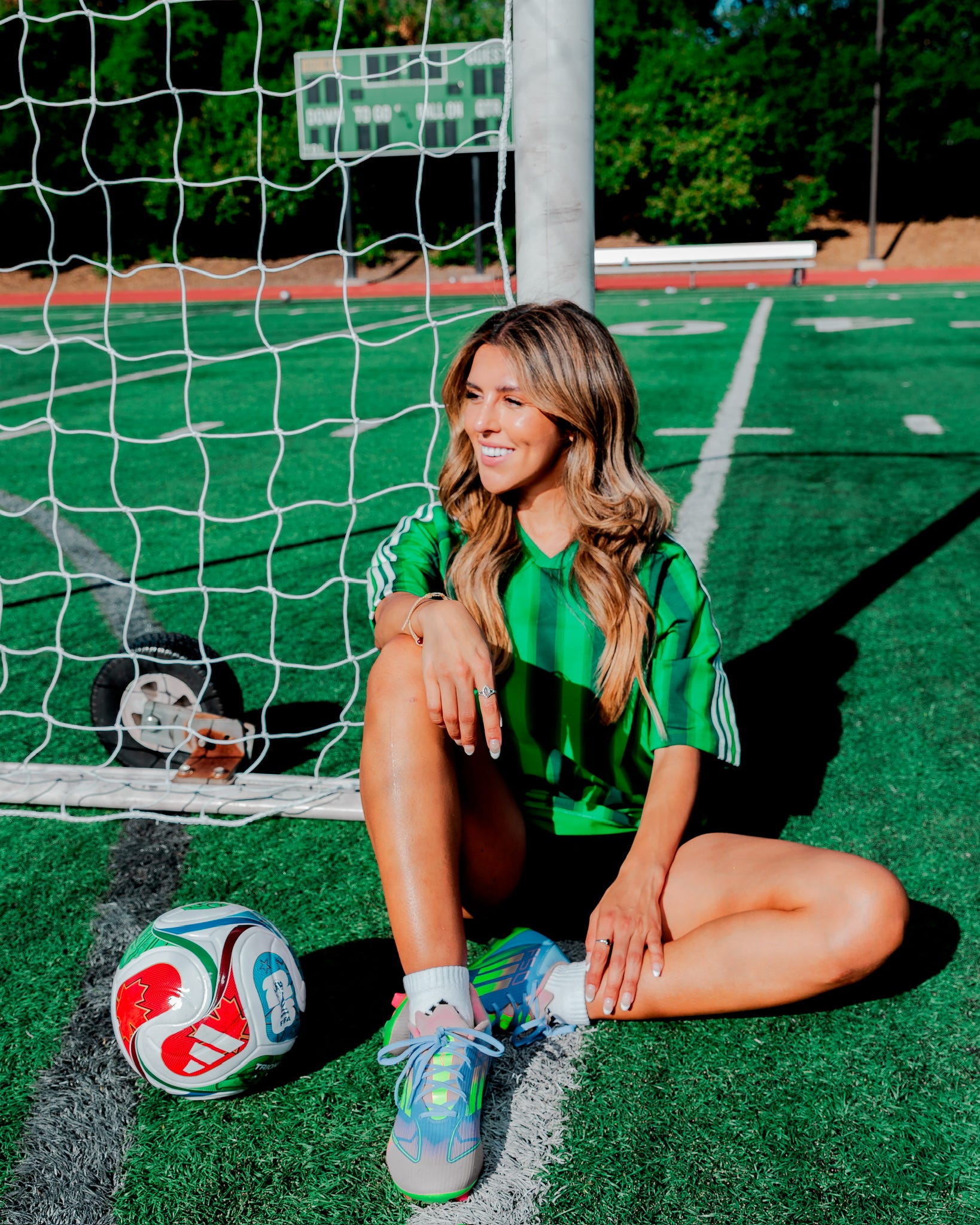
That is one of the clearest articulations of where women’s sports are right now.
People still talk about women’s sports as if exposure is a secondary benefit that follows the “real” competition. In reality, the visibility economy is already part of the industry. Storytelling is not fluff around the sport. It is one of the mechanisms through which the sport becomes durable, bankable, and emotionally legible to wider audiences. Muñoz sees that. She has already had to live the gap between being an athlete and being narrativized as one.
When we asked what it would take for women’s soccer to stop being treated as a moment and start being treated as an industry in its own right, her answer was strikingly blunt: “Just open your eyes.”
“The shift happens when people stop treating it like a trend and start treating it like a business. Consistent investment, real infrastructure, and long-term commitment are what’s needed. The audience is already there. The talent has always been there. Now, it’s about who’s ready to catch up and who’s still trying to play catch-up.”
Jennifer Muñoz is no longer asking where she fits
What makes Muñoz’s history so unique is not only that she can speak fluently about identity, sport, business, and representation, but also that she can do so in a way that is both personal and political. It is that she has clearly done the harder work of deciding she will not be reduced by any one of them.
The Mexican-American girl who once had to explain herself across rooms has become a woman who sees doubleness as power. The former pro who knows what institutional recognition can offer also knows exactly where it falls short. The “girly girl” athlete people could not reconcile now treats that unreconciled self as a method rather than a contradiction. And the founder she has become is trying to make sure the next generation of girls encounters sport as a place to expand, not split.