

Lena Dardelet on Contradiction, Softness, and the Weight of Becoming
She's performed with iLe, Monsieur Periné, and Vicente García. Now Lena Dardelet is arguing for something bigger: embrace the richness and layers of where you come from.
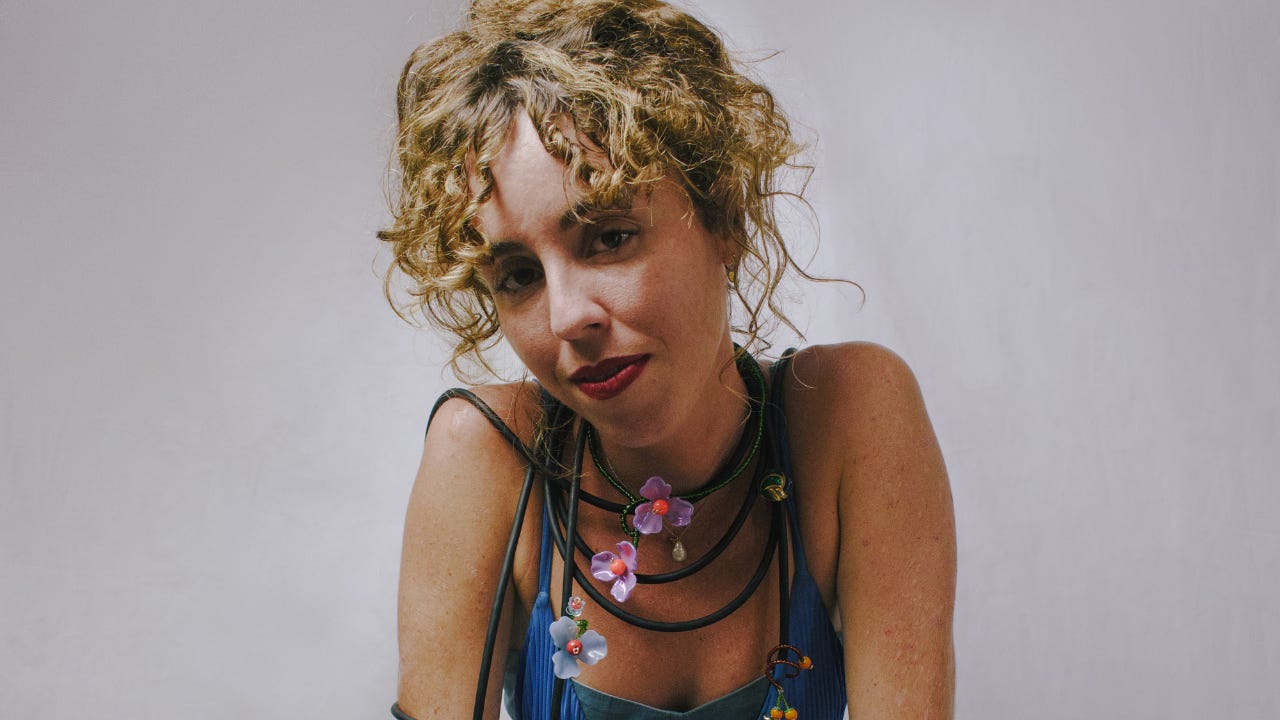
For years, Lena Dardelet has moved through Caribbean rhythms, Dominican folk traditions, the romantization of love á la française, and singer-songwriter intimacy. She is trilingual, a multi-instrumentalist, and has performed alongside everyone from Vicente García to iLe to Monsieur Periné. And through it all, she has antagonized the narrative that artistry should fold.
Instead, she has become an artist who loves her home while also being implicated in the forces changing it.
Now, with her recent work—songs and collaborations that move from Dominican folk tribute to bachata celebration to urban Latin experimentation, culminating in the seductive collaboration “Y Qué” with Martox—Lena is ready to show the world the product of her personal journey.
While her music has always been personal, and yes, political, she insists, without apology, that these things belong together.
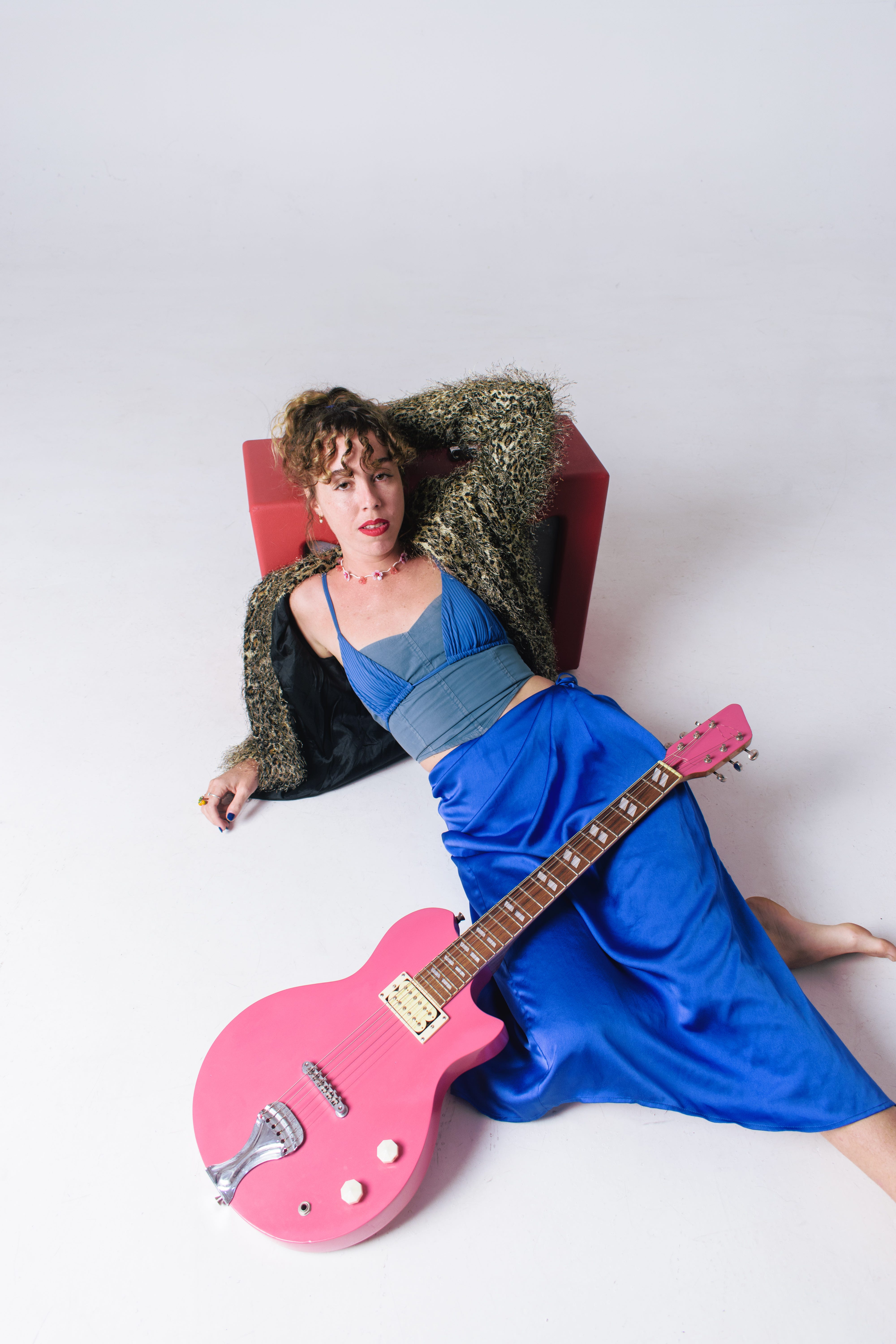
The Thing About Coming From Everywhere.
Lena Dardelet was born into a peculiar position: rooted in privilege but also shaped by movement. French and Dominican. A child of multiple worlds who grew up in a beach town, which is to say, in a place constantly remade by forces larger than herself.
Her family’s background—connected to development—means she has spent her life aware of the cost of her own existence. The beaches she loves and the communities she comes from exist, in part, because of decisions her family made. Decisions that displaced people, that concentrated wealth, that transformed ecosystems.
She does not look away from this.
“Coming to terms with how different things can coexist,” she says carefully, “means understanding that I am on the privileged side of things and that as an adult I can choose to do things differently and take responsibility to care and do better.”
Far from self-flagellation, Lena’s reflection focuses on seeing one’s own implication without using that clarity as an excuse to do nothing.
And it has shaped not just her politics but her sound. The sensuality of her music—the way rhythm moves through her work—comes from the Caribbean. But the critical distance she maintains, the refusal to make that sensuality into eroticized fantasy, comes from knowing that the Caribbean is not a performative scenario. Nor is her experience.
“I do think inevitably art becomes referential and representative to the audience that consumes it. I think it all comes down to understanding the layers and complexities of these cultures and how places evolve with time. Although I have voiced some of the problems, I definitely tend to romanticize island life in my music,” she admits, “because I think that is part of the beauty as well. The Caribbean is often depicted and consumed as fantasy, and in my art, I like to include its various colors and try to see things as they are instead of categorizing them as ‘good’ or ‘bad’.”
What Stays Constant.
If you listen to Lena’s catalog—and it is genuinely wide and diverse—there is a paradox at its center.
“I believe the fusion of Dominican rhythms and/or narrative always resurfaces in some way,” she says. “The simplicity in my writing. And the overall sensual sound.”
The simplicity she mentions is its own kind of sophistication. Listen to her early work—Caja sin Oxígeno, for example—and you hear the beating heart of Latin Pop, a massive genre that has survived decades.
Then, you listen to her most recent work, “PA’ QUE BAILEMOS,” and you feel DR pouring through her veins.
“I think my eclectic music invites people to embrace the richness and layers of Caribbean music,” she explains, “as well as invites people to see the world with more softness, while also [embracing] the strength of a feminine perspective.
The Personal and the Political Cannot Be Separated.
Lena has been outspoken about catcalling, environmental destruction, and gentrification. She has used her voice to advocate for women’s rights, to challenge violence, and to insist that the world can be different from what it is.
However, she lives inside a contradiction: she is also implicated in the very systems she critiques. Her family built the infrastructure that transformed the Dominican coast. Ergo, she grew up with the privilege that the development she now questions brought.
“What my music is arguing for right now,” she says, “is inviting people to embrace the richness and layers of Caribbean music.”
What An Artist Becomes When She Refuses to Simplify Herself.
When asked about where her writing comes from, Lena describes an interwoven process.
“I feel like each song begins from a different place. Every creative experience pulls from different threads. Sometimes it’s a melody. Sometimes it’s lyrics. Sometimes it’s a concept. In terms of making sense of myself, I try to be true to where I’m at and what moves me in that present moment.”
Her collaboration with Martox on “Y Qué” is a good example. With the softness of the morning sea, the song calls for the simplicity of life, the one that comes after the storm. It is her saying: I can be soft and strong. I can love this place and question it at the same time. As they sing, no es tan complicado.
This is what happens when an artist turns her gaze inward and outward at the same time. When she understands that the only way to honor a place is to see it clearly.