

Karol G’s Coachella Set Proved What Happens When Latinas Control the Narrative
She made Latin culture the framework, not the garnish, and she made women the gravitational center of the night.
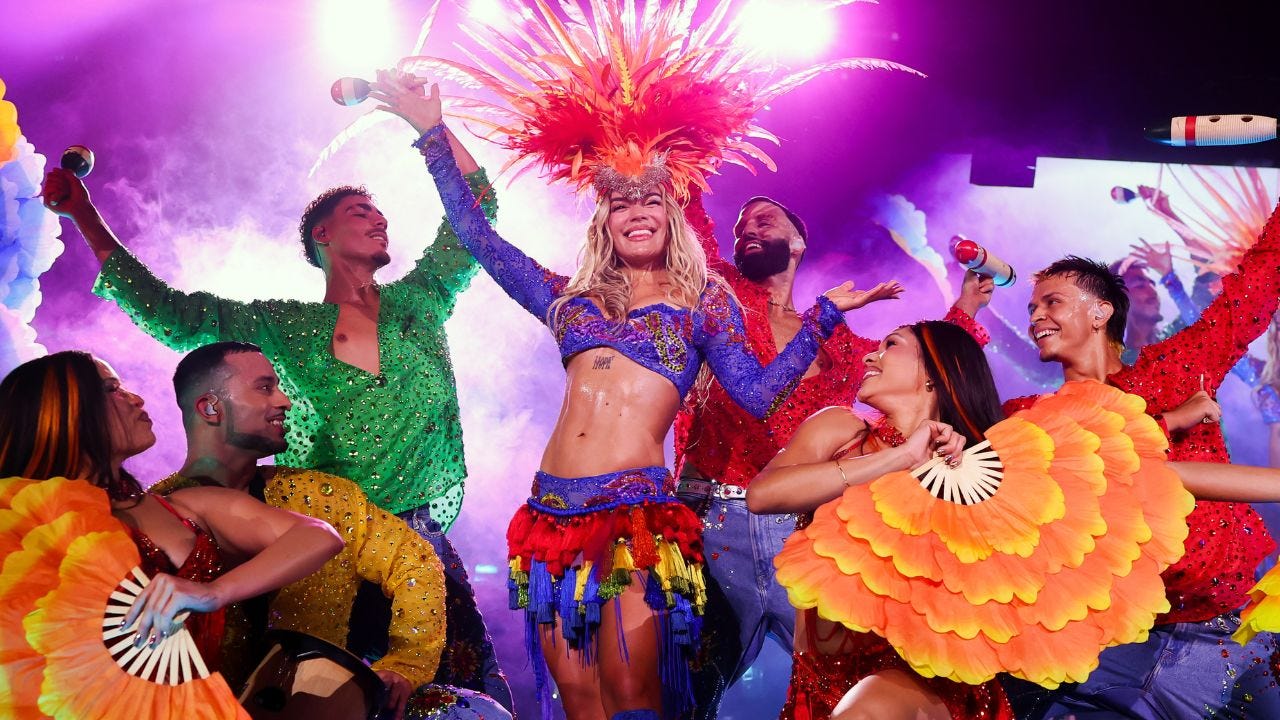
Every few years, Coachella sells the same fantasy: a desert weekend where music and fashion meet “culture.” Everyone pretends the festival is bigger than the industries that bankroll it.
But in 2026, Karol G arrived and redefined the fantasy.
Because what Karol did on that stage went beyond a headliner set. It was a masterclass in Latin culture and the power of a Latina woman who knows her history, her audience, and what it means to take up space in a country that insists our presence is optional.
Karol G became the first Latina to headline Coachella. She did it after decades of Latin artists and groups pushed their way into the lineup. She honored that lineage through a clear symbol: a tapestry of flags from all Latin American countries. These appeared in festival activations and during her performance.
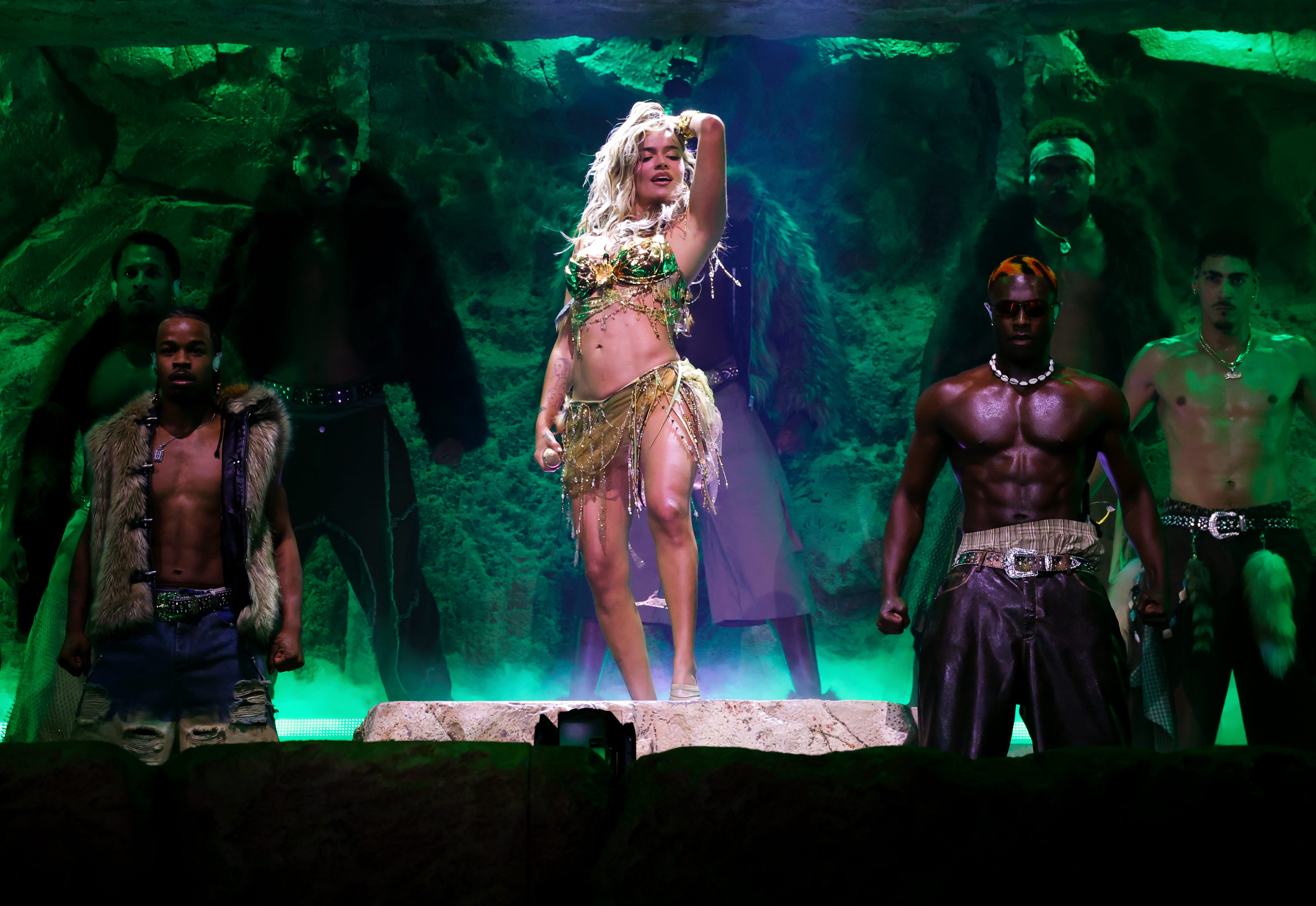
Karol G’s masterclass was in session last Sunday
The anticipation was palpable for Coachella 2026. The lineup balanced legacy names and return-to-the-stage moments, including Sabrina Carpenter and Justin Bieber. But even beyond Latino audiences, Karol G was the main draw.
And when she finally spoke to the crowd, she did so with the authority of someone naming the stakes.
“I’m Carolina Giraldo, from Medellín, Colombia, and today I’m the first Latina woman to headline Coachella,” she said. The audience looked like a sea of flags from across Latin America. “I’m very happy and very proud,” she added. But “at the same time, I feel like it’s coming late. This festival has been going on for 27 years. Before me, there were many great Latin artists who paved the way for this opportunity.”
Then she widened the frame beyond her career. “Latinos have been facing difficulties in this country lately,” she continued. “We support you. I’m proud that this brings out the best in us: unity, resilience, a strong spirit. We want everyone to feel welcome to our culture, our roots, our music. I want everyone to feel proud of their origins.”
If you grew up in this community, you know exactly what that message implied.
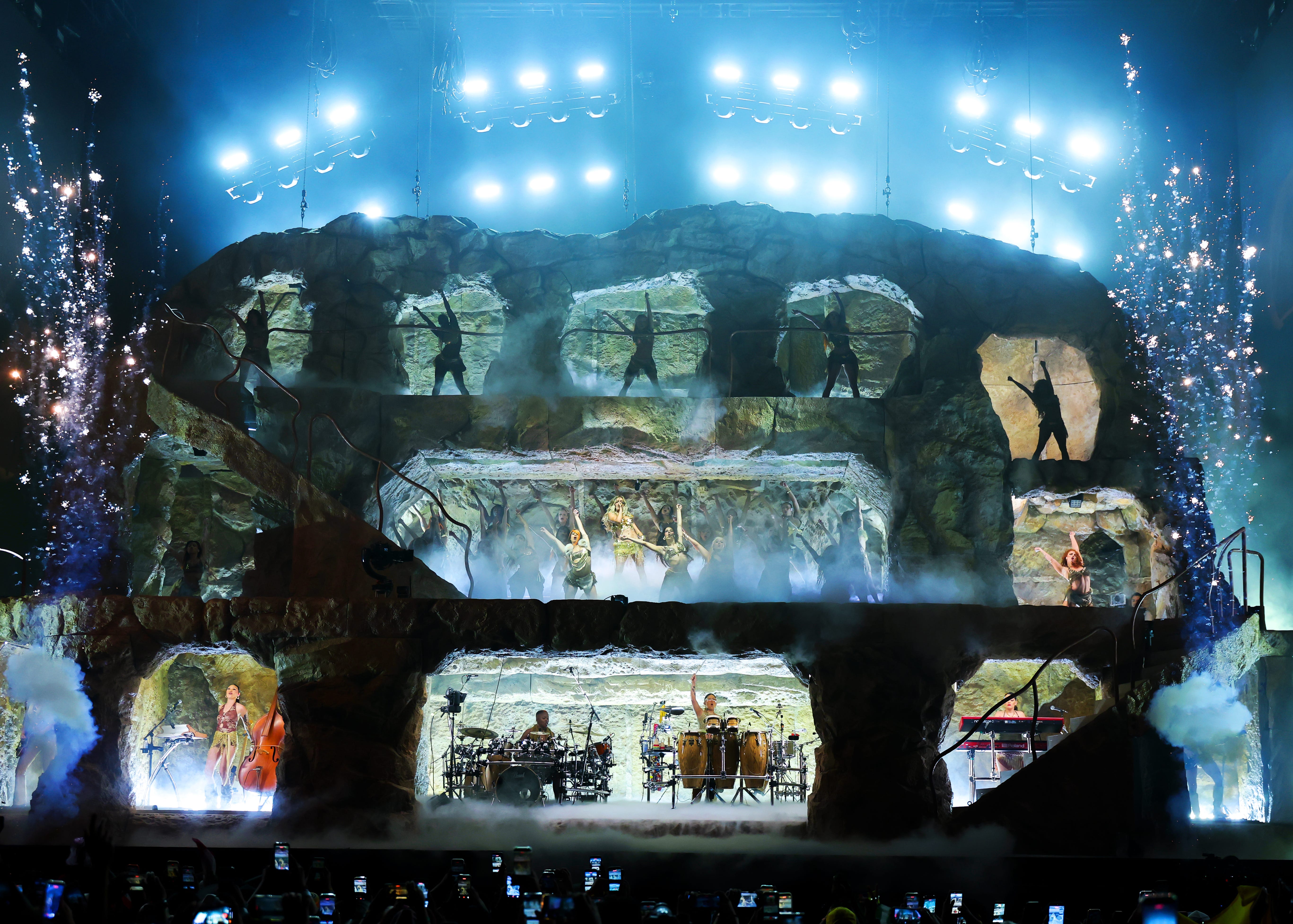
The takeover of “Karolchella”
Fans dubbed the Sunday-night set “Karolchella,” and the energy earned the name. The main stage’s intricate design included a three-story stone cave structure, likely nodding to the depths of the jungle in her native Colombia, and its construction reportedly took longer than expected.
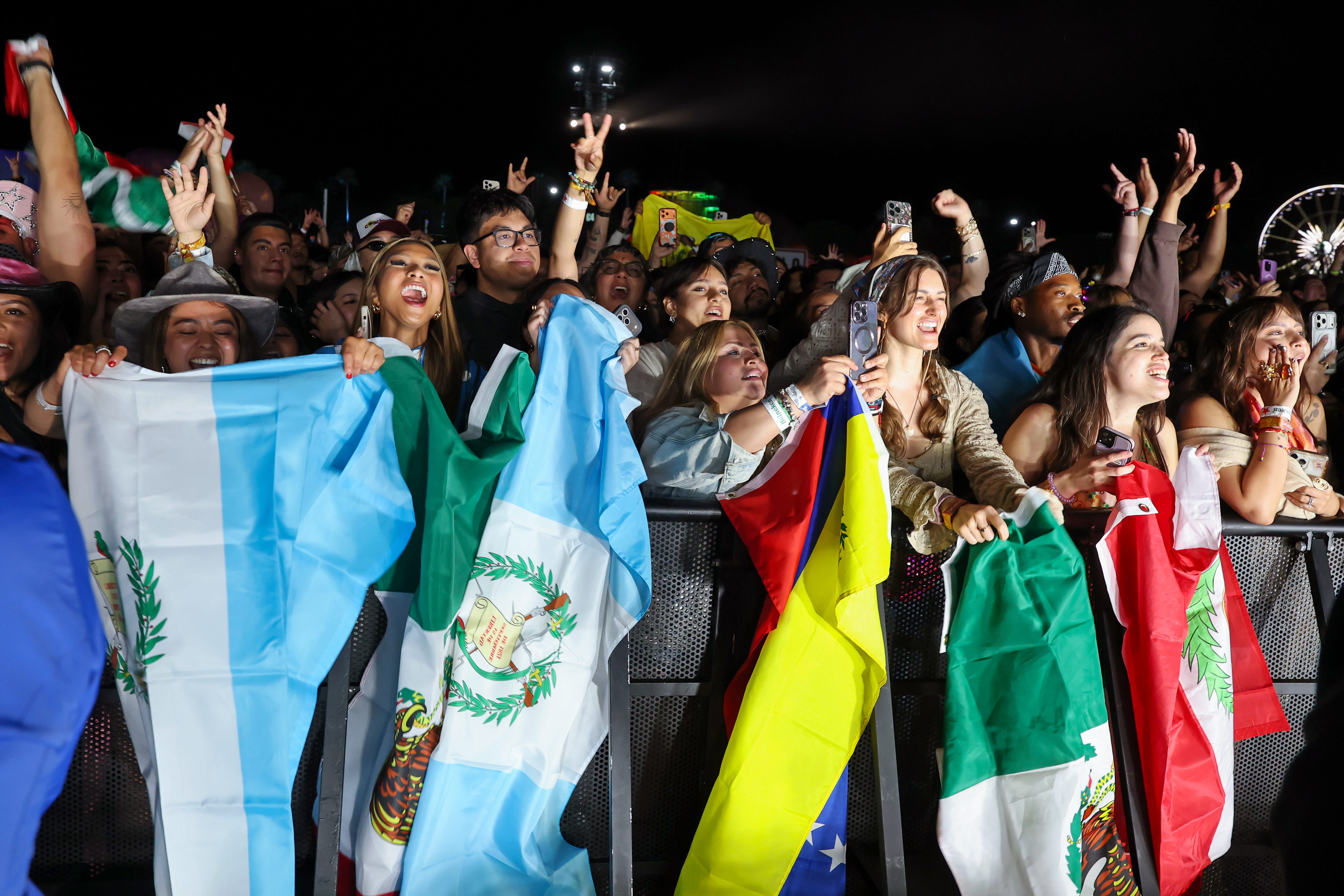
While the final touches delayed her start by about 25 minutes, the crowd did not drift. They chanted “bichota” and “Karol,” waving flags from across Latin America and the Caribbean like they were holding up proof of life.
Then the show began with a story narrated by Karol in Spanish, projected in English on the screens. It was about a girl who had to break free from social expectations to find her voice, and who used that strength to create light, water, fire, and valleys. When the story ended, jets of fire shot up. Karol and her dancers launched into “Latina Foreva.”
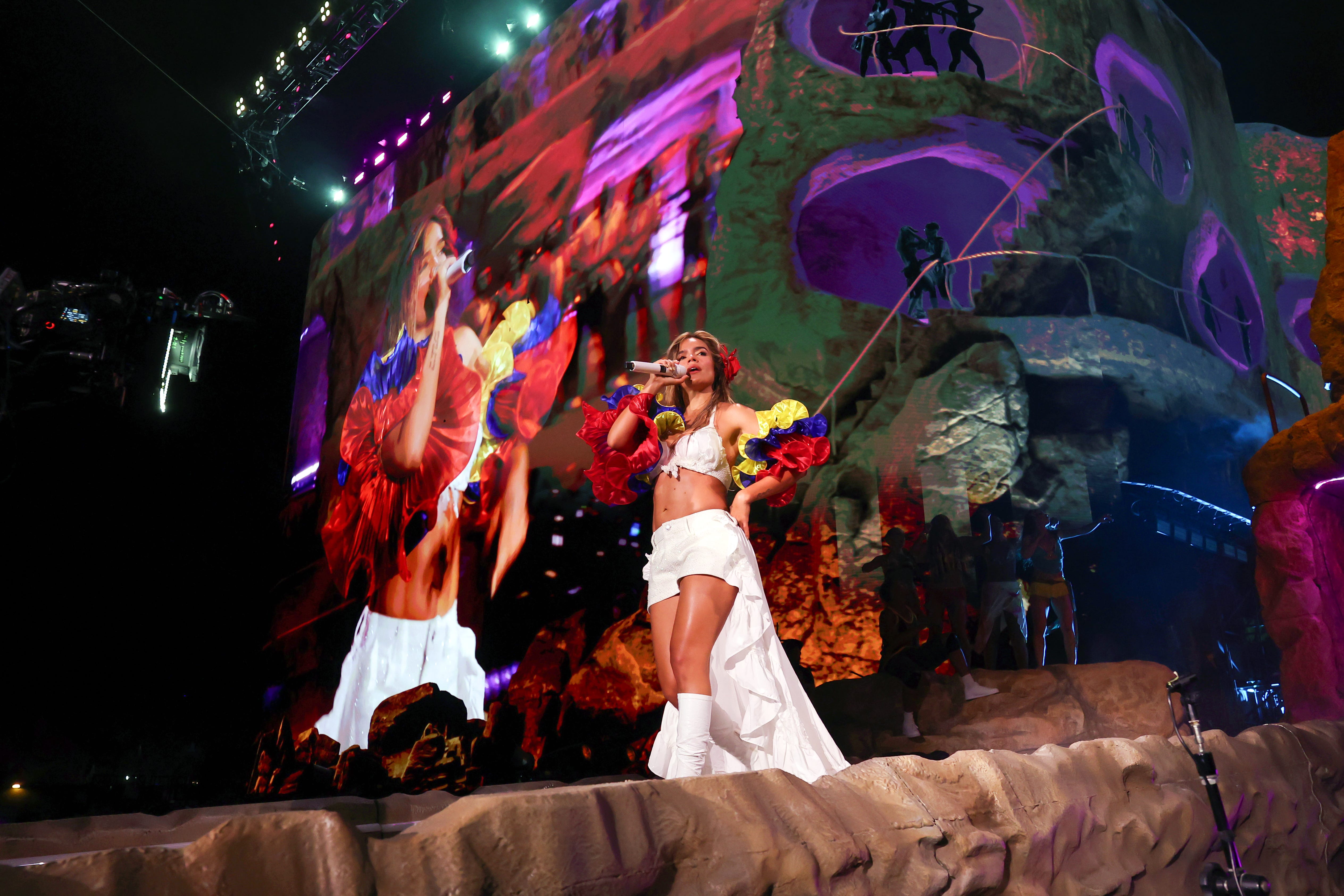
A jungle, a cave, and a road that looked like a warning
As part of her latest album Tropicoqueta, Karol offered a retrospective of Latin American women’s musical history. She emerged from the stage surrounded by symbols of indigenous cosmogony, including jaguars and a visual connection to the earth.
The stage also featured a cracked asphalt road, cutting through the jungle and caves, like a visual argument about movement, about the journey, about what this country keeps calling “civilization” while denying the cultures that built it.
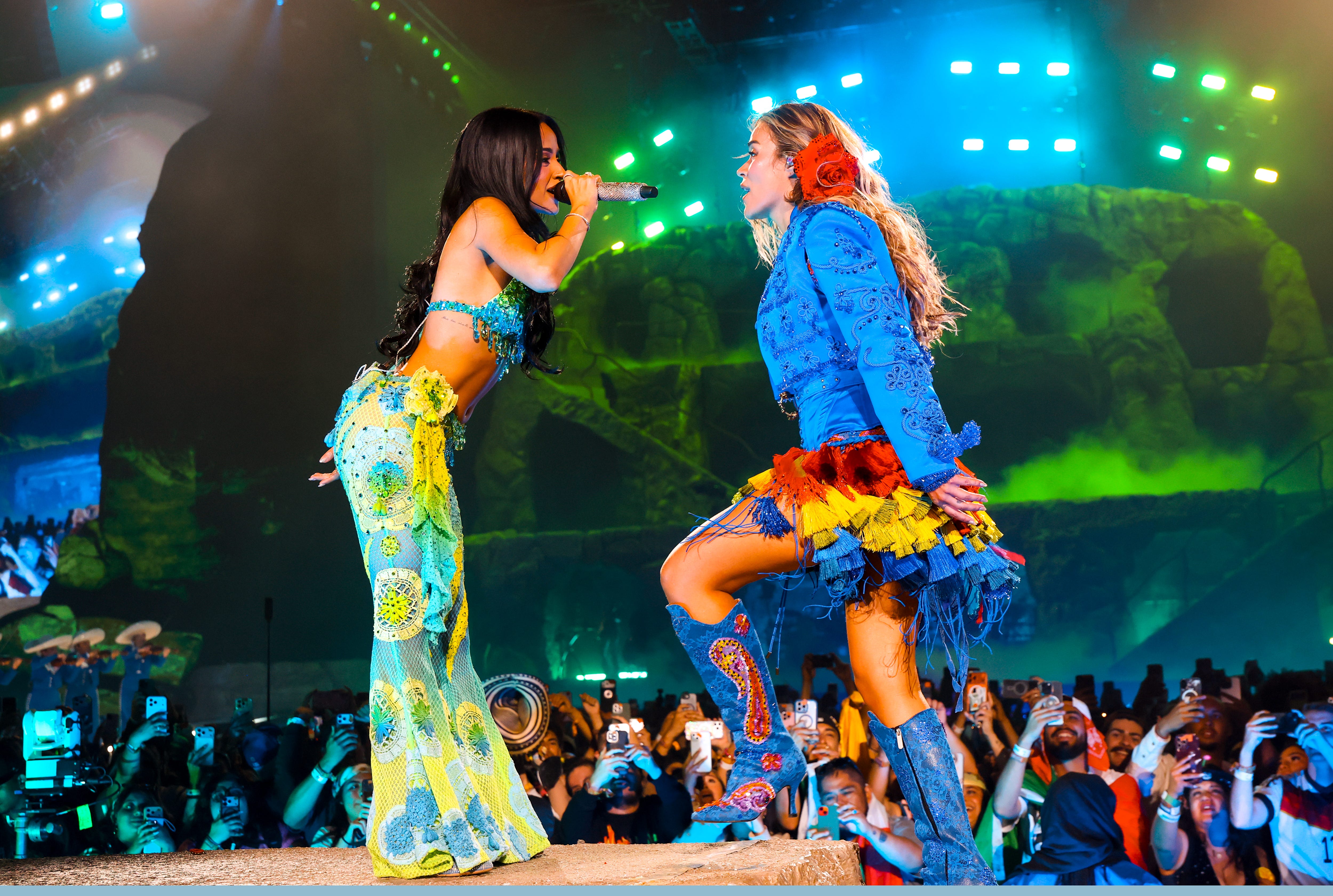
In that setting, she performed songs like “Papasito,” “Son de la Negra,” and “Ese Hombre es Malo.” She did more than sing: from there, she built bridges—toward mariachi and reggaetón pioneers, into rock, and to the women watching and those onstage.
The set was huge, and the choices precise
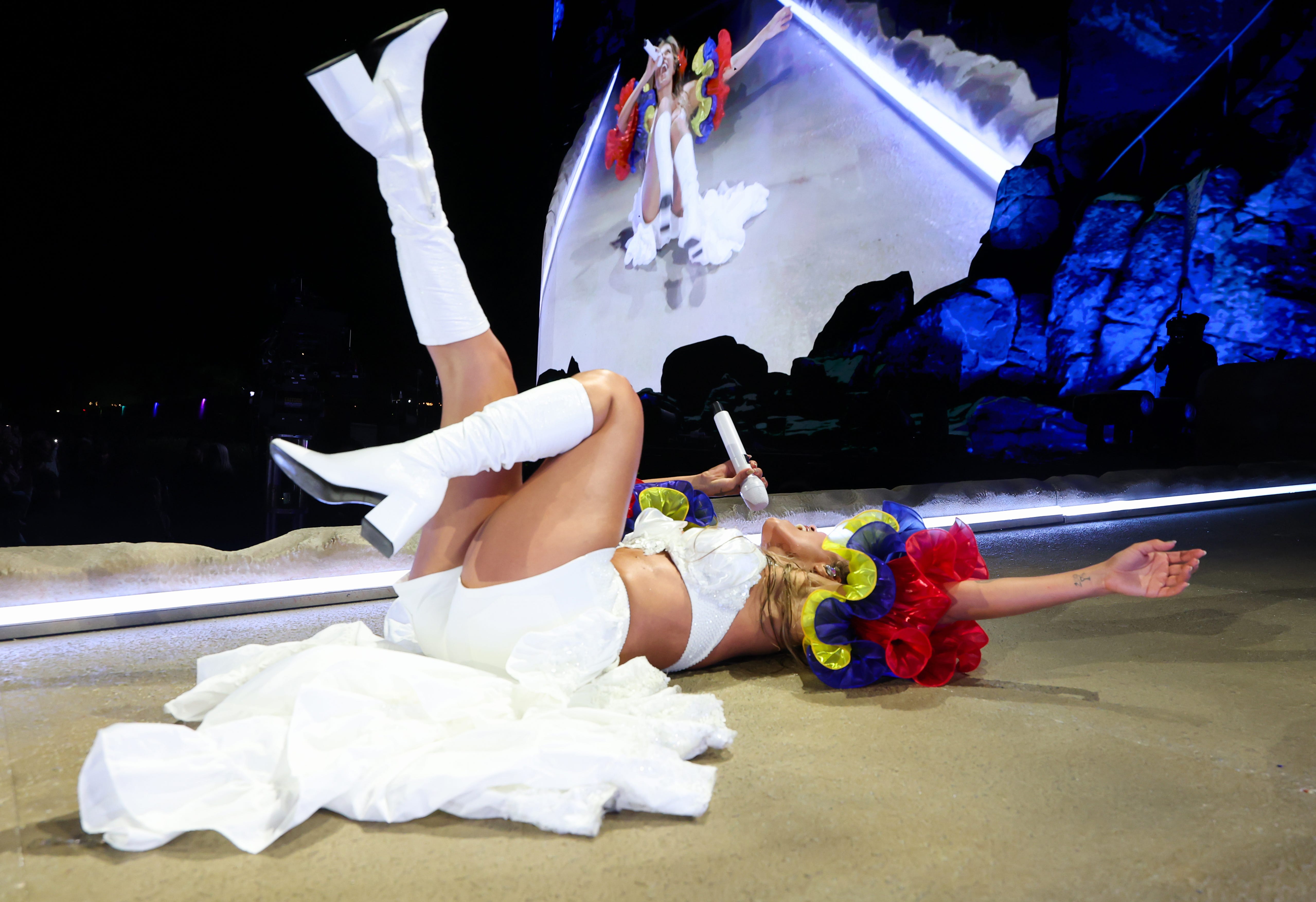
Over 90 minutes, Karol delivered 20 of her own songs, including “TQG” and “Amargura.” She moved through six costume changes, from caveman-inspired outfits to tropical-chic looks, across four distinct stage setups. Parris Goebel’s choreography drove the performance, with Rolling Stone describing the movement as aggressive yet sensual.
She covered Gloria Estefan’s “Mi Tierra.” Reggaetón pioneer Wisin delivered a four-song mini-concert. Mariachi Reyna de Los Ángeles, the first all-female professional mariachi group in the United States, appeared as part of the show.
Mariah Angeliq joined Karol for “El Makinon.” Becky G took the stage for a mariachi version of “Mamii.” Greg Gonzales of Cigarettes After Sex joined for “Después de Ti.” Cuban-American jazz musician Arturo Sandoval played trumpet during “Ivonny Bonita.”
It was a powerful ecosystem on stage.
The not-so-subtle female focus
Male dancers appeared at times, but the deliberate focus on women shaped the show’s atmosphere. Even the audience near the stage looked like a statement: Young Miko, Lizzo, Camila Cabello, and Becky G watched intently from close range.
Amid it all, the performance moved with overt sensuality: hip-shaking, twerking, and elaborate, skimpy outfits. The night’s indulgent center was a small, shallow stone-carved pool lit like quartz. There, Karol and her dancers became water goddesses in tiny silver bikinis.
This was intentional sensuality for the female gaze, directly contrasting with the way American culture typically portrays Latina sensuality, making a clear statement about agency and self-representation.
From tribute to authorship
In her first Coachella performance in 2022, Karol paid tribute to icons like Selena, Celia Cruz, Daddy Yankee, and others through a medley of their most popular songs.
In 2026, she went further. She made Latin culture the structure of the night: the narrative, the set design, the guest list, the language, the pacing, and the epicenter.
As the flags of Latin America and the Caribbean waved over the crowd, many wore black-and-white Colombian straw hats known as sombreros vueltiaos. She took over the venue with the ease of someone who knows she belongs there.
An ending that became a promise
During “Si Antes te Hubiera Conocido,” Karol announced she had to wrap the show and said she wanted to perform “Provenza,” a song she debuted during her Coachella 2022 performance. The finale exploded into Tiësto’s remix, then confetti. Karol took a final bow with her dancers, vulnerably showing her excitement.
For the critics, the performance’s success was undeniable. They agreed she “undoubtedly demonstrated why she deserves a place in the festival’s hall of fame.”
But the unavoidable conclusion is this: Karol G’s purpose on that stage was not to prove Latin culture’s legitimacy. She performed to show that Latin culture has always been present.