

Is The Girl Code Dead, or Did Reality TV Just Make It Loud?
Amanda Batula and West Wilson’s “Summer House” statement reopened an old debate: what do friends owe each other when romance enters the group chat.
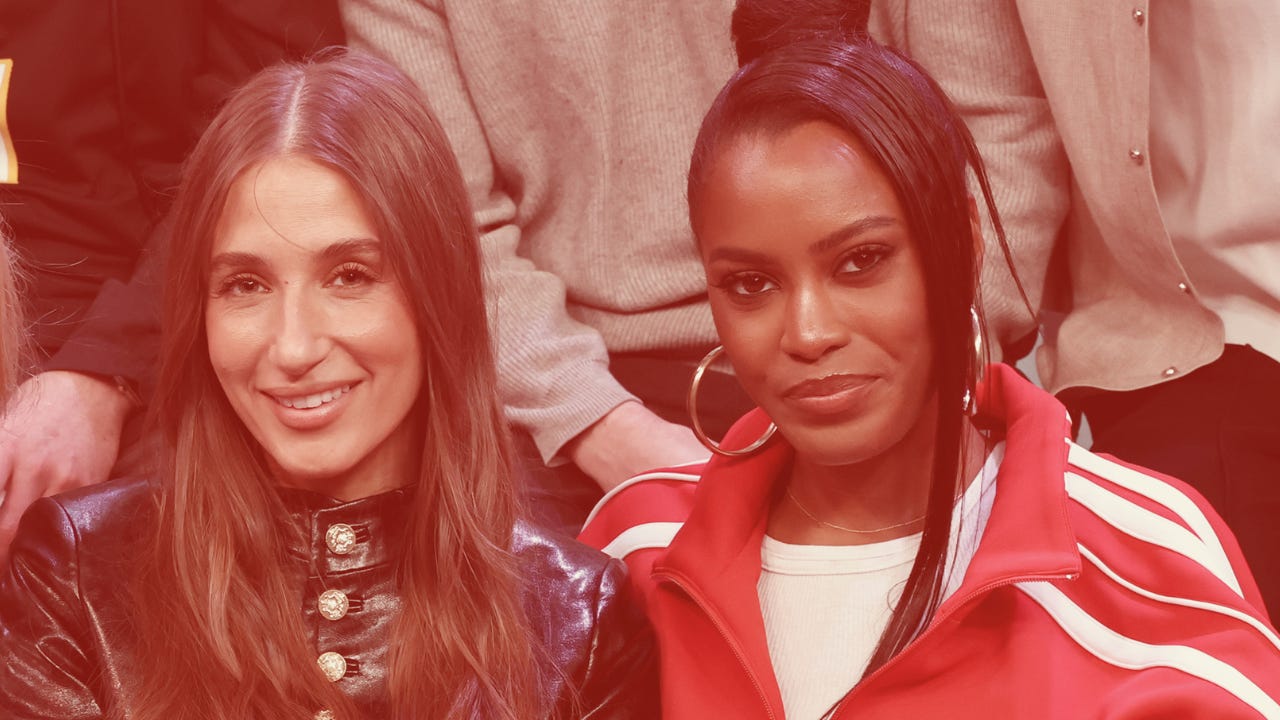
When did we collectively decide the Girl Code was dead? I know it’s been years since we’ve been debating its boundaries, but the recent Summer House drama made us rethink the approach once more. After all, that’s what reality TV does.
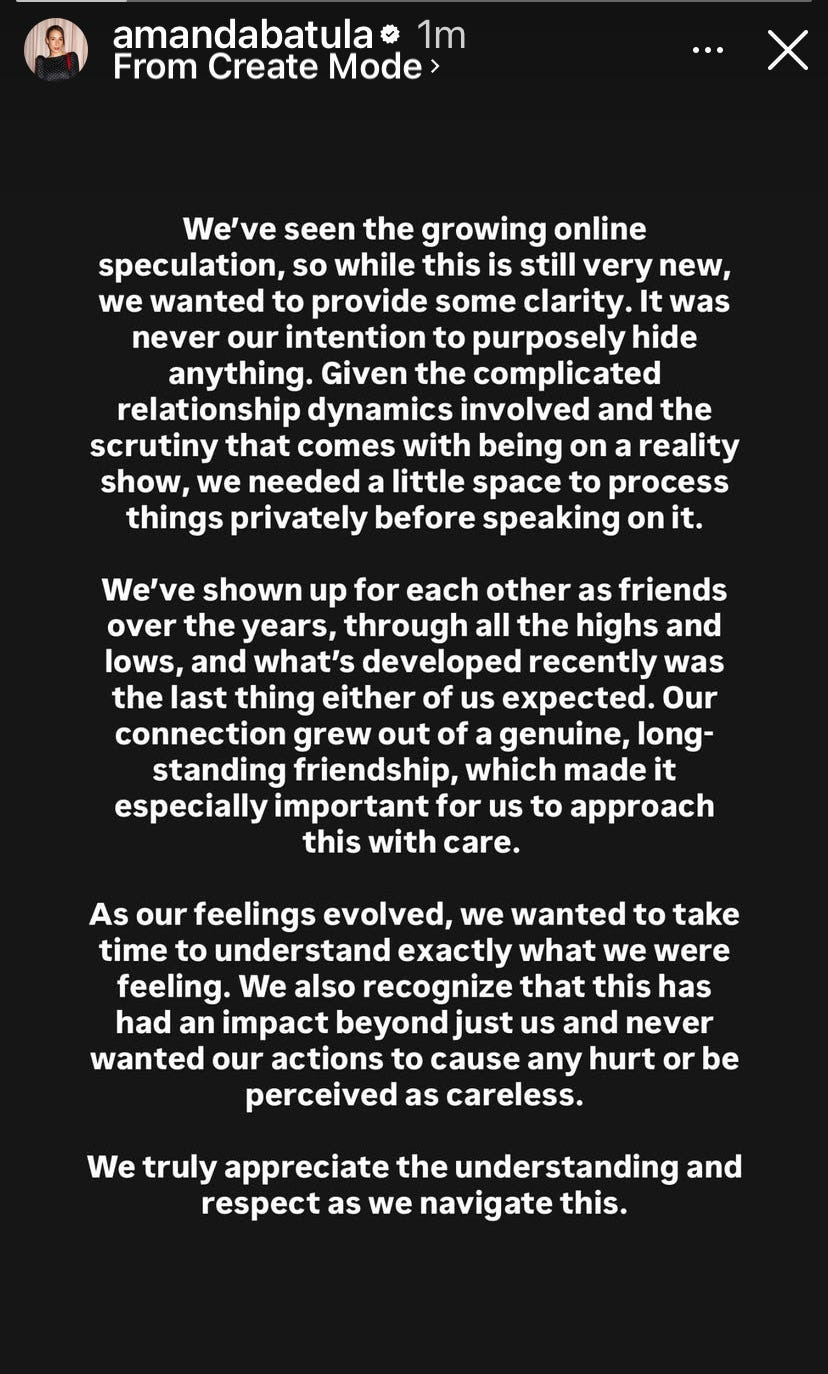
On March 31, Summer House stars Amanda Batula and West Wilson confirmed their relationship in a joint statement shared on Instagram Stories: “We’ve seen the growing online speculation, so while this is still very new, we wanted to provide some clarity,” they wrote, adding, “It was never our intention to purposely hide anything.”
If you’re a bit lost on the context, let’s put you on: West previously dated Ciara Miller, who is also (or was) best friends with Amanda. In the hours after the statement went up, coverage across entertainment media turned into one loud question: Is the Girl Code officially out the window?
The Girl Code has always been kinda obvious
Since, well, forever, the Girl Code has lived in the space between friendship and dating, which means it lives in ambiguity on purpose. But let’s revise the rules, shall we?
Rule #1: Keep your friends’ secrets like they are sacred. If she trusted you with something private, you do not recycle it for entertainment, you do not “process it” out loud with your partner, and you do not let it slip just to be interesting.
Rule #2 (and the core of our discussion): Do not date the exes, the situationships, or the “I think I like him” crushes. If your friend ever had feelings there, or history there, or even a bruised spot there, you do not go shopping in that aisle.
Rule #3: Tell the truth, even when it is inconvenient. If you know her partner is cheating, you do not play dumb to keep the peace. If she asks whether the outfit works and it does not, you do not lie to protect your own comfort.
Rule #4: Hype her up like it is your job. Treat her wins as evidence that good things can happen to women you love. Do not compete, do not compare, do not quietly resent her when she shines.
And finally, rule #5: Defend her in public, then correct her in private. If she is being dragged, you do not join the pile-on to look fair or “balanced.” You stand with her, then you pull her aside later if you think she moved wrong.
Yes, these rules are rarely defined until someone gets hurt. But do we even have to get to that point?
The Summer House situation is a case in point
Amanda and West tried to thread the needle publicly. They framed their relationship as something that “grew out of a genuine, long-standing friendship,” and said they wanted to “approach this with care,” acknowledging that it “has had an impact beyond just us.”
But if the impact extends beyond them, we are already in Girl Code territory, where friendship becomes collateral damage, and the audience starts assigning blame like in a courtroom. In the end, every relationship has two components. And yes, the audience always prosecutes the women first.
Can the Girl Code be weaponized?
A Debate Mag piece calls out how Girl Code often claims feminist intention while placing “all of the onus on the woman in the equation,” even though two people are making choices. A friendship might be jeopardized, but, more often than not, especially in the straight community, there’s always a man playing the innocent.
That dynamic has always been there. The code tends to operate as a policing mechanism rather than a protection mechanism. It frames women as the managers of everyone’s boundaries, the gatekeepers of community stability, the ones who must “behave” so men can keep floating through the story untouched.
So when something breaks, the blame travels the familiar route. Woman to woman. Friend to friend. Public to woman.
The Vogue question still hangs there: Is Girl Code dead?
Eileen Kelly asked “Is Girl Code Dead?” in a Vogue column last year, and the question reads differently in 2026 because the culture has moved even further into surveillance dating: group chats, soft launches, Instagram follows (and unfollows).
What we are watching now is less about a “code” and more about a public negotiation over what friendship is allowed to cost. Maybe the “public” part is more harmful than anything else.
Kyle Cooke’s “Instagram vs. Reality” post shows how the internet turns pain into a sport
In the middle of the swirl, E! News reported that Kyle Cooke posted a photo with Ciara Miller captioned “Instagram vs. Reality,” and tagged the location as “Psych Ward.” At the same time, online speculation continued to spiral around Amanda and West.
People are treating the entire situation like a live poll on loyalty.
That is the part no one admits: Girl Code used to be enforced in private. Now it gets litigated in public, in real time, by strangers who confuse parasocial outrage with ethics.
If Girl Code survives, it needs to be rewritten as accountability
Here is what still holds up: if you claim friendship, you owe honesty. You owe a private conversation before a public reveal. You owe your friend enough respect to treat them as a person with a nervous system, not an obstacle. You owe it to yourself to be willing to hear “this hurts” without turning it into a debate over technicalities.
But the Girl Code cannot keep pretending men are background characters. If West made choices that affected Ciara, that accountability belongs to him, too. If Kyle’s marriage ended and the aftermath turned into a storyline, that does not erase the emotional reality for anyone involved.
A “code” that only disciplines women is not sisterhood. It is patriarchy with cute branding.
Introducing how “internalized misogyny” looks in 2026 to a newer generation 🙃
The silence before the statement is doing so much heavy lifting here.