

‘In Case She Says No’: The TikTok Trend 'Training' Men to Attack Women
A brutal stabbing in São Gonçalo and a wave of viral “practice” videos have forced Brazil to confront how online misogyny can escalate into real-world violence.

Some trends have nothing to do with jokes or dances. They are terrifying rehearsals.
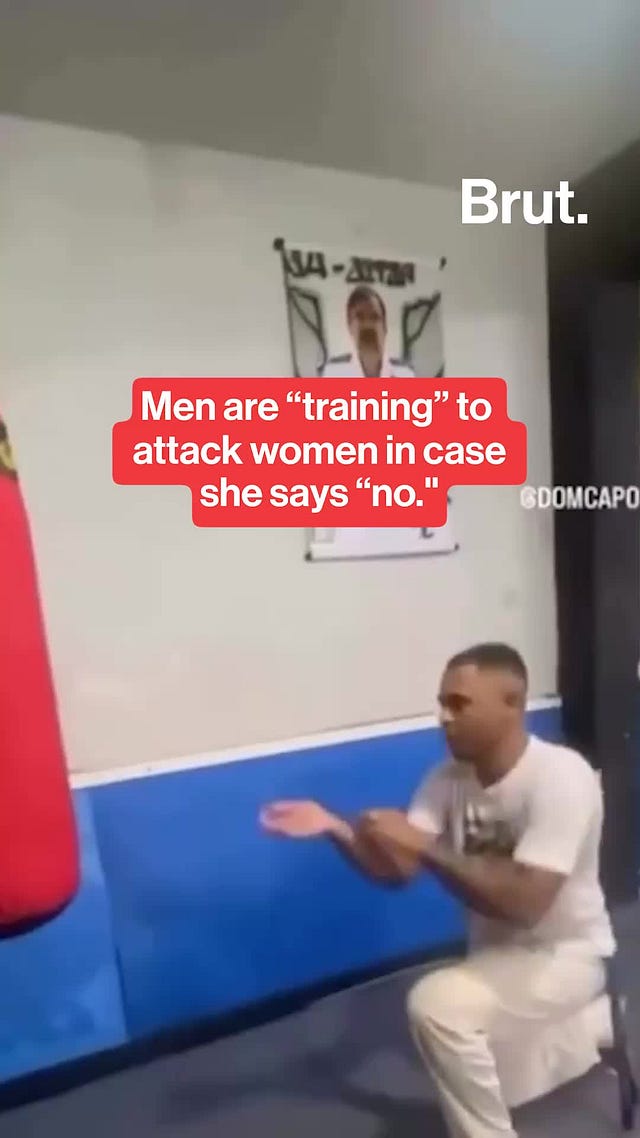
In Brazil, videos have been circulating across TikTok showing men simulating violence against women who reject them. The caption repeats: “training in case she says no.” And before it was considered just performative violence, a case in São Gonçalo sounded all the alarms.
A 20-year-old woman said no, and a month later, she was stabbed around 50 times.
The “training” trend is already attached to a real attack
According to Brut, Helena Anizio Rosak, 20, had turned down a man who sent her flowers and chocolates. Weeks later, he broke into her home in São Gonçalo, near Rio de Janeiro, and stabbed her around 50 times, stopping when her mother intervened.
Helena was placed in a medically induced coma and underwent multiple surgeries before recovering.
Meanwhile, the videos were spreading.
Brut reported that men in Brazil posted clips of themselves attacking mannequins or imaginary targets, repeating: “I’m practicing in case she says no.” Helena’s mother said the attacker followed similar content online.
 Tiktok failed to load.
Enable 3rd party cookies or use another browser
What the videos show is horrifying
Reporting from The International Business Times describes a pattern across TikTok. Men stage punches and simulate stabbings just out of frame. Some point firearms at the camera. They all set the situation as a hypothetical woman rejects them.
The trend, often labeled “if she says no,” went viral around International Women’s Day.
In Brazil, authorities responded quickly. The Federal Police cybercrime division opened an investigation after complaints that the videos could encourage violence against women. Similarly, officials requested that TikTok remove the content and preserve data linked to the accounts.
TikTok stated it had removed violating content and continued monitoring. Still, similar videos continued circulating, according to authorities.
The pattern fits what researchers already call radicalization
Experts have been describing this trajectory for years and are now arguing that the videos do not exist in isolation. They sit inside a broader phenomenon of misogynistic content often referred to as “Red Pill” or “manosphere” culture.
Daniel Cara, a professor at the University of São Paulo, said this culture “legitimizes and encourages” violence against women. Flavio Rolim, head of Brazil’s Federal Police cyber hate crimes unit, warned of a gradual “process of radicalization” among some men exposed to this material.
That process rarely begins with explicit threats.
Researchers describe an entry point through what they call “veiled violence,” content that reinforces male dominance while framing women as adversaries. Over time, some users move toward more extreme communities where violence becomes normalized, then performed.
A study from the Federal University of Rio de Janeiro found that 123 Brazilian YouTube channels promoting misogynistic rhetoric had reached a combined total of 23 million subscribers by 2024, representing an 18 percent increase in subscriber numbers over two years.
The scale of violence is global
According to statistics from UN Women and the UN Office on Drugs and Crime, around 50,000 women and girls worldwide were killed in 2024 by intimate partners or family members. This amounts to approximately 137 victims every day, or one every ten minutes, underscoring the scale of the problem.
The UN defines femicide as the intentional killing of women driven by gender-related motives, rooted in discrimination, unequal power relations, and harmful social norms.
For her part, Sarah Hendriks, Director of UN Women’s Policy Division, stated that “femicides don’t happen in isolation. They often sit on a continuum of violence that can start with controlling behavior, threats, and harassment, including online.” She added that digital violence “often doesn’t stay online” and can escalate into real-world harm.
Brazil is already confronting the consequences
The reaction inside Brazil has moved beyond outrage.
According to Brut, some users have recreated the trend to show what they believe is the appropriate response to rejection, pushing back against the original framing.
At the institutional level, lawmakers are advancing proposals to address the spread of misogynistic content. One proposal seeks to criminalize content that, in the words of a lawmaker, “leads to the death of women every day.” Another bill, already passed by the Senate, aims to classify misogyny as a crime similar to racism, punishable by prison time.
Similarly, President Luiz Inácio Lula da Silva has also addressed the issue, stating that men are becoming increasingly inhumane and violent.
This trend is not new. The focus should not only be on Brazil, but on misogynistic men like Andrew Tate, as well as similar "influencers'" websites that also appear in U.S. and European TikToks and other internet streams. With advancements in technology and the ability to circulate information with the touch of a button, women, POC, LGBTQ+, and immigrants are now more at risk of violence than ever before in the history of people on this planet. We must learn to use the amazing advancements we have developed to uplift rather than destroy.