

How Reconnecting With Her Father After 20 Years Led Sofía Paloma Juárez to Launch a Tequila Brand
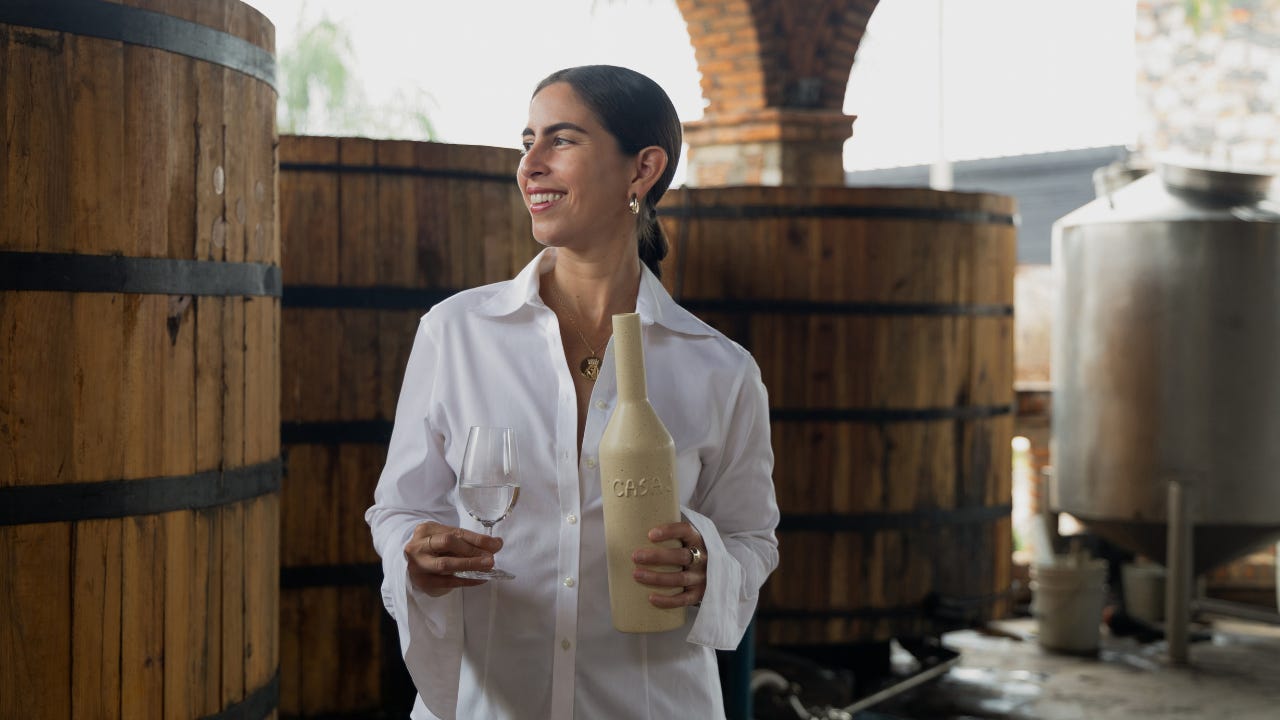
Sofía Paloma Juárez did not launch a luxury spirit to secure another seat at the table. She launched it because she wanted her missing half back.
For more than 20 years, Juárez lived with a gap she could name but could not fill. She grew up with her mother, who is Italian American, surrounded by “this Italian cultural hospitality, food, beverage, wine, and this beautiful connectivity through family and community,” as she told FIERCE in our interview. But her “other 50%,” her Mexican heritage and Spanish language, stayed out of reach after her father left when she was “about two, three years old.”
Then, when she was 27, her father reached out after nearly two decades of separation and asked her to visit him in Jalisco. She said yoga and meditation helped her show up “more open-minded and open-hearted.” She hopped on a plane and decided to keep things light, to start with a clean slate. And somewhere between the meals, the stories, and the tasting glasses, she found the emotional spark that would later become CASA J.
“On a quest to discover my heritage, I bottled the spirit of Jalisco,” she says when introducing her brand.
Tequila became the language her father-and-daughter relationship could finally speak
When Juárez landed in Mexico and saw her father for the first time in 20 years, she did not romanticise it. She described a human, nervous kind of relief.
“The first thing was a visual recognition,” she told FIERCE. “He looked good and healthy. I was just happy that he looked healthy.”
She also chose not to dive into heavy conversations right away. “I kept a light vibe,” she said. “I wasn’t diving deep into any massive conversations.”
Instead, she let the reconnection unfold through the everyday. Her father wanted to show her the town and introduced her to friends. They moved from place to place and explored. She said she felt “very included,” and she noticed his pride. “He was very proud to introduce his daughter to all of his community there,” she said. “He was very, very proud.”
Her father is a chef, and Juárez said he connected by cooking meals inspired by his grandmother’s recipes and pairing them with tequila authentic to Mexico. Through his passion, she said, he passed down “the history, the culture, the heritage, the significance” of tequila.
“He was sharing and passing down to me the significance of tequila in the way that it’s normally passed down from grandfathers to grandsons and fathers to sons,” she said.
In the press release, she reflects on that same tradition and names her own place inside it: “The Mexican art of tequila production is a tradition that’s culturally passed down from father to son, from grandfather to grandson. I have a different story.”
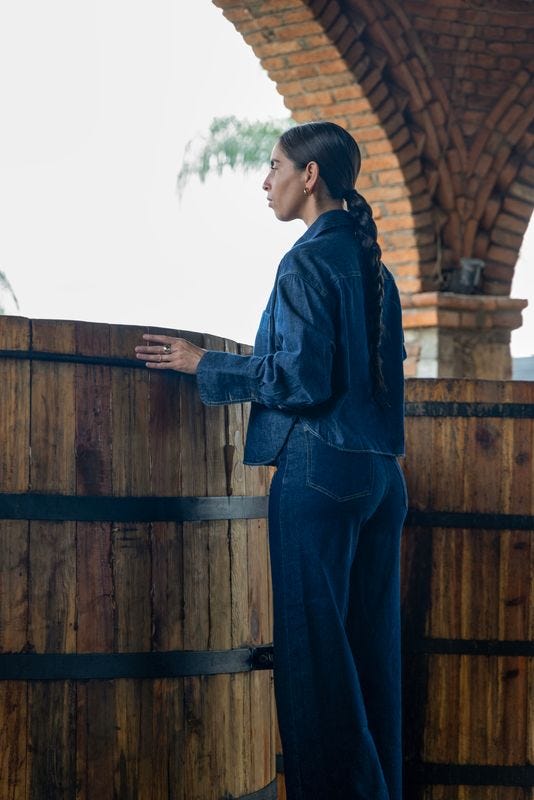
Before the brand, Sofía Paloma Juárez built other people’s brands for a living
Juárez did not walk into spirits without a toolkit. She told FIERCE her background is “360 brand marketing,” and she learned early how to shape identity, narrative, and visuals.
Right after college, she worked in editorial, “writing and editing and sourcing feature stories.” She moved through fashion and culture, then stepped into agency life, where she built strategy and content for clients including champagne brands, Coca-Cola brands, and names like Bloomingdale’s and David Yurman. She described hands-on work that spanned concept ideation through directing shoots, casting, delivering assets, and building a full strategy across platforms.
At the time her father reached out, she said she worked “exclusively for the Veuve Clicquot Champagne brand,” and she drew inspiration from “a female-founded Heritage Champagne House.” She also said she felt inspired by “the work of Madame Clicquot,” describing a woman leading a champagne house in the 1800s as “magnificent.”
Later, she ran her own digital marketing and brand strategy business for eight years, helping clients build brand identity, websites, and social platforms. Years later, when she started CASA J, she approached it the same way she had approached campaigns for other brands.
“I began doing what I did at the agencies,” she said. “Finding the illustrator, finding the artist, finding a designer, finding the ceramicists.”
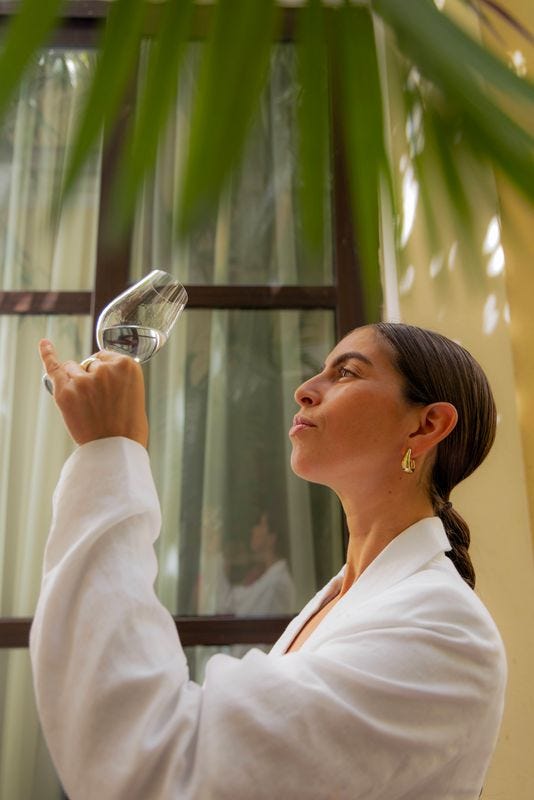
Tequila, for her, is about region, process, and dignity
Juárez’s origin story sits in a very specific place. Her father is from Jalisco, Guadalajara, which she called “the land of the blue agave, tequila.” In the interview, she compared tequila’s protected regional identity to products like champagne and Parmigiano Reggiano, saying it is specific to “the culture and the land where it’s crafted.”
That sense of place runs through the brand’s positioning. CASA J is “a refined expression of region, process and heritage,” and Juárez says the brand debuts “as the first ever Tequila Blanco Ensemble.”
She also outlines how the product aims to bridge past and present through its methods: “Handcrafted by harmonizing old world and new world processes including hand mashing, earthen pit roasting, copper pot still distillation, wooden barrel and stainless steel fermentation.”
Juárez told FIERCE her first non-negotiable was quality. She wanted to create a blanco as “the purest expression of the spirit.” Then she went straight for the bigger question she kept asking herself:
Why does the world assign automatic value to European craft and hesitate when the craft comes from Mexico?
“I really wanted to raise the bar of the world view of Mexican artisanal crafts in the way that we look at European artisanal crafts,” she said. She pointed to champagne and Italian ceramics as examples of categories where consumers do not blink at high price points. “Well, why aren’t we willing to pay a price for a Mexican artisanal craft?”
Then she grounded the argument in time: “Before one bottle of Tequila Blanco is created, that plant is growing in the earth for seven years,” she said. “It’s already a seven-year-old product that we’ve been working on before we even bottle it.”
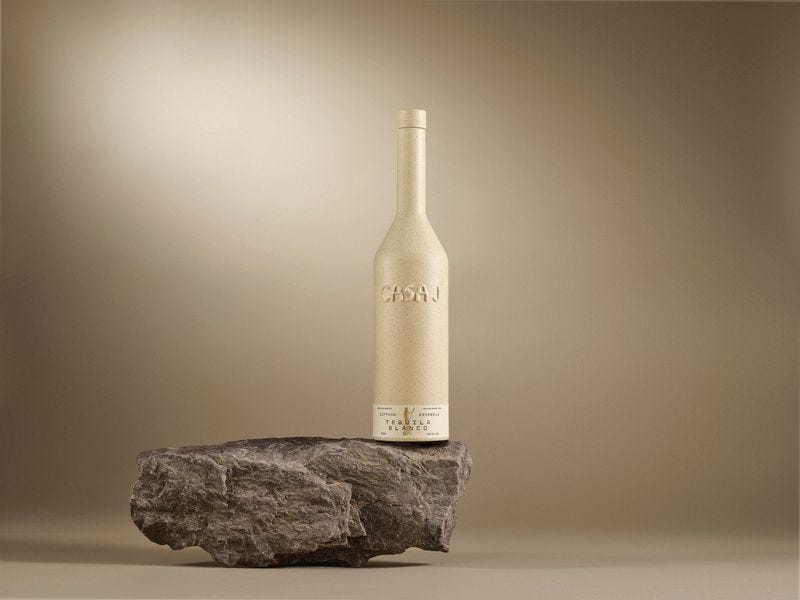
The bottle had to carry the same weight as what’s inside it
Juárez wanted the outer experience to match the inner craft. So she built a physical object meant to live past the pour.
In our interview, she said she worked with artisans in Hidalgo at an artisanal ceramic factory, describing pieces that are handmade and take months to create. She described the ceramic vessel as something she hopes people reuse and regift.
“You could reuse it in various ways,” she said, listing ideas like flowers, olive oil, a batch cocktail, even a “batch of coquito.”
The brand’s press release also frames artisan collaboration as a core commitment, saying CASA J “actively supports the artisans of Mexico through their commitment to bespoke, commissioned collaboration.”
And it positions the brand as “female, Mexican, and LGBTQ+ owned.”
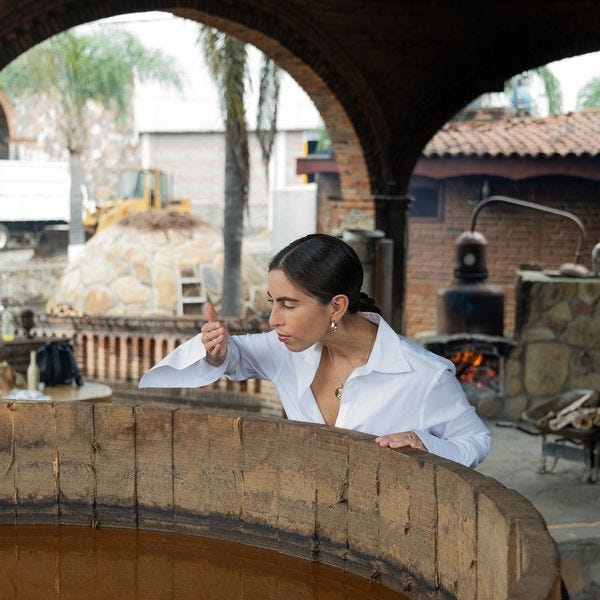
Tequila is still male-dominated, but Latinas keep pushing the door wider
Juárez’s story falls within a broader shift that has begun to show up in reported numbers.
In 2023, Bloomberg Businessweek reported that “only 11 of the 174 registered tequila distilleries were headed by women,” highlighting how limited women’s representation has been even amid tequila’s growth. Bloomberg also reported that Mexico exported $4.1 billion in tequila in 2022.
And yet, the women who have carved out a space in the industry have changed the narrative anyway. The Asociación Mujeres del Tequila, for example, has aimed to increase visibility and leadership.
Juárez fits into this moment in her own way. She told FIERCE she wanted to bring “this beautiful feminine perspective,” with “one foot in Mexico, one foot in New York.”
That vision did not happen overnight. Juárez said she spent seven or eight years travelling to Jalisco whenever she could get time off, meeting artisans, building community, and then building the brand step by step. “This is why it took me eight years from the start of the company,” she said. “Now, finally, we just launched in January of 2026.”
The press release confirms the January 2026 launch and says CASA J debuts in New York and online, with distribution in over 40 states.
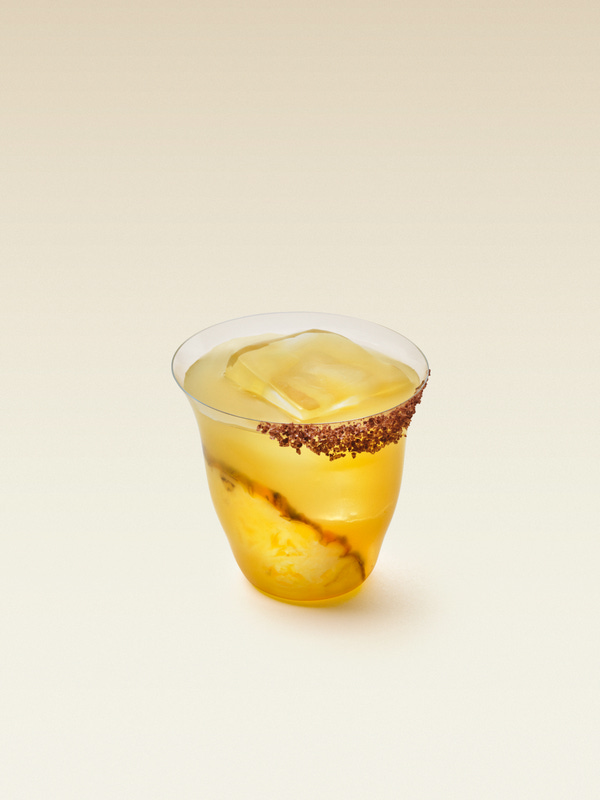
What she wants people to taste when they taste it
Juárez said consumers often fall for the visual identity first, then the liquid seals it.
“The number one consumer feedback that I get is how incredibly smooth it is,” she said. She described CASA J as “a sipping tequila first,” meant to be enjoyed slowly, “in a glass,” the way she says people drink it in Mexico.
“This isn’t a shot cocktail or a drink,” she said. “This is to sip and savor and enjoy.”
Thank you to the FIERCE by mitú team for this thoughtfully written editorial. 🥹✨🇲🇽