

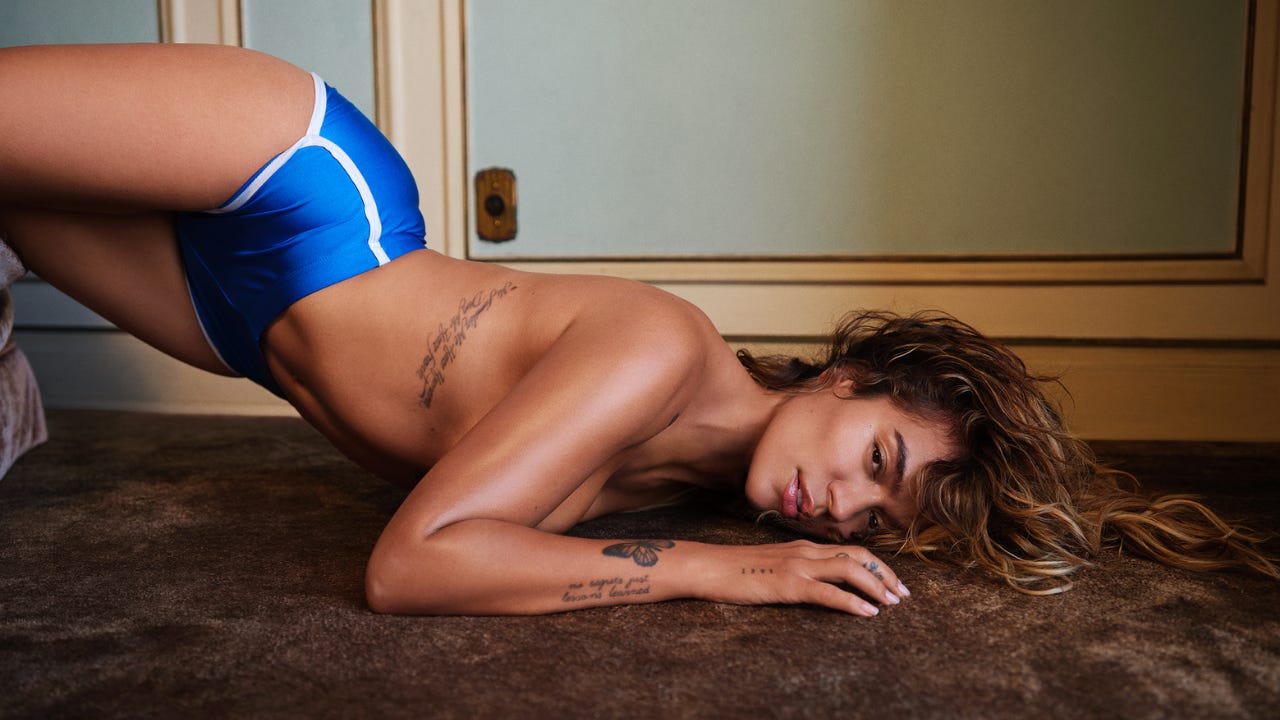
When Marilyn Monroe “appeared” on the cover of Playboy magazine, the publication still carried the subtitle “entertainment for men.” It was 1953, and the archetype of the sex symbol finally made the “readers’” dreams come true: her nude “Golden Dreams” photos were inside. Hugh Hefner purchased the images for $500 from a calendar company without Monroe’s direct consent, as she had posed for them in 1949 while struggling financially.
Ironically, it was Marilyn’s cover that gave Playboy its legitimacy. It was that precise cover that launched Hefner’s media empire, but it also solidified Monroe’s iconic status, despite the savage exploitation of her image.
Since then, Pamela Anderson, Anna Nicole Smith, Carmen Electra, Darine Stern, Madonna, Drew Barrymore, Farrah Fawcett, Kim Kardashian, and Lindsay Lohan, to mention a few, have transformed appearing on a Playboy cover into a rite of passage: from stars to icons, from women to crowned sex symbols.
Where Latinas Fit in the Playboy Mythology
Latinas, for their part — and while they have always been the token of sexualization — were not invited to the party until recently. While Playboy México and other Latin editions have always featured Latinas on their covers, the American Playboy has only featured a few. Stacy Sanchez was Playmate of the Year in 1996. Ten years later, Jessica Alba appeared on the cover of the March 2006 issue. The first Latina Playmate of the Year was Raquel Pomplun in 2013.
And now, Karol G.
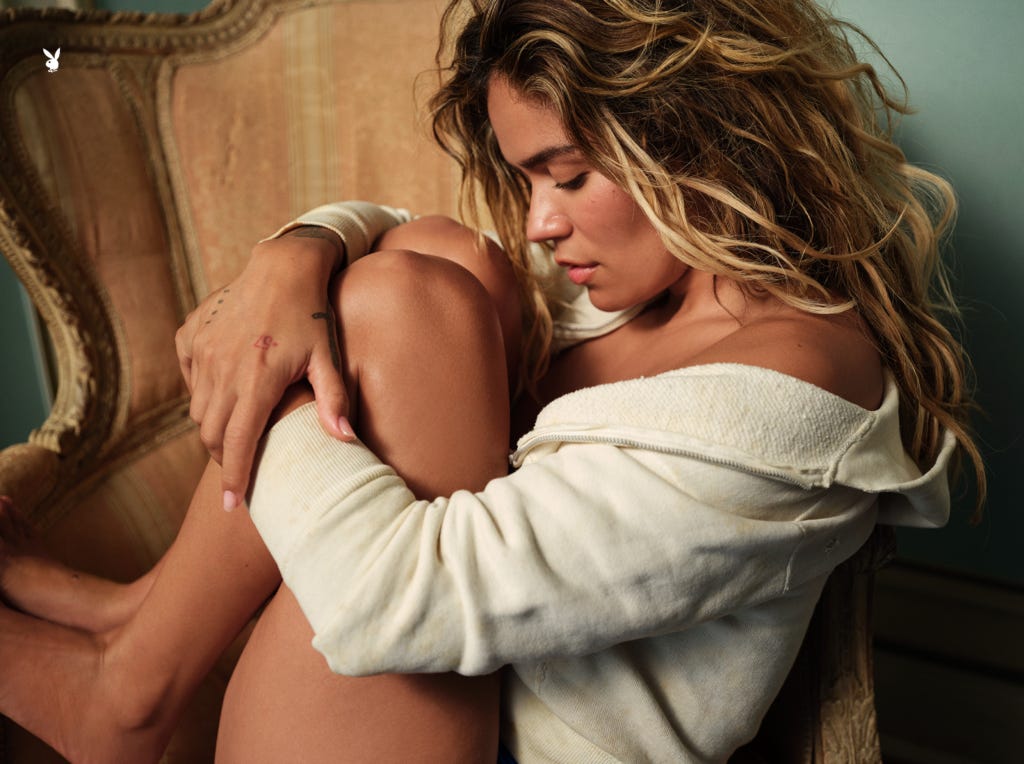
Karol G, Playboy, and the New Paradox of Legitimacy
However, Playboy is not the same magazine it was over 70 years ago. The uncomfortable paradox of legitimacy has transformed the publication into a Variety of sorts, with texts people actually read. And Karol G’s is one you shouldn’t miss.
Just days before making history at Coachella, the Colombian star told Paola Ramos she’s no longer interested in playing it safe. “Last year… life threw me to the floor, kicked me, pushed me, stood on me, spun me around,” she confessed. Now, she decided to do the cover because “I grew up inspired by how beautiful the women in the magazine looked and now I have the opportunity to be that beautiful,” or sexy, mamasota, as she said in Spanish.
And yes. This statement might be an impossible tautology for anyone who didn’t grow up inside the Latino community. A badass woman feels empowered by what began 70 years ago as a system of oppression for half the population. However, Latinas know there’s a unique power in owning your sexuality and your beauty. That, my friends, is a force that can build or bring down empires.
The Part Karol G Refuses to Apologize For
And this is precisely the sort of empowerment Karol G has spearheaded for years now, while struggling with heartbreak, impossible expectations, and coming to terms with her own history. From sold-out world tours to a heart-wrenching yet inspiring documentary, we knew she was ready to leave the apologies behind. Moreover, we intuitively knew she was ready to cut the generational curses imposed by the Latino mindset, including emotional dependence in relationships and the fear of el qué dirán.
“I’m letting go of everything,” she said, while adding that her newly single status is particular fuel on its own. “I’ve always thought that my most evolutionary moments come when I’m alone. As a good Latina from a traditional family, you're taught to give yourself fully to relationships, to the point where you can even lose yourself… I think you have to work a lot on yourself so the relationship can work. You also have to do the work so that you can walk away when you recognize it’s not going to work. When I finished my last relationship, I initially felt like, ‘Wow, I’m here again.’ But then I saw it as, ‘Wow, how beautiful that I had the courage to say that I no longer wanted to be there.’”
That mindset helped her let go of the pressure to “feel behind” for not having kids and allowed her to “be curious.” She’s now ready to receive what the world has in store.
Coachella, Consecration, and the Beginning
And that precise world seems to agree. She was expecting Coachella to be her consecration, but now that she holds the reins, she actually feels “like it’s the beginning.” “This is the first time in my life that I feel I’m going to see myself as the artist in the same caliber as the stage that I’m stepping on,” she says in her interview with Playboy.
“When I received the call, I felt like a huge weight fell on me… I feel very blessed to be part of a generation that is trying to change the narrative and raise our voice for the community… I feel like it’s a show for my community, for the world, but it’s a show that’s very much for me.”
And it makes sense. After all, what is empowerment, true empowerment, but self-love? Many people, including she who writes these words, often thought the idealization of Playboy and its Playmates by women was complicit in the oppression of patriarchy; it was a passive way of feeding the machinery of sexual violence. And hey, it might well have been years ago. But you cannot even attempt to see Karol G’s Playboy cover and interview and not feel proud and inspired by a woman whose self-awareness and humility transform into a unique beauty and intimacy only a Latina could pull off.