

Fernanda Castillo on Bringing Férula Trueba’s Tender Tragedy to The House of the Spirits
Castillo opens up about vulnerability, sisterhood, and why Férula Trueba carries one of the deepest emotional truths in The House of the Spirits.
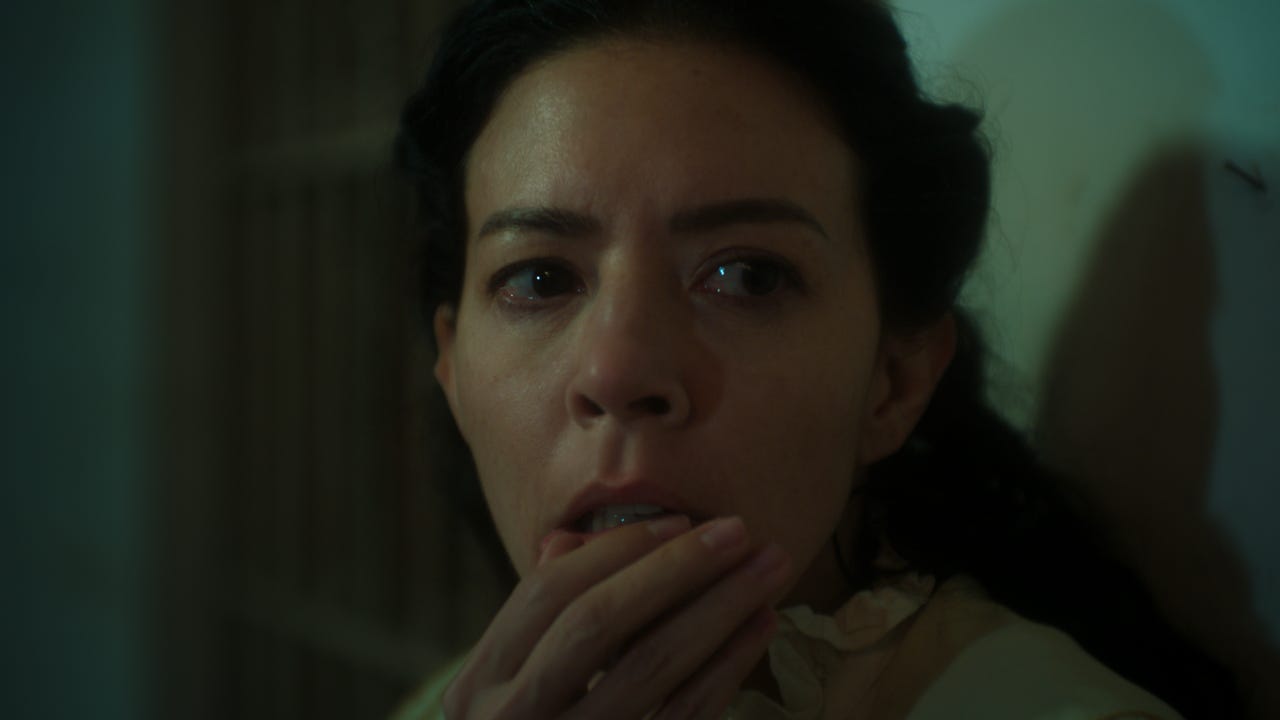
There are certain literary characters who live in the margins of a story and still refuse to let go of you. Férula Trueba is one of them.
In The House of the Spirits, Isabel Allende gave Latin American literature one of its great family epics, a novel thick with ghosts, class violence, political fracture, desire, and memory. Yet inside that vast architecture, Férula has always occupied a stranger room. She is neither the obvious heroine nor the grand matriarch. She moves through the house as a woman shaped by duty, repression, devotion, resentment, and a hunger to be seen. For many readers, including me, she embodies the female discomfort. Then, with time, she becomes something much sadder and much more profound.
That is exactly the version Fernanda Castillo understands.
Speaking about playing Férula in the new adaptation of The House of the Spirits, Castillo does not approach the character as a secondary figure orbiting the larger drama. She speaks about her as if she were carrying one of the book’s deepest emotional truths. And once she begins describing her, it becomes clear why.
Férula, in Castillo’s telling, is a woman who has lived under all the demands history made of women like her. She is dutiful, silent, pious, self-erasing. She has no control over her life, no real power over her future, no freedom to choose whom to love or how to exist. Then Clara looks at her, truly looks at her, and the entire meaning of her life shifts.
That is the version of Férula Castillo wanted to defend.
The role she knew she had to chase
Castillo came to the project the way many actors do, through casting. But the route to Férula was not accidental.
She already knew Allende’s novel. She had read it before. She had also seen the 1990s film adaptation with its Hollywood cast. What struck her this time was the scale of the opportunity. Here was an adaptation of a foundational Latin American novel, in Spanish, filmed in Chile, and featuring an international cast assembled to tell a story that unmistakably belongs to the region.
Her first audition, she tells me, was for Clara. Then, the moment she left, she knew she needed to ask for something else.
“I remember my first audition was for Clara, and immediately after leaving the casting, I said, ‘Would there be a way for me to audition for Férula, because she is the character I am in love with.’”
Castillo describes the role as “a very beautiful journey,” then explains why the character took hold of her so strongly. “She is a character who seems complex to me, tragic in some way,” she says. “She represents all of us, doesn’t she? We all want to be seen. We all want to exist. And many times, it is the gaze of another that gives us a place, that lets us know we exist, that lets us know we are seen, that we are taken into account.”
That, for Castillo, is the emotional key to the whole role.
Férula is invisible inside her own family. She embodies exactly what her era expected of a woman. She is obedient, silent. She is deprived of agency so thoroughly that even her inner life seems forced underground. And then, through Clara, something opens.
“This woman, through her bond with another woman, through Clara’s eyes, discovers herself,” Castillo says. “And there comes a moment in her life when she is grateful to have been seen by this other woman, because that gave her reasons to live.”
A woman touched for the first time
One of the most striking aspects of the way Castillo discusses Férula is her insistence on fragility. Not the one that translates into weakness but the one that turns vulnerability into depth. The trembling human fact of a woman who, deep into adulthood, is recognized intimately for the first time.
“She is a woman who is seen for the first time,” Castillo says. “And we can see it in the novel, and we also see it in the series. This woman is touched for the first time. That moment of fragility and vulnerability seemed very, very beautiful to me to be able to tell.”
For years, Férula has often been remembered in harsher outlines. Severe, rigid, and even bitter. In the older cinematic imagination, it is even masculinized. Castillo knows how easily the character can be read as forbidding, austere, and emotionally closed. But that was precisely the trap she and the creative team did not want to fall into.
When I point out that many readers discover Férula in different ways as they age, Castillo immediately understands what I mean. There are books one reads at twelve and then reads again as an adult, only to realize an entirely different woman had been waiting inside them all along. Férula is one of those women.
Castillo says she and the directors, showrunners Fernanda Urrejola and Francisca Alegría, along with Andrés Wood, spoke directly about that risk. If they leaned too heavily on the character’s darkness, they would lose her humanity. Worse, they might end up telling the wrong story altogether.
“It was very easy for new audiences too,” she says, “for her to become very stiff and very dark, in a way that would not let us look at her from another place, a more human place.”
So they made a different choice.
“Where they asked me to place the emphasis, very much, was in the tenderness of this character. In finding the tenderness in her.”
This is one of the most beautiful things the audience will discover in this new adaptation of Allende’s masterpiece. Férula’s love for Clara becomes not a coded eccentricity, nor a Gothic shadow hanging over the household, but one of the story’s clearest emotional revelations.
The answer is love, whatever form it takes
Castillo is exquisitely careful when she speaks about the relationship between Clara and Férula. She doesn’t reduce it to a trope, nor does she sensationalize it. She understands, better than most, that part of what makes that bond endure is that it exceeds easy classification.
She points out that Allende herself has said she was not necessarily imagining a sexual relationship between the two women in the explicit sense people might now impose upon it. But Castillo does not use that as a way to retreat from the intensity of the bond. Quite the opposite. She uses it to enlarge it.
“For me, what this character tells us is that love is love,” she says. “Because this woman, even with all her religious burden, with all the burden of being a woman born into a place where she has no choice over anything, the only certainty she has at the end of the story is love.”
She continues, and her voice sharpens with conviction.
“The only thing she does not regret is this enormous love she has felt for Clara, and that is the only thing that gave her a reason to live.”
That is a startling way to understand Férula Trueba. And it also feels exactly right.
Castillo calls the character visionary for that reason. “For me, she is super visionary,” she says. “Because she says something very powerfully: the answer is love. Whatever form it takes.”
Strength made room for vulnerability
Castillo has spent much of her career embodying powerful women. Women audiences read as strong, defiant, commanding, and difficult to break. She knows that. She knows many viewers connect to her through that energy. So I ask her what kind of craft work it took to communicate someone as delicate, interior, and emotionally transparent as this Férula.
Her answer is one of the most revealing moments of the conversation.
She says it would have been impossible for her to play this degree of vulnerability had she not already encountered its opposite inside herself.
“I am used to playing very strong characters,” she says. “And to women connecting a lot with those very strong characters. But I think I could not speak about the fragility Férula has, or as an actress, put myself in that very vulnerable place, if I did not know that this binomial exists in women.”
“This strength I know we have, and that I have explored in other characters, also gives me the internal space to say, and now I can be vulnerable. Because that is what we are.”
She talks about watching this with her mother as she grew older. Then later, once she became a mother herself, she saw it again in other women. The image she reaches for is precise: A lioness defending her cub with absolute ferocity, and at the same time a being capable of immense delicacy, breakability, even tenderness bordering on crystal.
“That binomial fascinates me,” she says. “It electrifies me, the idea that we can be all of that.”
Sisterhood on set, and the spirit of Allende’s world
As the conversation continues, something beautiful begins to unfold. Castillo stops speaking only about performance and begins discussing the atmosphere around the production of The House of Spirits. What moved her, clearly, was not only the character or the text, but the collective ethic that formed around making it.
She talks about how rare it was to be on a project where so many people from different countries, generations, and backgrounds came together with one shared seriousness of purpose. Actors and creatives alike. People from Chile and beyond. Women and men. Different sensibilities, different histories. Yet inside the work, she says, what mattered was telling the story with “depth” and “complete surrender.”
There is a palpable gratitude in the way she remembers it.
“I could not believe the people I had beside me,” she says. “As actors and as creatives. I would say, wow, this is a project where this person is here, and it felt astonishing.”
Then she tells me a story she clearly treasures.
At some point during production in Chile, actress Chiara Parravicini had her hair dyed green for her role as Rosa Del Valle. She worried, quite reasonably, about whether the color would come out once filming ended. Green hair may be perfect for a role. It is less useful when you are trying to keep working. The dye turned stubborn. And Parravicini began to worry.
What happened next stayed with Castillo.
“All the women who were there in Chile at that moment gathered together to go be with her through that difficult moment,” she says. “And I swear I remember it, and I get emotional, because I thought, this is what life is about. Truly. This is what it is about.”
They ended up together in the salon, drinking wine, celebrating that the green finally washed out. But for Castillo, the importance of the moment had nothing to do with hair.
“What mattered was that the only thing happening there was the pain you were having, the difficulty, the struggle you were having. And how do I accompany you in that?”
It is impossible not to hear Isabel Allende in that story. Not as the omniscient author, but as the underlying theme of women witnessing one another. Women holding one another through fear and absurdity.
When I ask her whether it would be fair to say that spirit seemed to seep into the pores of the experience itself, she does not hesitate.
“Completely,” she says.
A character who still speaks from the house
Near the end of our conversation, I asked whether there was anything she wished she could say about her experience as Férula that no one had asked her yet.
What followed is not a forgotten production anecdote or a technical note about the role. It is something much more intimate. Castillo says what she feels grateful for is that, while making this series, the people involved kept returning to a shared commitment larger than any one performance. They were not there simply to adapt a beloved book. They were there to honor a history of struggles, especially those carried by women across Latin America, and to do so with seriousness, empathy, and mutual attention.
“If we did things more like that,” she says, “without thinking, you are from this place, and I am from that place, and this is what makes us different from one another, if we thought more in terms of a common good, things would be different in the world.”
Later, when I mention how strongly this resonates with Allende’s literature, Castillo expands the thought. Feminism, for her, is also about empathy. About listening. About vulnerability in front of others. About being willing to recognize another person’s struggle as equal to your own. She says that from the first day, the creative team made that mission legible to everyone involved.
“We were all very proud to tell this because it mattered to us,” she says. “And for it to matter means honoring those who came before, the women who came before, our struggles as Latin America, as women, as human beings who want to be heard.”
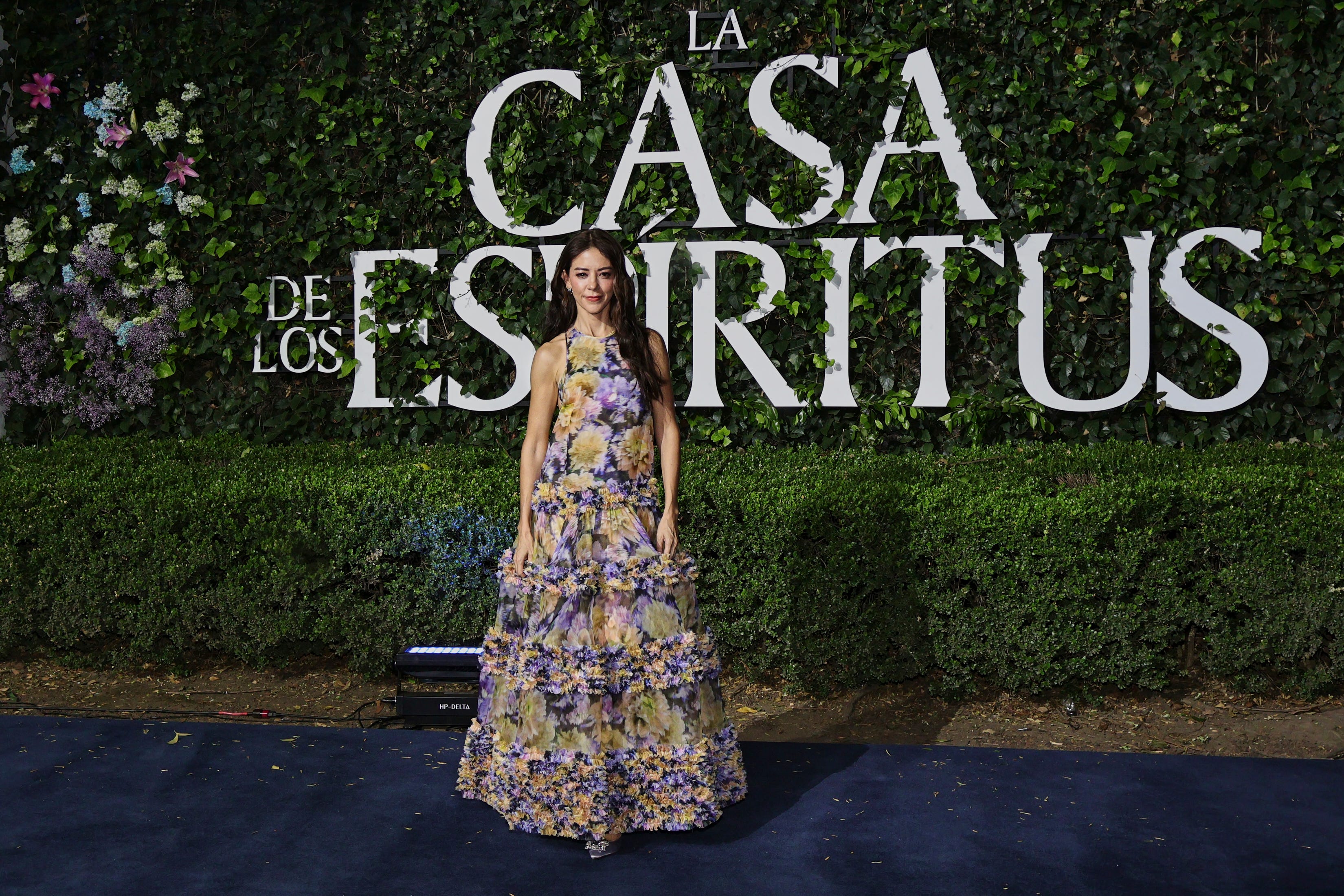
The House of the Spirits will premiere worldwide on Prime Video on Wednesday, April 29, 2026. And you won’t want to miss it.