

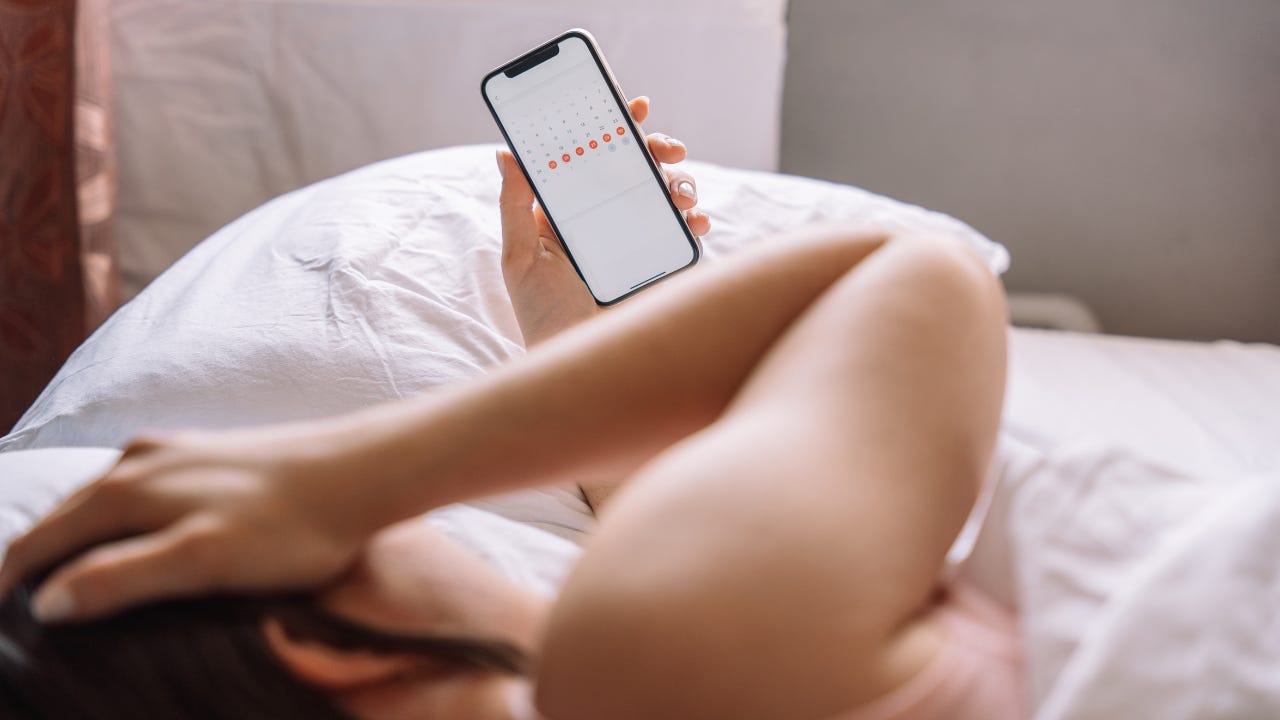
A TikTok creator named Oz posted earlier this summer that her period was 13 days late “and counting.” “June has just been weird,” she said. “This is not typical for me.”
She was far from alone. Across TikTok, Reddit, and Instagram, thousands of women from the UK to South Africa to India to the United States reported the same disruption: periods arriving anywhere from four to ten days late, skipping June entirely, or showing up twice within the same calendar month. The conversation spread so quickly that it became genuinely viral, complete with competing theories about its cause.
Some pointed to astrology, others to climate. Some even pointed to CERN.
Here is what we actually know.
What Women Reported
The volume of reports demanded attention. On Reddit’s r/TwoXChromosomes, a thread asking whether other women had experienced an irregular June cycle attracted hundreds of responses. Women described periods arriving 4 to 10 days late, cycles stretching to 45 days in people with consistent 30- to 33-day cycles, and multiple instances of two full cycles within the same month. Pregnancy tests came back negative across the board.
“For 9 years I have regular cycles (28 to 32 days),” one Reddit user wrote. “Never got 2 in a month. Only happened in JUNE 2026. THAT’S WEIRD.”
Other women on the same thread reported no disruption at all and pushed back on the premise. “More people talking about it does not mean it’s happening more than normal,” one user wrote. Another put it in three words: “Confirmation bias in action.” They have a point worth holding onto, and we will return to it.
The Astrology Crowd Has a Theory
For a significant portion of online commenters, the timing suggested something cosmic.
June 2026 carried a high concentration of major astrological transits. Saturn, the planet astrologers associate with structure, timing, and delays, turned retrograde on June 28. The month also featured a New Moon in Gemini on June 15, a phase astrologers associate with fresh starts and resets, and a Full Moon in Capricorn on June 30, symbolizing culmination and release. Astrologers describe months like this as periods of disruption before a new rhythm settles in. For anyone tracking both their cycle and their cosmic chart, the convergence felt significant.
Others went further. Several Reddit threads referenced CERN’s four-year operational pause, which began on June 29, with some users speculating that the shutdown altered the nature of time itself and disrupted biological rhythms. Still others pointed to a karmic shift or a broader awakening of matriarchal energy as the underlying cause.
However, one thing is clear: there is no scientific evidence linking planetary movements to menstrual cycles. The CERN theories have even less grounding in documented physiology.
While Not a Planet, the Moon Does Have an Effect. And There, the Science Has More to Say
A September 2025 study published in Science Advances analyzed long-term menstrual records from 176 women over periods of up to 37 years and found that menstrual cycles historically synchronized with the lunar cycle, specifically with the full and new Moon, before 2010, per the study. After 2010, when LED lighting and smartphones became widespread, that population-level synchronization largely disappeared. The authors hypothesize that artificial light at night disrupts the lunar light signal that historically entrained the cycle.
Gravitational coupling persisted. The study found measurable synchronization of menstrual cycles with the Moon’s gravitational cycles, particularly in January, when the Earth is closest to the Sun and gravitational forces among the Moon, Sun, and Earth are at their strongest. The authors concluded that the human menstrual cycle behaves like a true circalunar clock, an endogenous biological oscillator that, given the right conditions, synchronizes with the Moon.
The reach of the astrological explanations still says something real about how many women are searching for a framework that matches the scale of what they experienced.
The Answer Might Be On Climate Change
The UK broke its record for the hottest June temperature this year, with a peak of 37°C (98ºF) in East Anglia. Since May, the UK alone experienced three heatwaves, and scientists estimate more than 2,700 excess deaths in England and Wales during the May and June heat periods, a toll they attribute to climate change. The rest of the world has experienced something similar.
And it has a documented effect on the menstrual cycle.
The hypothalamus, the part of the brain that regulates hormones, reads extreme heat as a physical stressor and prioritizes temperature regulation above nearly everything else, including the hormonal signaling that drives ovulation, per Nua Woman. Specifically, heat stress disrupts the pulsatile release of GnRH (gonadotropin-releasing hormone), which initiates the hormonal cascade that leads to ovulation, according to research cited by Nua Woman. Less GnRH means less ovulation signal. Delayed ovulation results in a delayed period.
A 2021 cross-sectional study found that climate and temperature shifts had measurable effects on menstrual cycle length. Warmer temperatures were associated with shorter cycles, while extreme heat events were associated with delayed or skipped periods.
Dehydration compounds the disruption. It thickens the blood, reduces circulation to the uterine lining, and makes periods heavier and more painful. Heat also degrades sleep quality, raising cortisol and further suppressing reproductive hormones. Being on your period already raises core body temperature by 33ºF. In a heatwave, every fraction of a degree adds up.
Pharmacist and TV health expert Thorrun Govind told Metro UK: “The menstrual cycle is sensitive to changes within the body and factors such as disrupted sleep and heatwaves can impact it.”
Dr. Nighat Arif, a UK women’s health expert, offered a clarifying note for anyone who experienced what felt like two periods in the same month: that pattern may reflect a shorter cycle in which ovulation occurred earlier than usual, per IOL. Two periods do not always mean two separate events. It can mean one cycle that started and ended within the same calendar window.
The Skeptics Have a Point, and So Does the Science
The confirmation bias concern is real. When a post goes viral asking, “Did your period do something weird in June?”, the women who experienced an irregular cycle are far more likely to engage than the women whose cycles were completely normal. Without population-level data from period-tracking apps like Flo or Clue, there is no way to confirm whether June 2026 represented a genuine statistical anomaly or a very noisy conversation about something that happens to someone every month.
Dr. Suzanne Wylie, GP and medical adviser for IQdoctor, said: “These effects are likely to be quite modest; they won’t happen to everyone.”
At the same time, the physiological mechanisms by which extreme heat disrupts ovulation are documented and published. The summer was record-breaking. The body does not operate in a sealed compartment separate from its environment. The idea that a June this extreme left menstrual cycles completely untouched requires more faith in biological impermeability than the evidence supports.
The honest answer is probably this: confirmation bias operating on top of a real environmental stressor, amplified by an algorithm that fed the conversation to everyone who clicked once. Some of the June reports reflect normal monthly variation that found an audience. Some of them reflect genuine disruption from heat, sleep deprivation, dehydration, and stress. The two are not in conflict.
It Was About Damn Time
The more interesting thing is that we are talking about it.
For a long time, menstrual irregularities were something women tracked quietly in apps and mentioned to their doctors in passing, if they mentioned them at all. The fact that thousands of women compared notes publicly, across countries, in real time, and demanded an explanation is something worth marking. They expected answers. They expected their bodies to be taken seriously. They expected the conversation to happen out loud.
Climate change will keep pressing on women’s bodies. Summers will keep breaking records. Heatwaves will become longer and more frequent. More Junes like this one are coming. The least we can do is keep talking about it.
And hey, if it’s a sign that the matriarchy is finally upon us, it was about damn time.